
January 31st, 2023 Update:
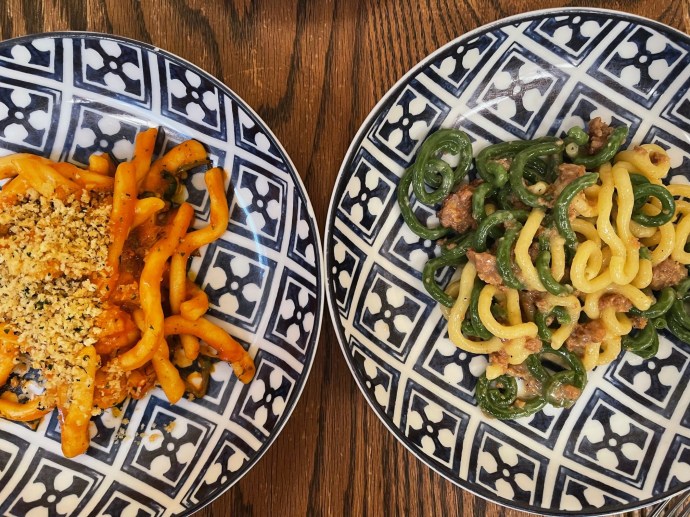
Ok, you want the good news or bad news first? Lets start with the good. Rezdora pastas still rank with the best of them. The Gramigna Giallo e verde is a thing of multicolor beauty. The kind of “white” ragu that sends you back to Italy, specifically Tuscany for me. A lesson on how to get so much flavor from so little meat. Another triumph is a Mozzarella di Bufala appetizer with pickled beets. Every morsel of the oil, basil, and every other ingredient is profound. Rezdora remains our best Emilia Romagna representative. However…
This is not the same Rezdora since the Michelin star. I get that sometimes we pay a hefty price for quality, but I believe we also pay for the privilege to some degree. A Michelin tax if you will. If you get it, they will come. And by they I mean tourists. That Mozzarella appetizer I just described is $26. The pastas seem reasonably priced for NYC, but they are about 1/2 to 2/3 the size of a full portion. In fact they even warn you that one pasta each may not be enough. You want bread? It will cost you $8 for a couple of oily toasts. Might as well get the Gnocco Fritto with all the salumi goodness 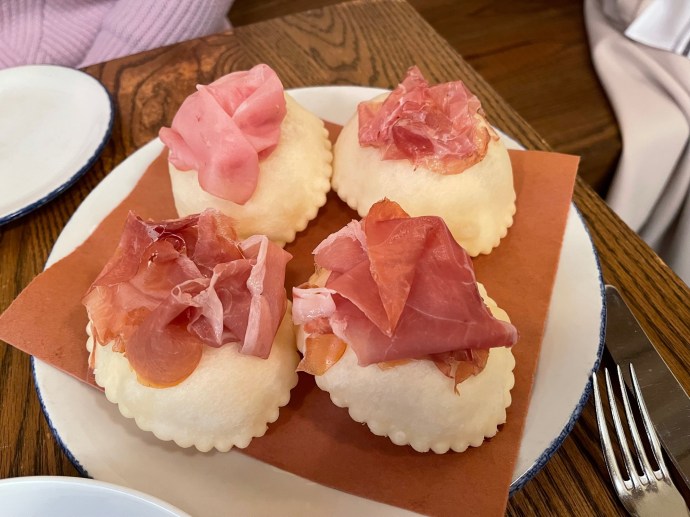
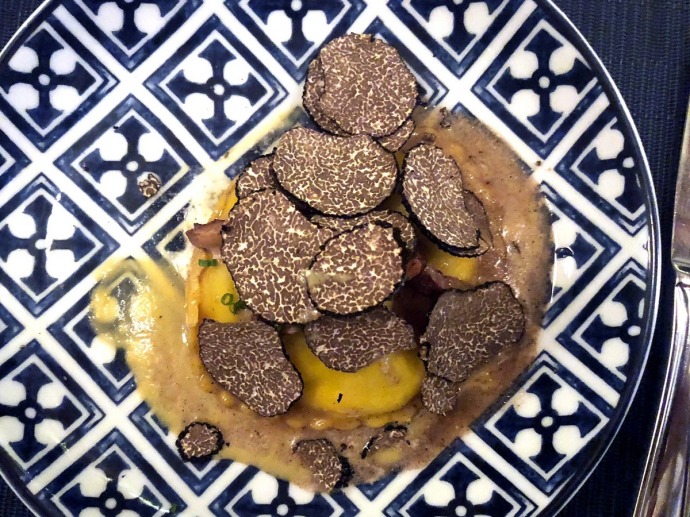
If you want the Uovo Raviolo with white truffles, you may as well tell your kids they’ll need to rely on their grandparents for continuing education. And while the pastas are generally strong, we did manage to find one to avoid. The Strozzapreti ($29) with tomato sauce and lobster was a tad too acidic for the tiny amount of lobster. In fact Mrs Z started questioning whether we got the right dish after we finished it as she didnt recall eating lobster. Rezdora is now firmly on the tourist radar these days due to Michelin, and being open for lunch. Still recommend, but as with the recently covered Jeju, hope you took advantage when I first recommended.
Original 2019 Post:
Did I ever tell you the story of my mysterious volume spike? A few years ago, I looked at my site and noticed the number of page views suddenly skyrocketed. Mainly due to the post on Hosteria Giusti in Modena I wrote a few years prior that suddenly went viral. And there was no indication why. There was no referral site like Trip Advisor or Facebook which was the culprit for similar spikes in the past, like the Top NOLA bites that went viral on Facebook. It appeared that people were sent there from simply googling “Hosteria Giusti”. But why so many Googling?
The answer came about four months later. Heard of Netflix and Chill? If not, and you are a parent, you may or may not want to Google it. But in my house, its more like Netflix and Sleep, with almost zero chance of Chill. One day we started watching Master of None, Season 2, set in, you guessed it, Modena, a sort of Foodie paradise in Emilia Romagna. But it was only when Aziz Ansari celebrated his birthday in Hosteria Giusti, that little light in my head finally turned on. The next morning I googled it, and sure enough, my story is on the first page. The spike started the day the season was released.
“So what the fuck does all this have to do with Rezdora, Ziggy”. Great question Timmy. I’m getting there. And why so angry today? Hosteria Giusti is a 400 year old deli in Modena that takes a stupendously long lunch break and transforms into one of the north’s toughest tables. Unless you have the adorable looking face of an Aziz Ansari, reservations required many months in advance. For me it was easy because I do happen to have the adorable face of an Aziz Ansari. More like a cross between Aziz and Tom Branson from Downton Abbey.

Anywho, this requires some more investigating, but chef Stefano Secchi the owner of Rezdora, might have been at the helm at Giusti during our lunch. Although he grew up in some Italian city called Dallas, Secchi got much of his inspiration at Giusti and Osteria Francescana, one of the only restaurants in the world where you book the restaurant first, and THEN book flights. Rezdora is an homage, not only to Modena, arguably the best food city in Europe, but also to the Nonnas that make it happen. Its not entirely clear to me if Rezdora means head of household or Grandma in Modenese dialect. It depends on who you ask. Maybe in Modena, the grandma is usually in charge. Not so much in NYC.
While we have plenty of restaurants that call themselves North Italian, or offer cuisine from Emilia-Romagna, none are nearly as representative or daring as Rezdora. This is Modena cooking. There’s a certain level of Chutzpah required to introduce this level of authenticity by way of dishes that may seem odd to the natives. Like a Raviolo, which by definition means one Ravioli (and its a good one). New Yorkers may know Ravioli, but not Raviolo. Still, this is the right city to do this. You may not get the same results in Boise.
Reservations are tough to get as of now. But we showed up a few minutes before opening (5) and were able to get sits at the bar on a Saturday night. When we left two hours later, there were sits available. The best thing I can say about the service, and any service, is the staff seemed happy, genuinely enjoying what they do. Here’s the food rundown…

Eater
Cherry season in Vignola – Vignola is a town near Modena known for its intense cherries. Here its paired with creamy Stracciatella and almonds. It is meant to eat with bread that doesnt exist unless you order the Fett’unta, an oily, garlicky toast. It paired well initially or at least until the garlic from the bread took over the mic.
Gnocco Fritto – This is a classic Modenese specialty of fried dough balloons that pop when you bite into. The Gnoccos vary from town to town between Parma and Bologna, but this is pretty much what you get at Hosteria Giusti. Each one is topped with either Prosciutto di Parma, Mortadella or Finocchiona. If you are sharing and feeling selfish, go for the Mortadella. If you are on a first date, go for the Prosciutto. Then Mortadella.
Tagliolini al Ragu – If you ever had the ultra eggy Tajarin in Piedmont, or Tagliolini in ER, this is as close as it gets in NYC today. Its an explosion of flavors. What we call here Bolognese is essentially a poor attempt to mimic this, the original.

Eater

Eater
Cow grazing in Emilia Romagna – The names of some of the dishes alone show that Massimo Bottura influence. This is pretty much what you expect from a sirloin in a high end restaurant. Perfectly cooked quality beef with three delicate sauces. The meat is so good on its own, you hesitate to try the sauces. But they dont do any harm. Mix and match for best results.
Uovo Raviolo di Nino Bergese – One large ravioli, and a brilliant combination of Ricotta, runny egg, Chanterelles, and fragrant summer black truffles shaved on top for good measure.
Chocolate Tart – This is were things just fell a little flat for me. There was a Tiramisu and another dessert, but this one looked most interesting. A not so inspiring dark choc tart with hazelnut mousse.
Poor lighting translated to some horrible iphone pictures this time, so borrowing some from Eater. Read Eater!
Rezdora
27 E 20th St (Brwy/Park), Flatiron
Recommended Dishes: Cherry season in Vignola, Gnocco Fritto, Mozzarella, Gramigna, Tagliolini al Ragu, Uovo Raviolo, Cow grazing in Emilia Romagna

 This is not a drill, nor a sales pitch. Just a friendly heads-up. Last year during the last few months of the year, I answered so many requests starting with the word “Unfortunately” that my smart phone started completing “Unfortunately” every time I started a sentence. This year its happening much earlier. I got plenty of availability between now and then, but the month of December is looking mighty busy already, especially with Brooklyn tours.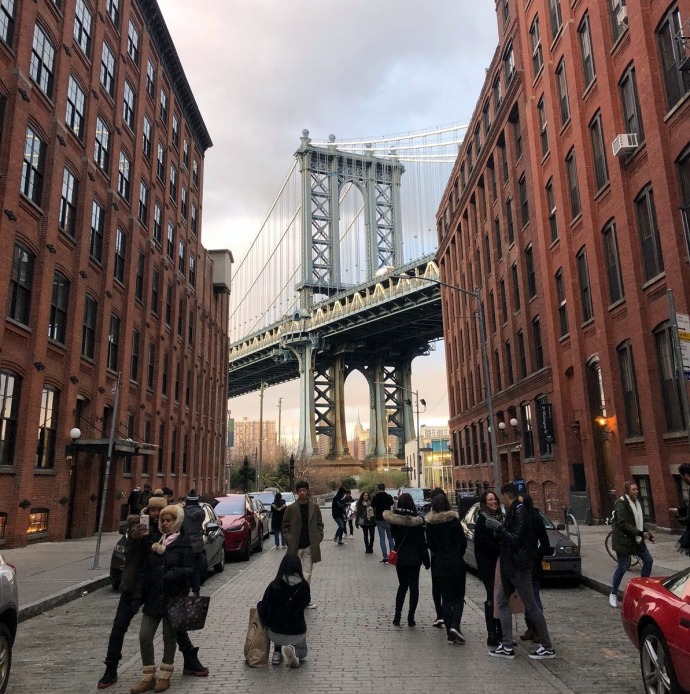

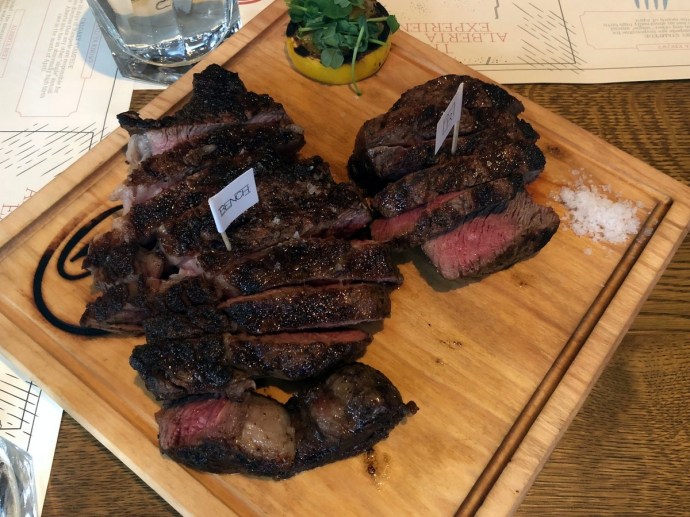
 Chuck’s steakhouse – Best meal of the trip as expected. Superb quality especially from the striploin/New York cuts surprisingly over the Wagyu and Rib Eye. Very clever sides (cauliflower!) and even better desserts. I would skip appetizers here altogether and just concentrate on the prize. If you are more than three, share some cuts that add to about 8-10 ounces per person, a few sides, and you are golden. This is NYC quality stuff.
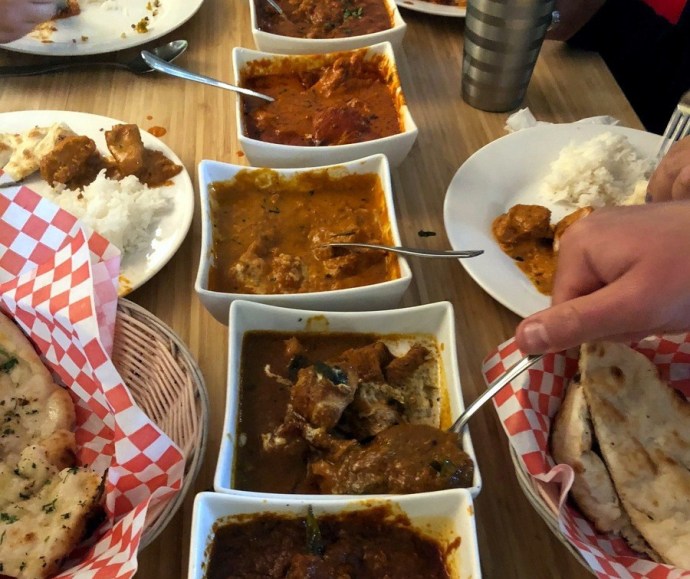
 Indian Curry House – We know Indian. We love Indian. This is good Indian. By the last day we were craving something spicy and tall buildings. ICH took care of one part, while Calgary took care of the other. Not everything was super authentic like the too tomatoey Chana and the surprisingly mild beef (yes, beef is allowed here) Vindaloo (get it still), but really excellent Chettinad among other dishes
 Bear Street Tavern – We know pizza. We love Pizza. This was not good pizza. But its popular pub fare, with a solid beer lineup. Skip the mooshy wings
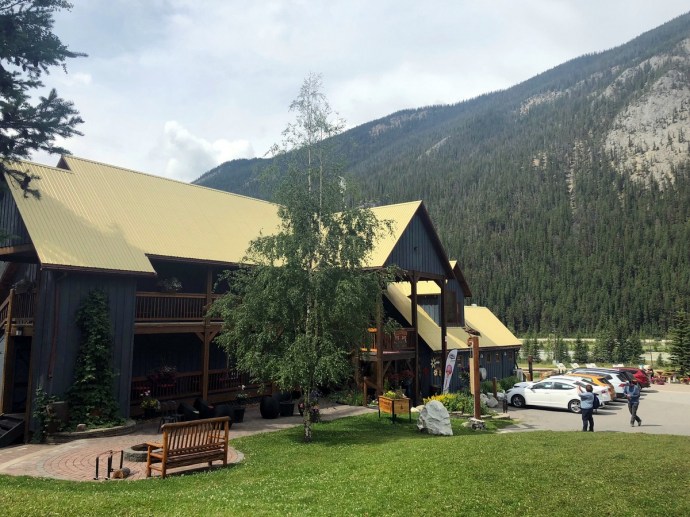 For breakfast head to Wild Flour Bakery and get the Frittata sandwich. One morning we picked up their fine baguettes and just bought butter elsewhere for a Parisian breakfasts in the hotel room. Best full breakfast was at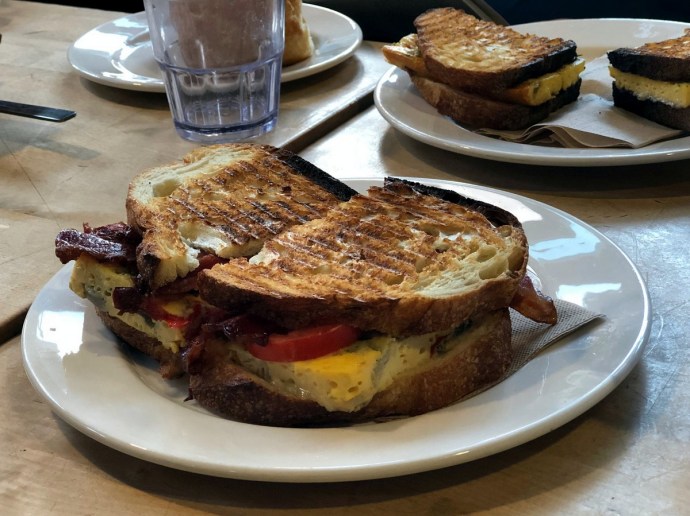
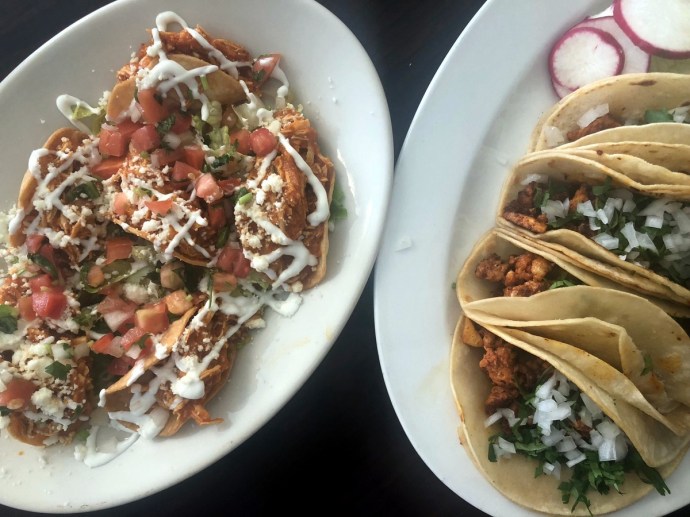 Social Media is a wonderful, powerful thing. Until its not. I dont recall how I first learned about Casa Vieja in Sunset Park, Brooklyn. Perhaps I read about it on Chowhound or the excellent


 Instead of boring you with the usual Best of Umbria this or that, or random tips on Umbria, I will bore you with an award ceremony.

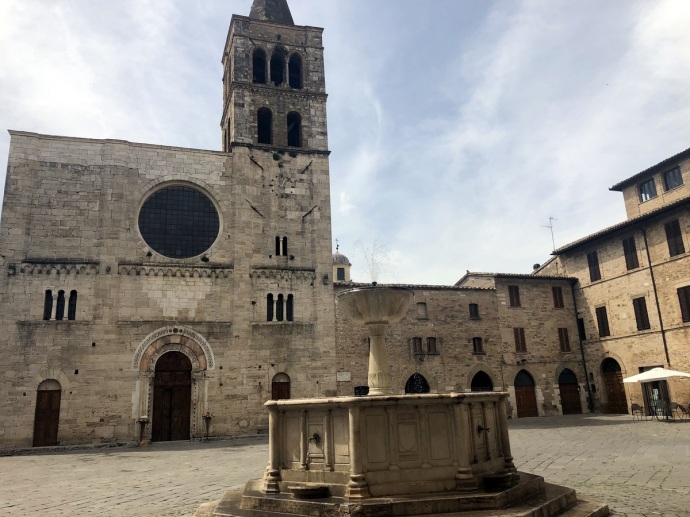

 The Milton Snavely Hershey Award. Given to the best Chocolate – Urbani truffled truffles in the Urbani museum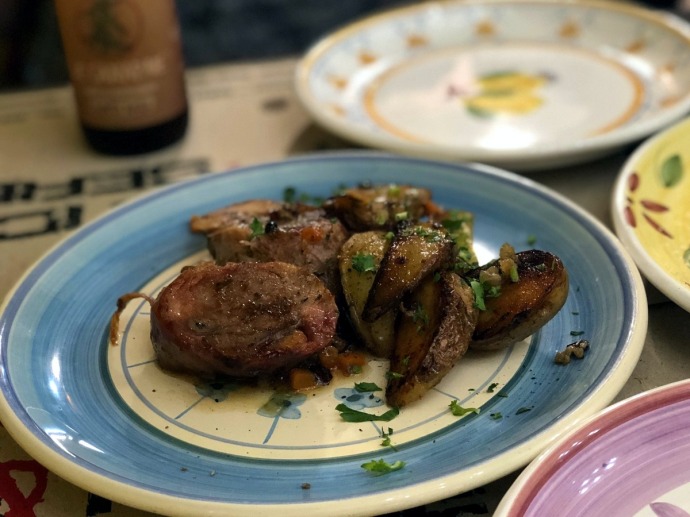




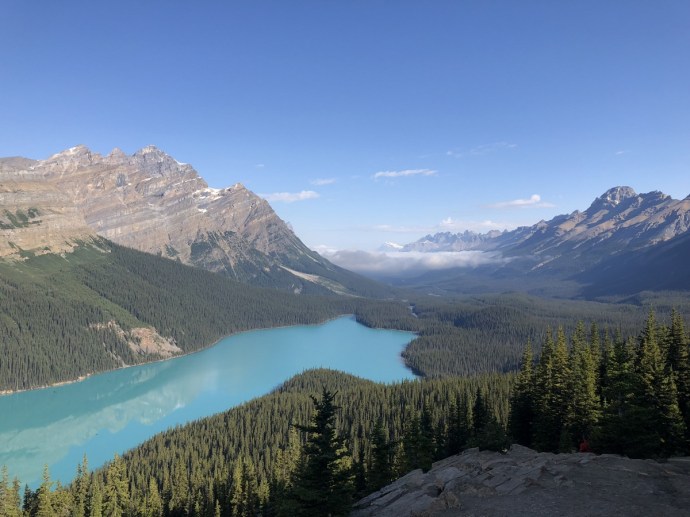 Another incomplete North America National Park visit in the books. Still, no bears. Just like with the elusive sea turtle after hundreds of snorkeling sessions (ok, more like 15), this is starting to feel personal. We even got stuck on two “Bear Jams” between Yosemite and Banff and nada. A Bear Jam is when traffic builds up on a road because bears were spotted. Its the National Park version of a NYC accident on the other side of the highway.


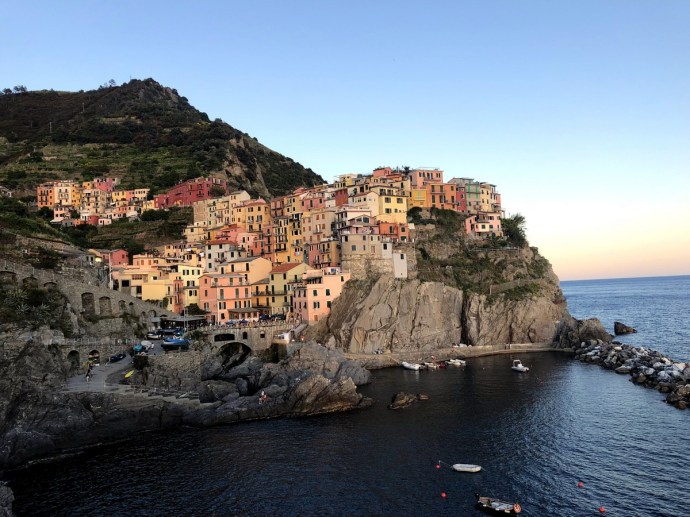
 To say that Cappun Magru offers the best Cappun Magru in Cinque Terre is a fair assessment. Its the only one making it. This old Ligurian specialty is slowly disappearing from Ligurian menus, even in Genoa where its most associated. Cappun Magru is an elaborate seafood and veggie salad to put in the simplest of forms. Its most common spelling is Cappon Magro, but here at the headquarters of EWZ, with the tagline “Eating Well, Spelling Pourly” we dont care about spelling all that much. My guess is that Cappun Magru is the more ancient spelling. Sort of like Giovanni da Verrazzano ancient spelling had only one Z. If only NYC would have known about it before spending millions to change the name.


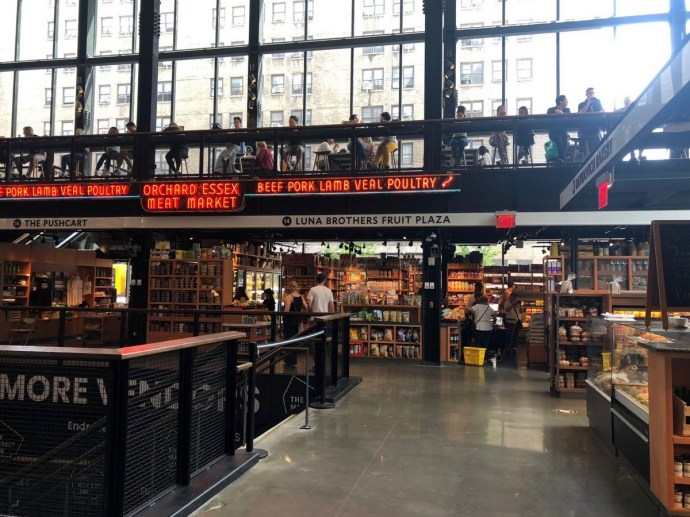 I won’t lie to you people. I rarely do. When I first saw the new Essex Market, it felt like I just discovered a new Foodie paradise as the
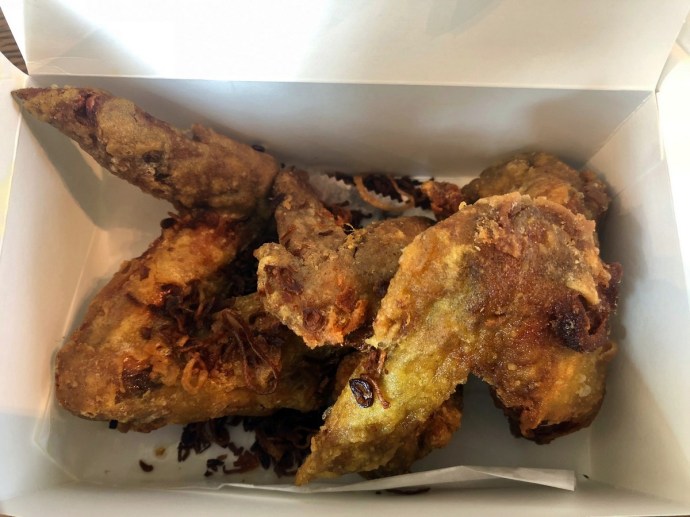
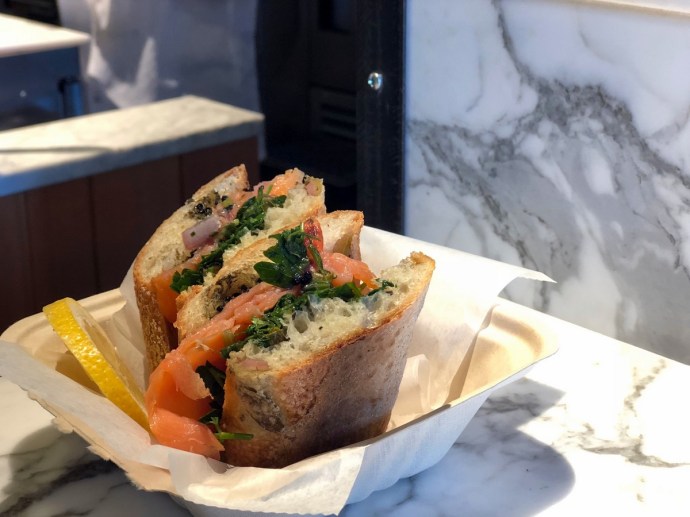


 This was supposed to be a post about Osteria Baciafemmine, one of Umbria’s most hidden (quite literally here) gems. But something happened during this visit. A twist. The kind I only see in South Korean movies. As good as this meal was, the little village of Scheggino, with a population of 463 (we counted) upstaged the meal. To the point that we changed plans on the last day to visit the village again.
 Cutting through at the foot of Scheggino is the Nera River producing one of the only seafood items found in Umbria, trout. You can have it at Osteria Baciafemmine as is, or crusted with crunchy breadcrumbs and parsley. Osteria Baciafemmine is a local legend, Slow Food fixture, and the reason we came to this village in the first place. Rustic, all in the family Osteria, dishing out local specialties and meat raised in their own farm. Mother, father, daughter, cat, all hard at work at a space decorated head to toe with food and drink stuff, almost museum like. Toto, we are not in Staten Island anymore.


