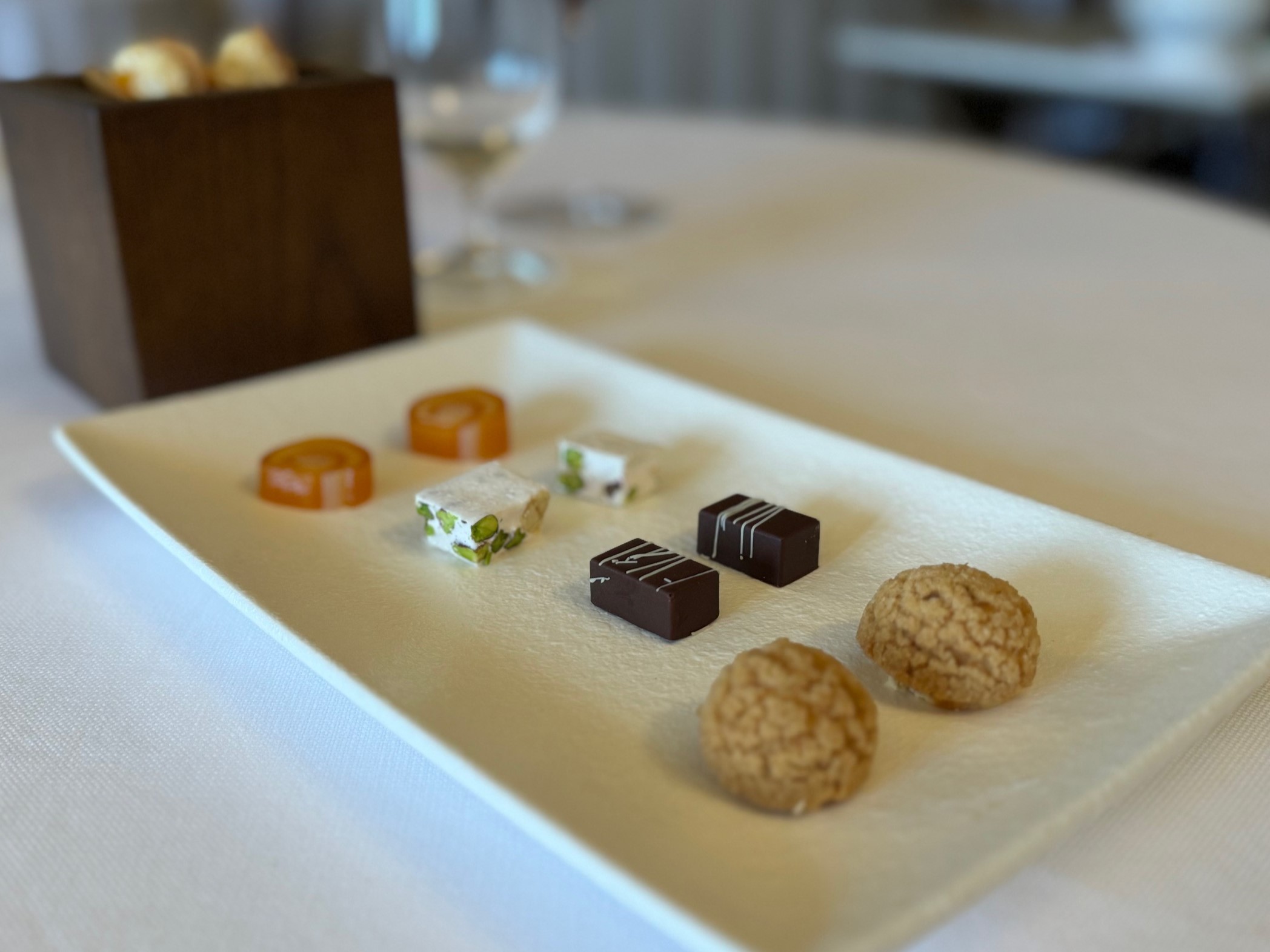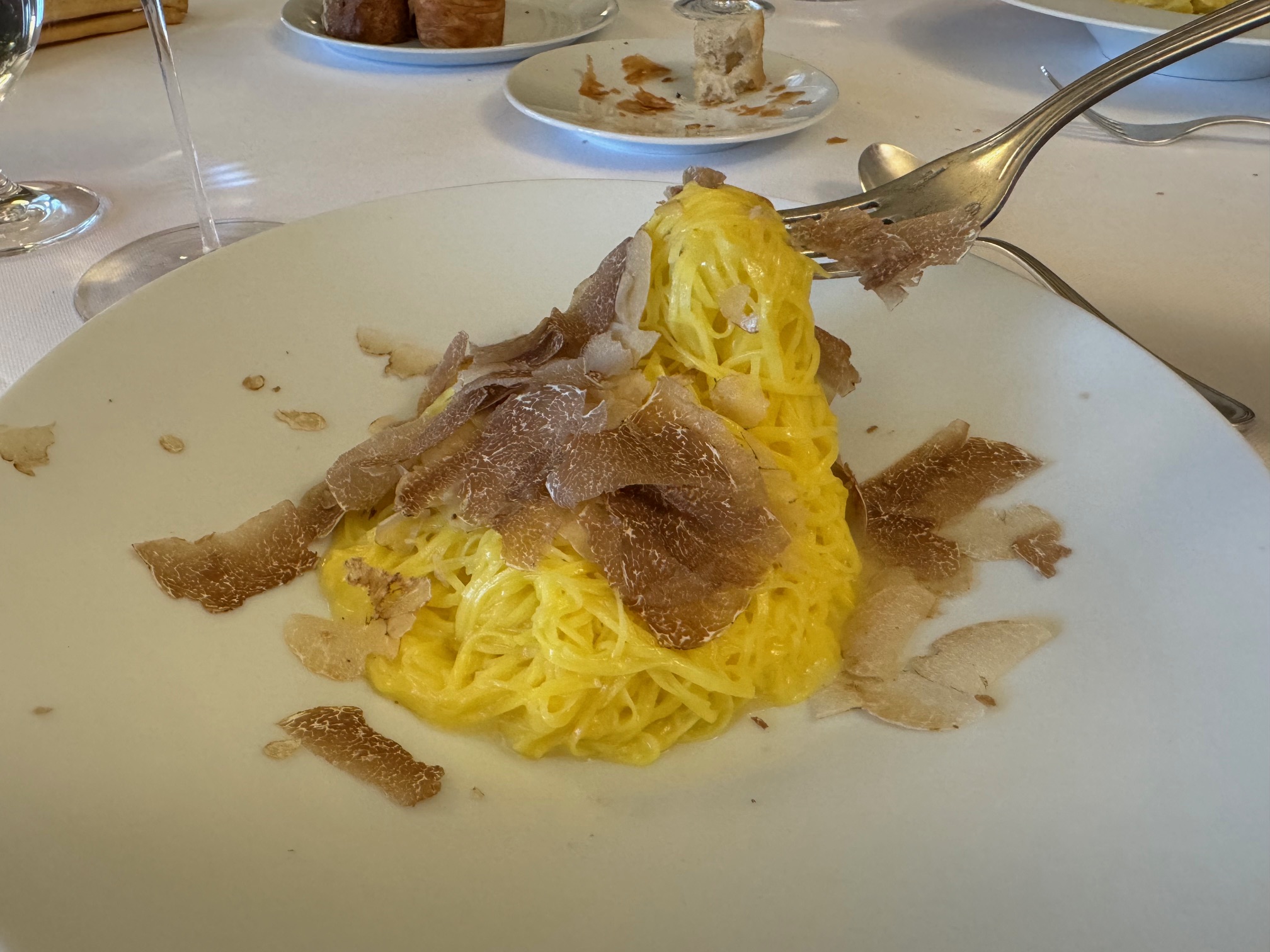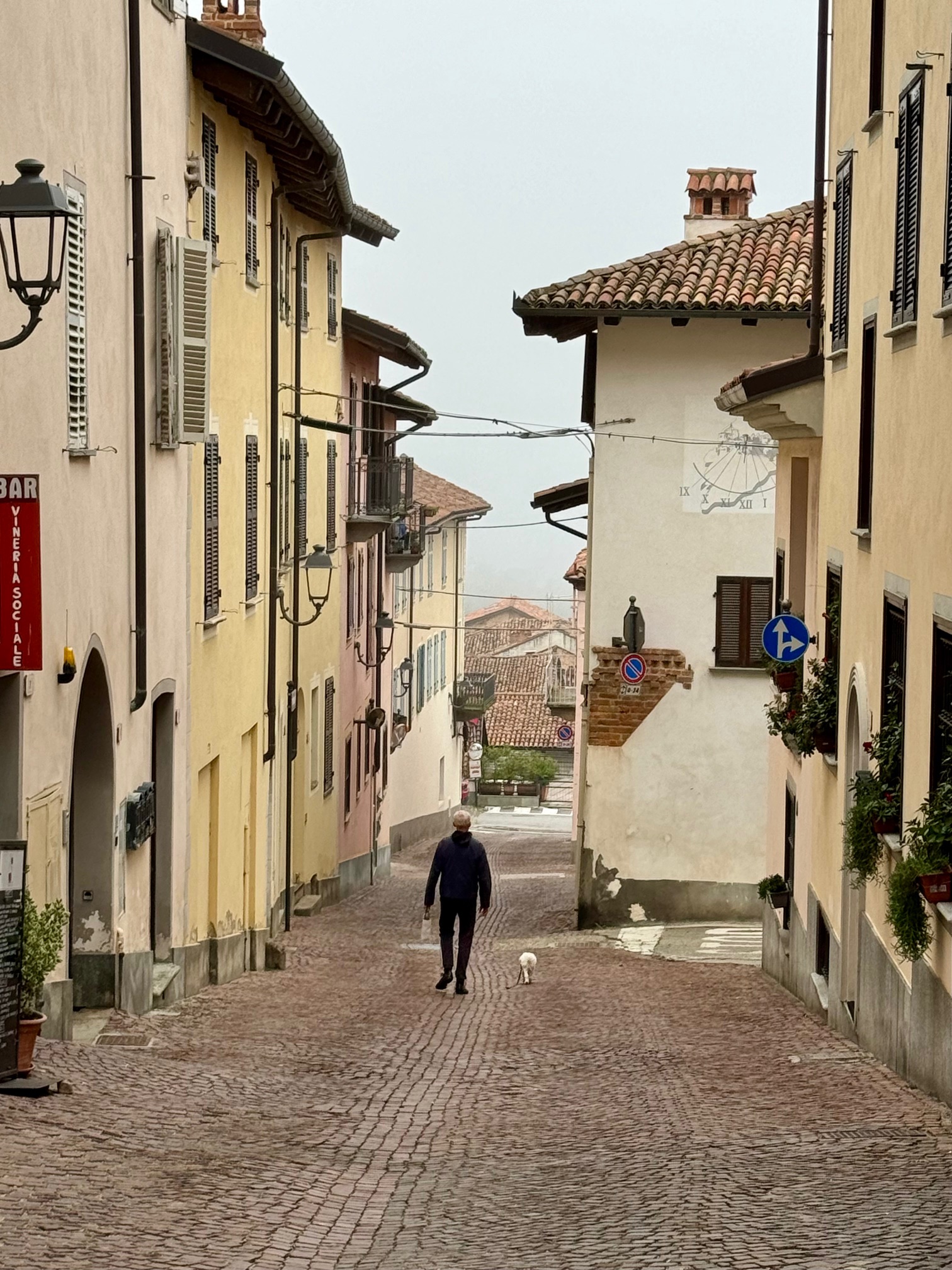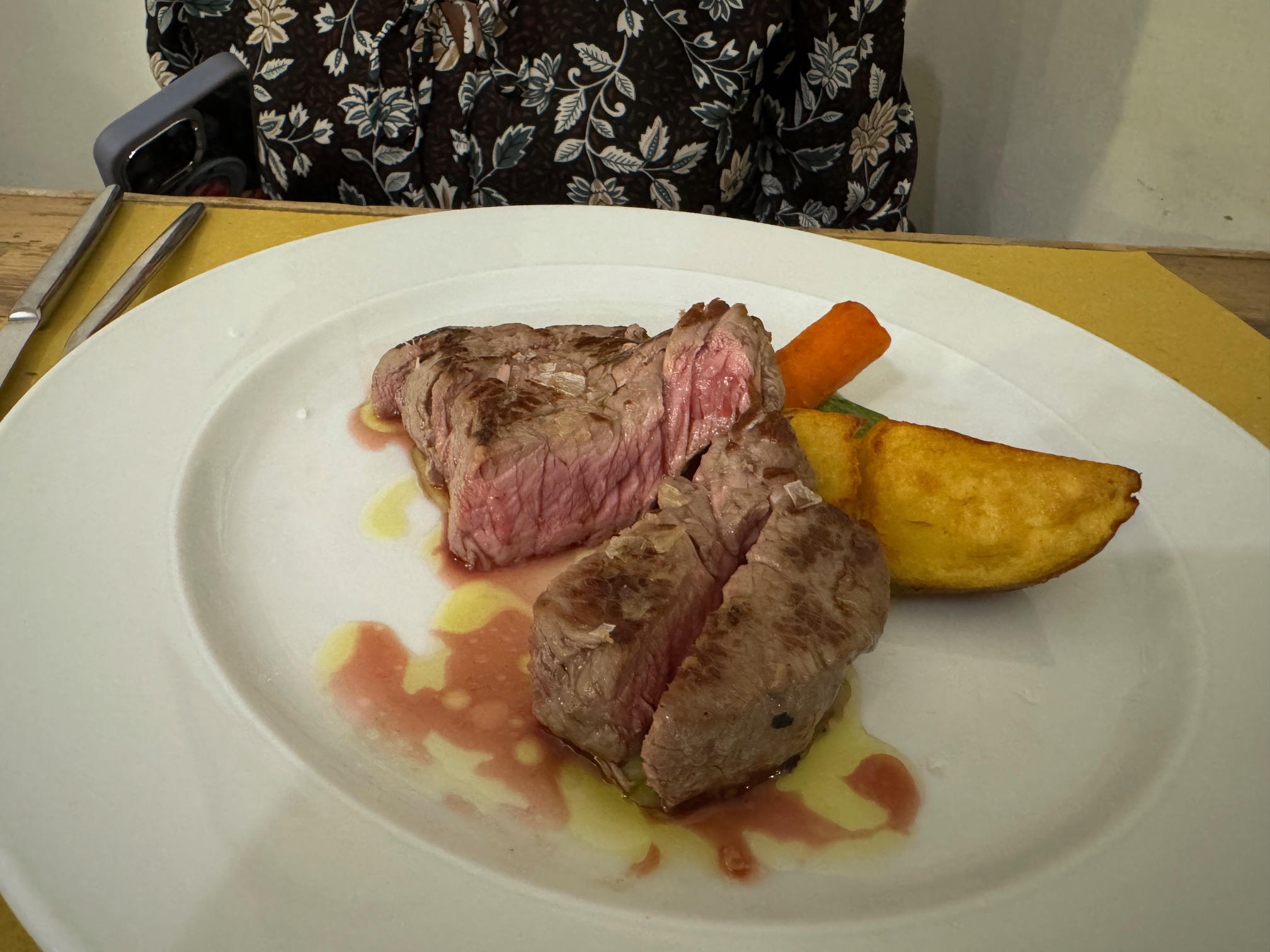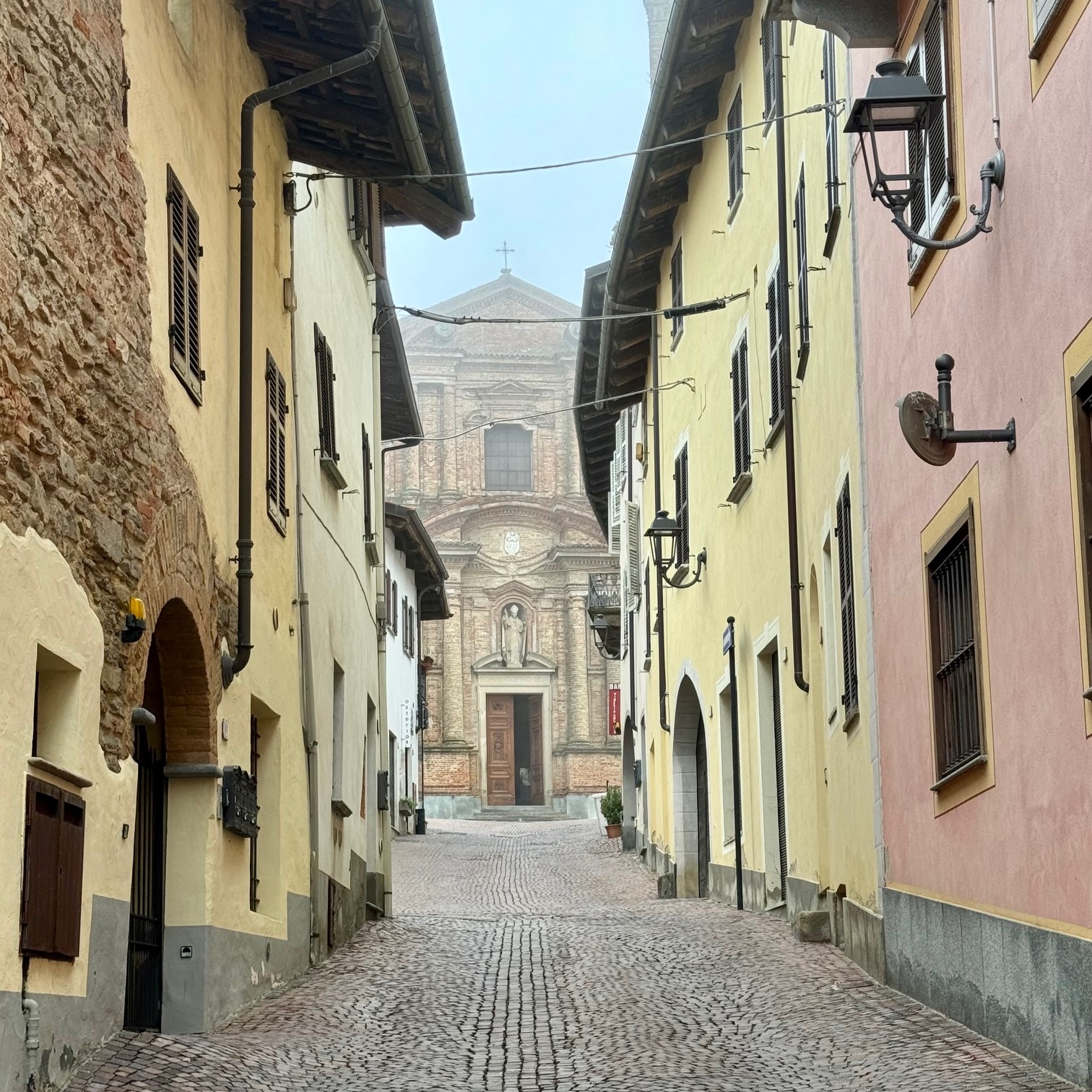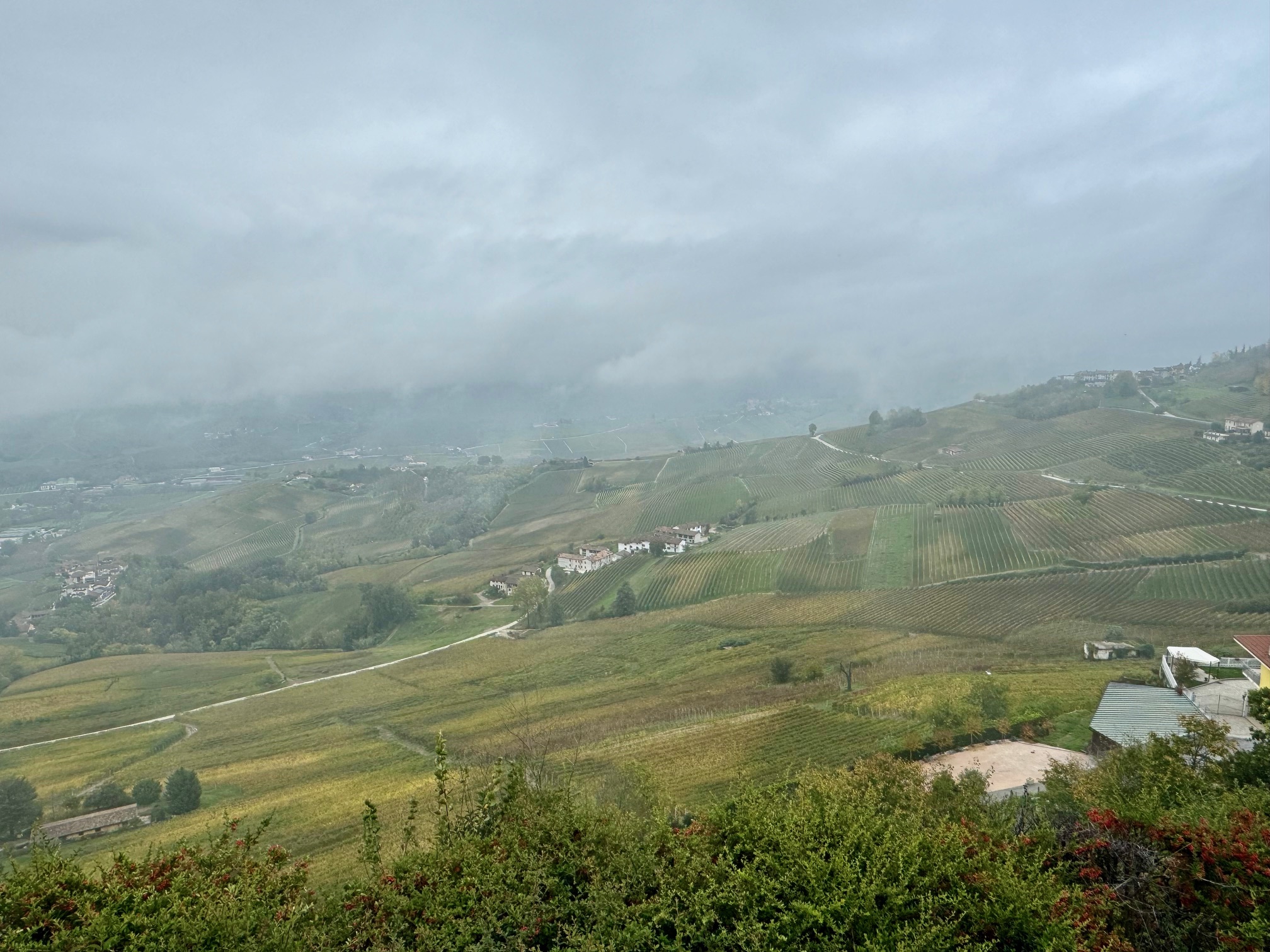
Turin, a food and monument wonderland in North Italy. A city rich in culture and history… and chocolate. I probably bought more chocolate in Turin than all my travels combined. It’s a city that would be a top destination just about anywhere else in the world, but in Italy it gets lost in the shuffle. Not to mention it’s so close to the mother of all food and wine wonderlands, Langhe. You will leave Turin talking about Turin like you talk about your newborn. Especially if you spend one of the days eating and drinking with Abram of I Eat Food Tours.
As some of you know, I’ve been taking food tours before most people even heard of them. I took my first one roughly 15 years ago in Lisbon, way before they went mainstream. 10 years later I started offering my own, before Covid hit and and life happened. While it remains the coolest thing I’ve ever done, I dont regret moving on.
Its a business I know a thing or two about. The good and the bad. Simply put, we both agreed that this was the second best tour we’ve ever done. It’s pretty impossible for a European tour to beat our almost 5 hour eating extravaganza in the markets of Mexico City. But this easily topped anything we’ve done in Europe. It got all the needed ingredients. Small group, entertaining guide, great food. A simple rule of thirds when it comes to Food Tours.
Abram is a Michelin star trained chef. He runs the tours along with his wife Cecilia. You just don’t come across something like this too often in large cities. If they do exist, Trip Advisor has made it very hard to find them since the Viator merge. Last year in Seville my best option was a large group with a company running tours in 20 cities across the globe. A staggering difference to a tour offered by the a local who owns the business.
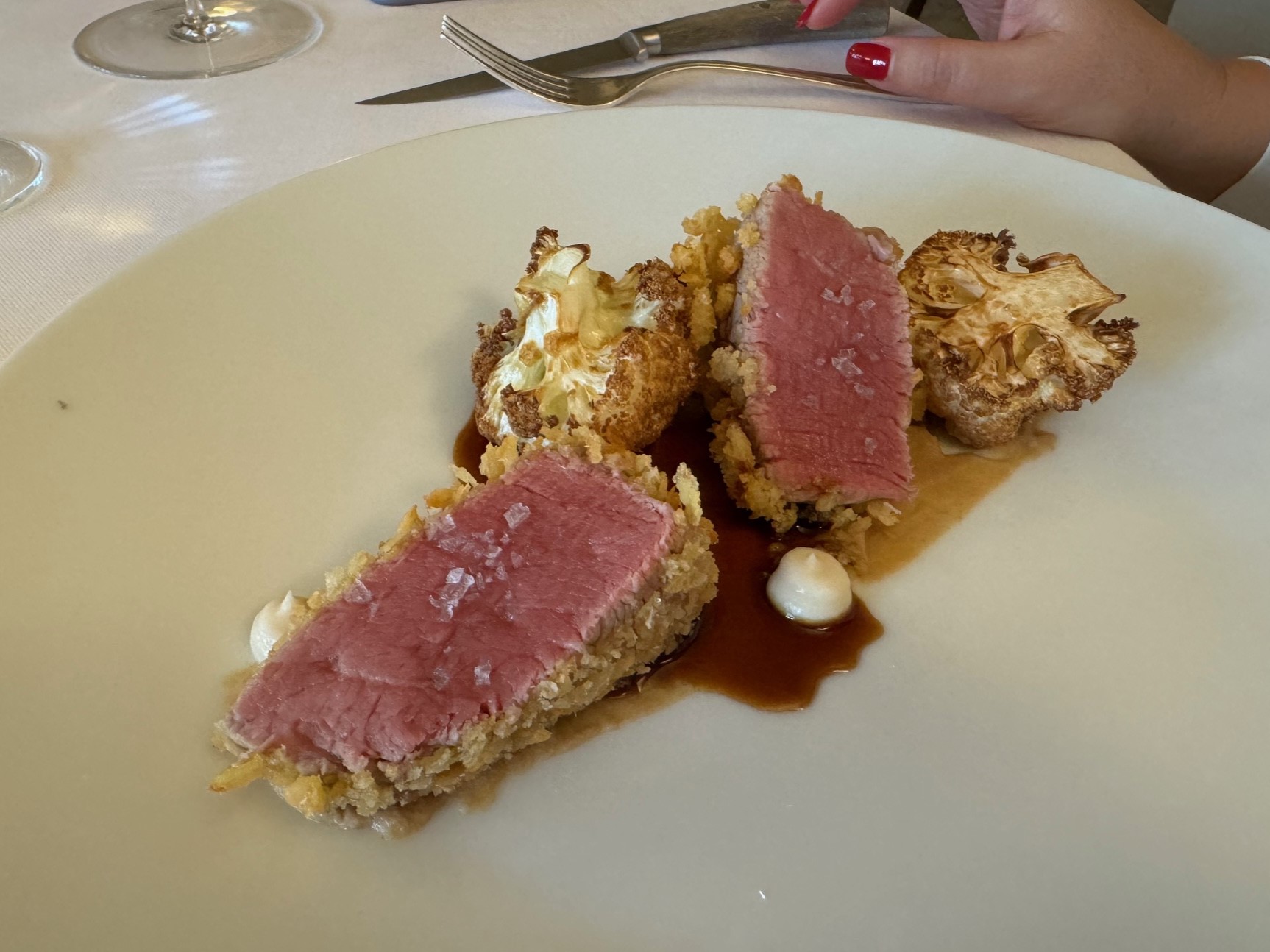
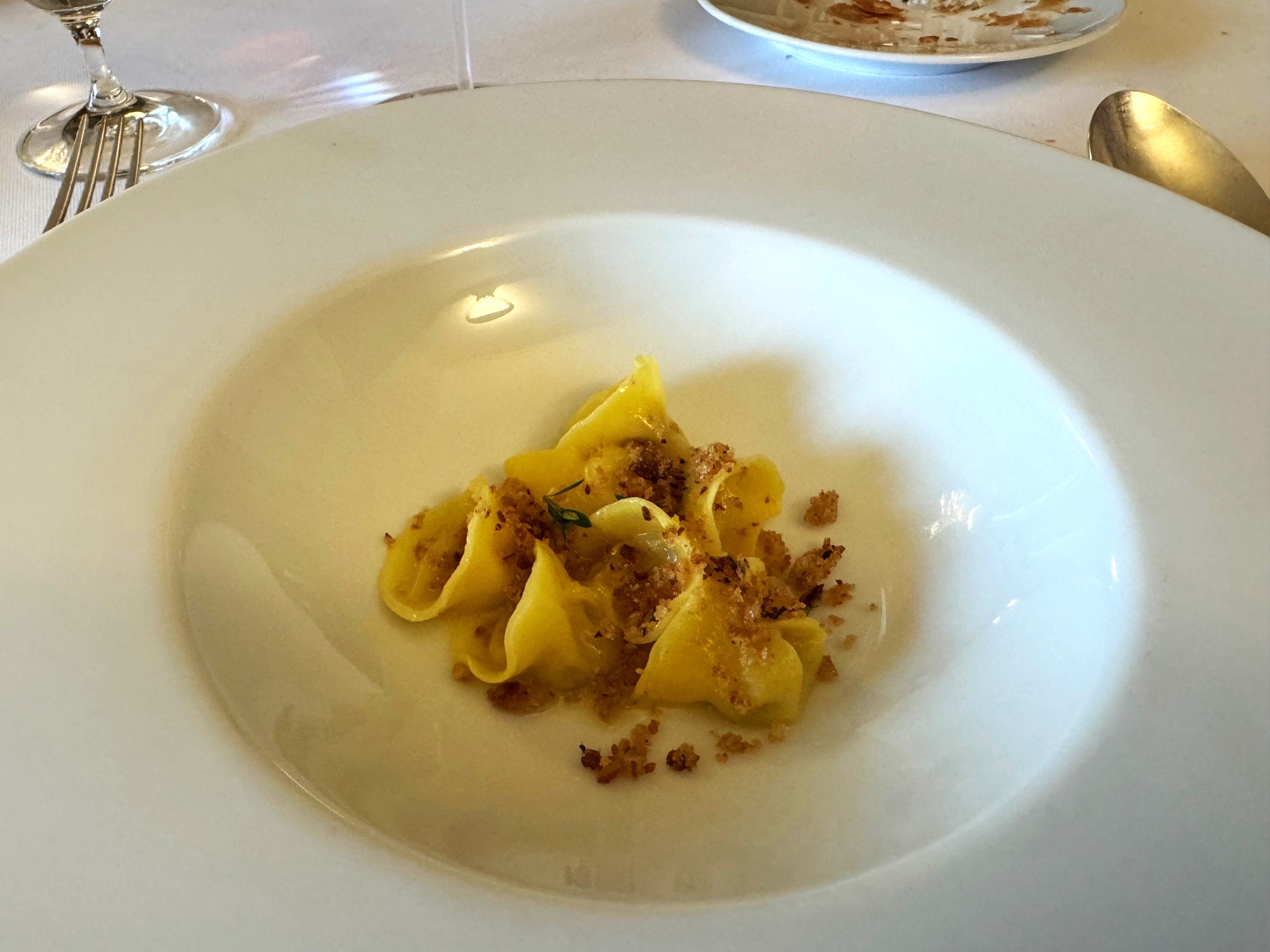
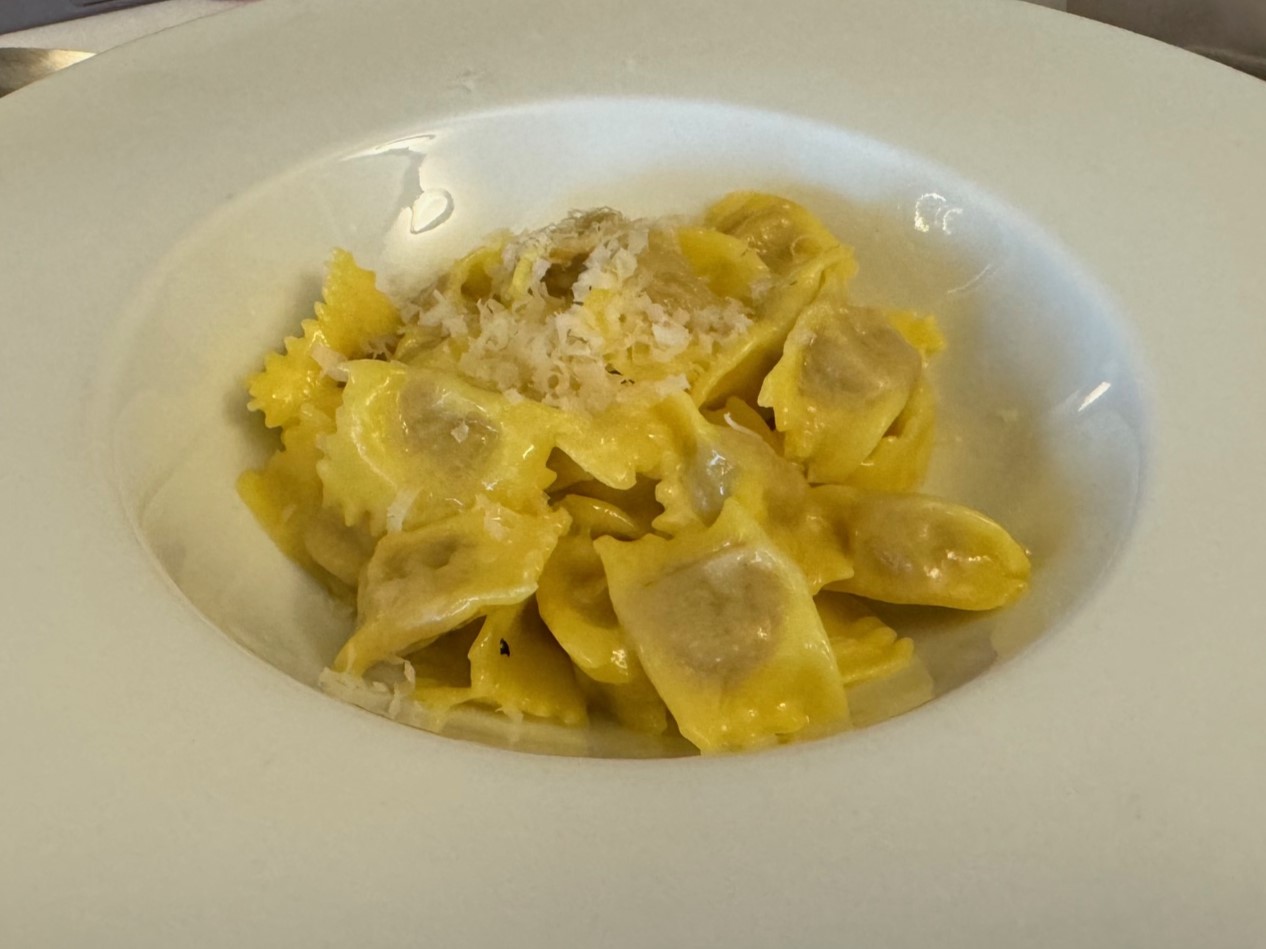
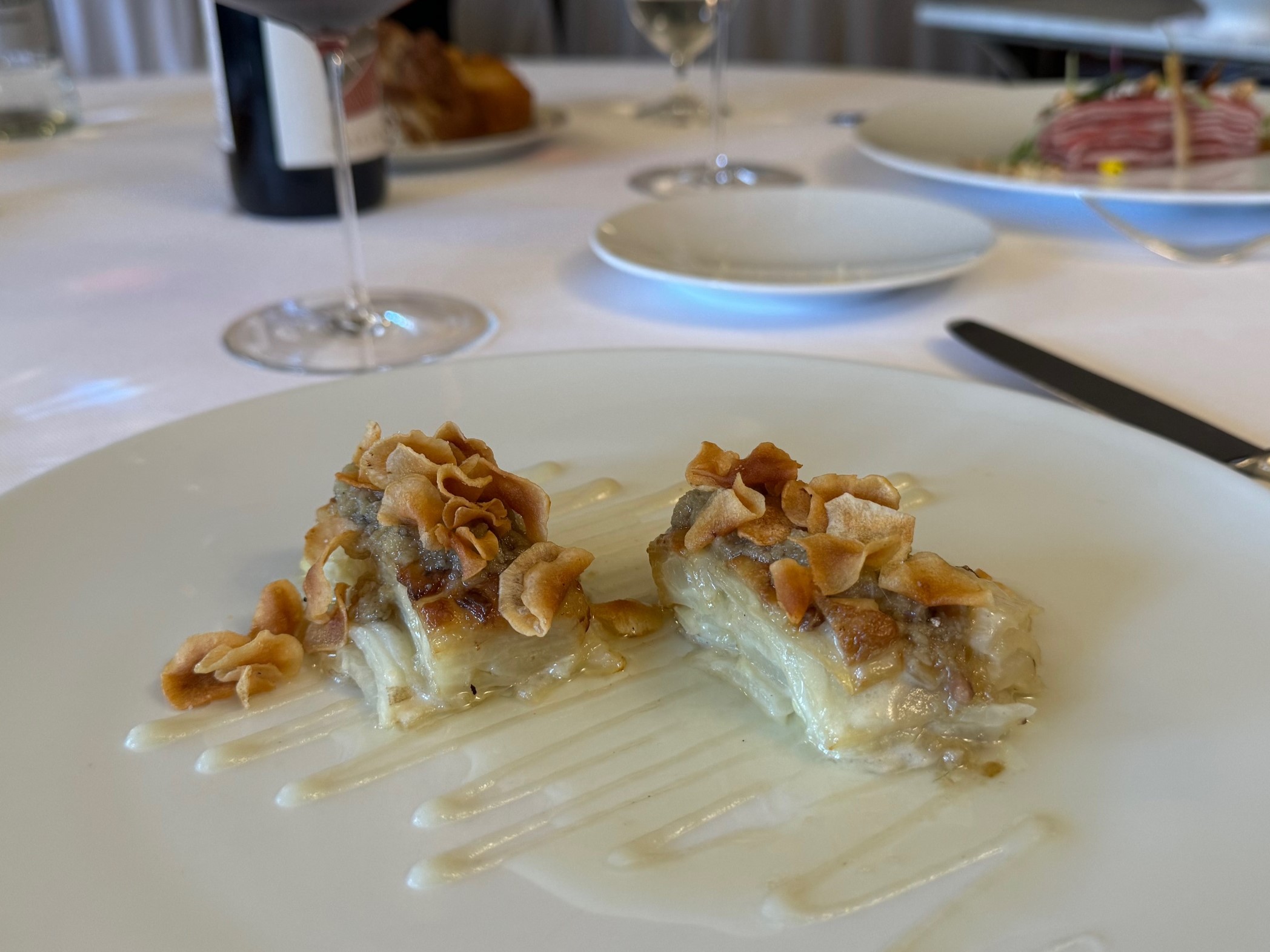
I wont get into the food details except for the few pictures (there’s much more to this). The less you know the better. But this was some of the best food we had in Turin. There was one particular local specialty that we ate often all over Piedmont and none came to the level we had on the tour.
But the icing on the cake was Abram’s personality. Just the kind you want to be around for half a day and then wonder where the time flew. He’s a wealth of information about Turin, and his personal stories (he worked at the legendary Del Cambio) can carry the tour on their own. But at the end of the day, he’s just a fun guy that didnt stop smiling for four hours. Go!
Imagine this scenario. For a decade you dream about coming back to a place you ranked in the top 10 dining experiences in the world. You are finally back, and have another memorable meal, even while being somewhat under the weather. And when its time to update the post you wrote about this place 10 years ago, you discover that much of the old post was about Puerto Rican oven mitts, and bad dad jokes. Not the kind you normally expect on Google’s first page.
So instead of updating the old mess, I’ll just write a new one. But if you are looking for oven mitt tips, and some serious Piedmontese food porn, you may want to check out the original post, even though its a decade old. In Slow food country things change at a snail’s pace. And you get the sense that Alessandro, Massimo and Tiziano, the three brothers running the magic show at La Coccinella are not rushing to change much.
I’ve said it before, and I’ll say it again. The Langhe area has some of the highest concentration of great dining in Europe. Other than the coast area between Getaria and San Sebastian in Basque country, I cant think of another embarrassment of riches as such. Whether you are staying in La Mora, Alba, Monforte d’Alba, or even up in Guarene and Priocca, you are just minutes away from amazing dining. Of course offering Piemonte cuisine which is arguably Italy’s best, and some of the most versatile and robust wine in the world helps.
The menus in all these restaurants dont differ a whole lot, which is why places that go outside the box like Trattoria La Coccinella stand out. Not that I mind being in this box. I love the box, and can eat Agnolotti del Plin, Battuta di Fassona, and Vitello Tonnato every day. We pretty much did that for 10 days last month, and got the doctor warnings to prove that. But it’s nice sometimes to bump into some seafood, or maybe an onion stuffed with chicken liver, a local specialty that isn’t nearly as mainstream as the rest.
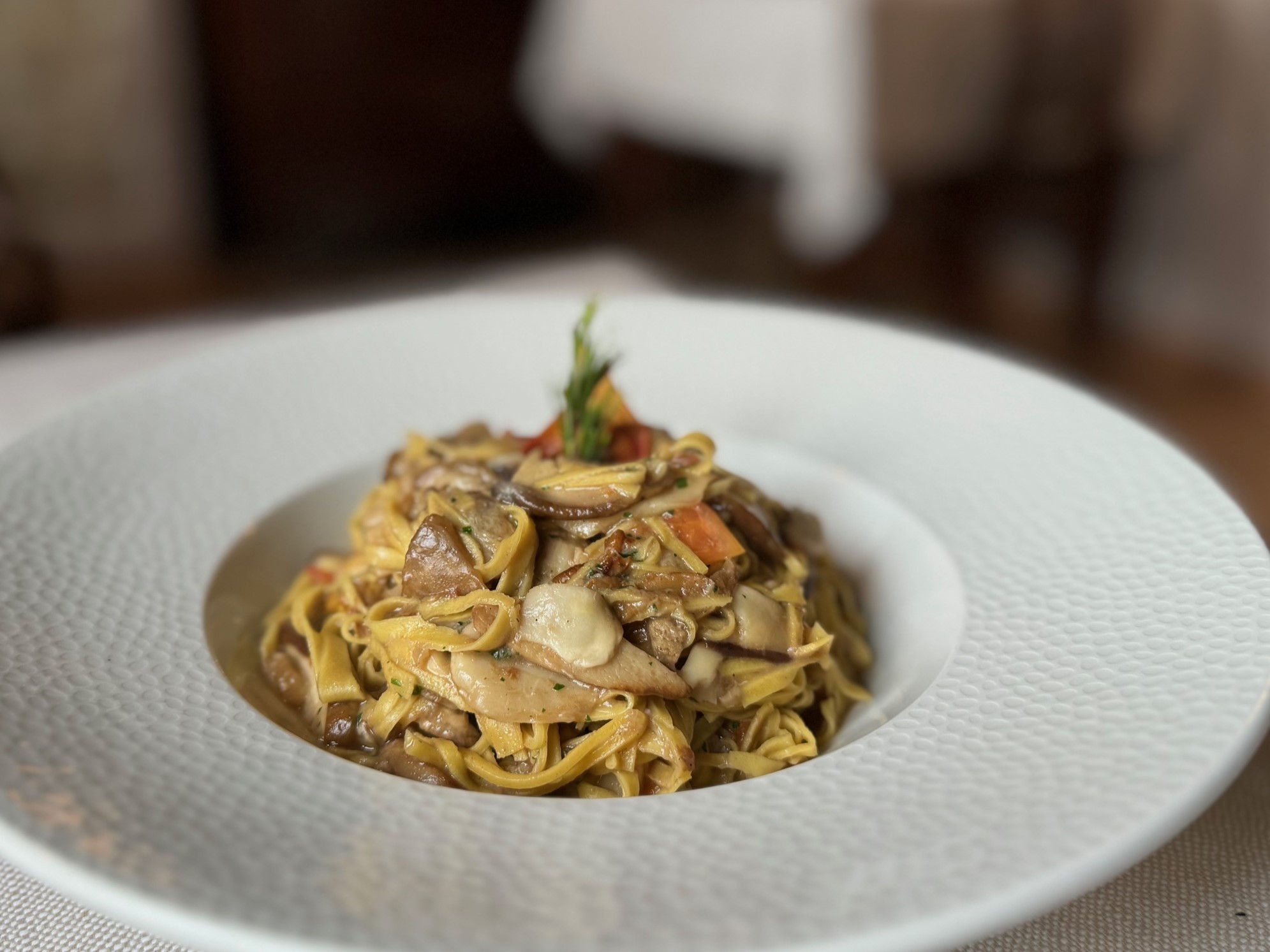
Whether you actually like onions is irrelevant in this case. The onion is stuffed with delicious chicken liver, baked in salt, and the result is sublime. But just like the fondest memory was an onion last time, this time it will be the Tagliatelle with mushrooms. It was unlike any mushroom pasta I ever had. More like a superb, meaty mushroom ragu. Even chief mushroom hater Mrs Z admired this one.
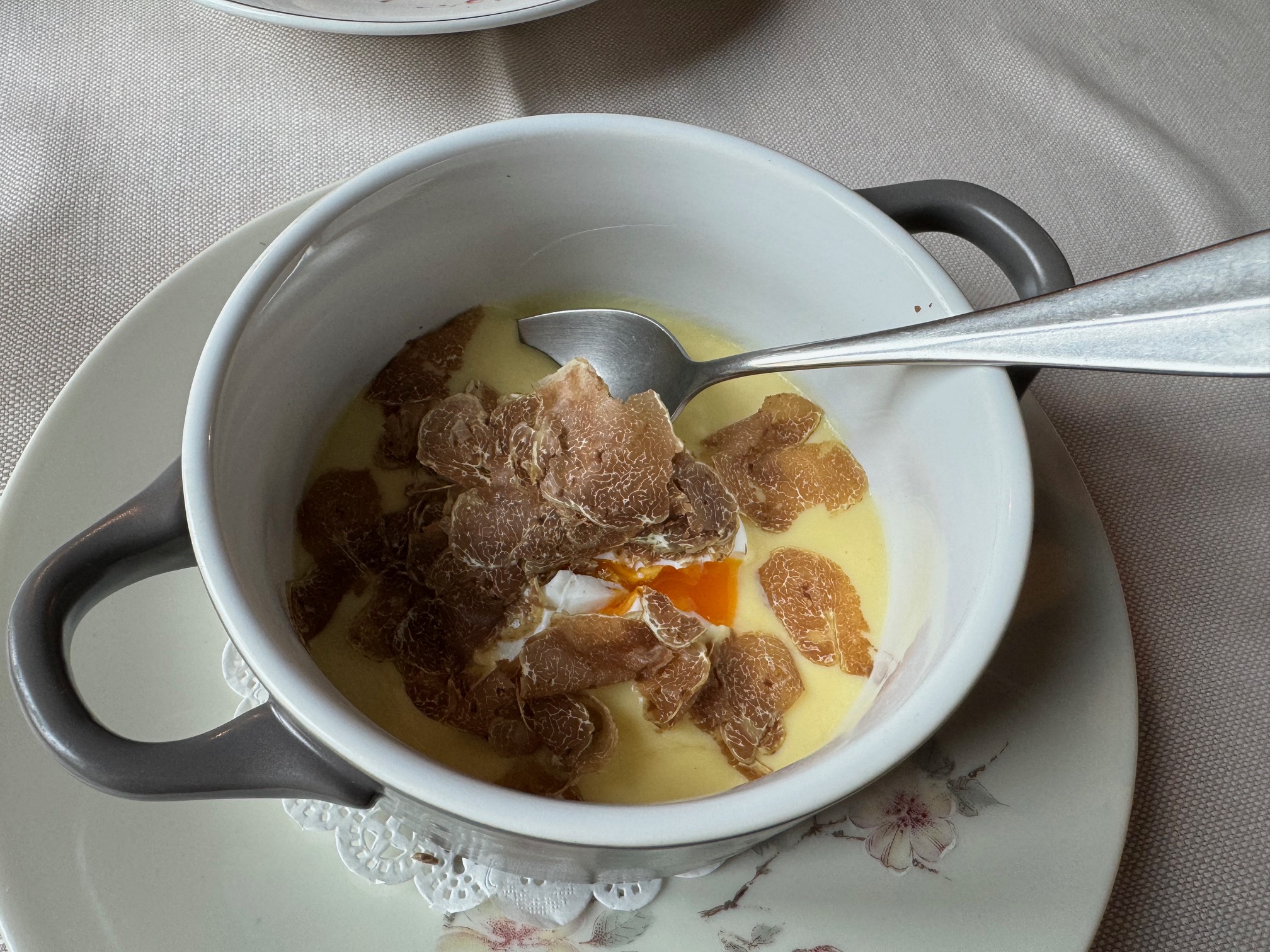
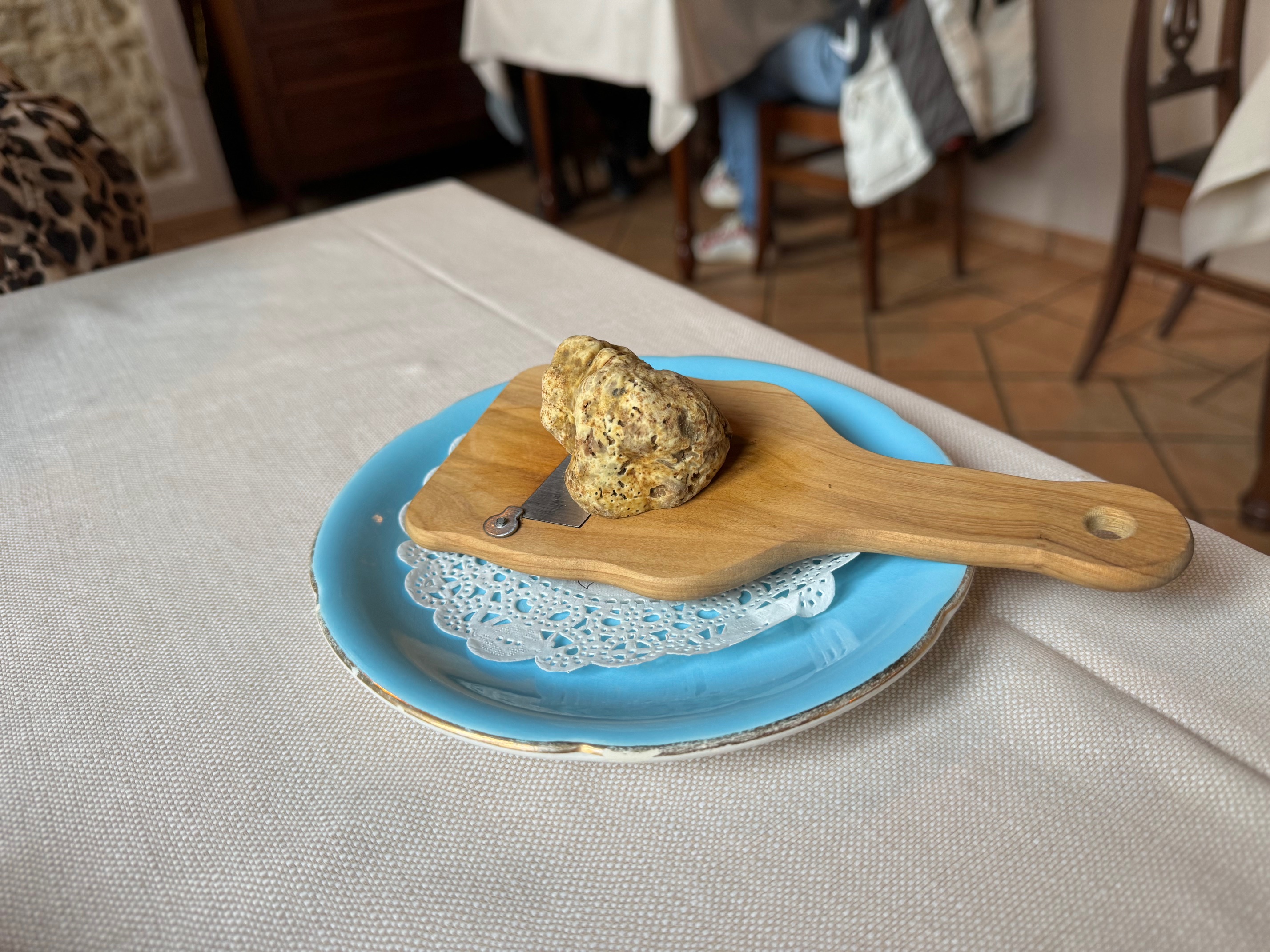
Just a couple of truffle dishes this time. Gnocchi with butter and a poached egg. Terrific even on their own. We got a little unlucky with the timing of the truffle season this time, as white truffle peak was a few weeks away due to excessive rain. Even our lunch with a truffle hunter was entirely black truffles. But we got very lucky with the mushrooms.
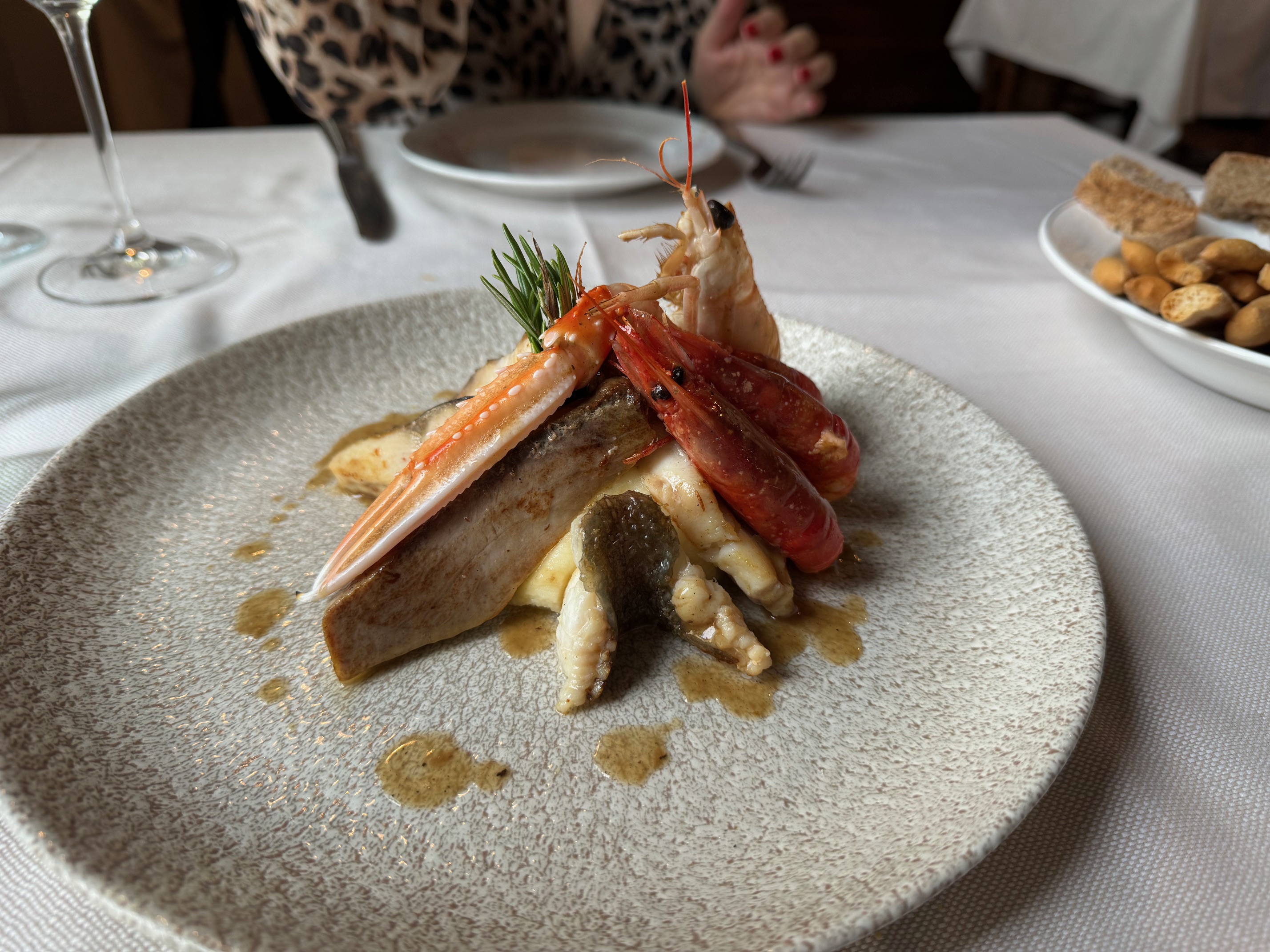
We ended with a mixed seafood grill that included succulent Sicilian red shrimp among other goodies. One of many dishes that showcases the chef’s range. And one of the only restaurants in the area offering a seafood menu. In addition you have a regular/classic menu, and a truffle menu when in season. Mixing the dishes from the various menus is allowed of course.
Driving to and from Serravalle Langhe is an event in itself. Especially if you arrive from the north or west, you’ll encounter some of the most stunning scenery in the country. Hence I suggest lunch, combined with a visit to Monforte d’Alba. Go!
As usual I will provide 7 random tips for a destination we enjoyed. Even in pouring rain. I mean, non stop rain throughout our stay from the moment we got there to the moment we left. The forecast literally showed sunshine at the time of our flight back, followed by 10 days of nothing but sun. Like a sick joke. It wasnt so much the rain that bothered us, but the lack of blue skies. Pretty sure they are related! But rain or shine, this was a memorable trip to say the least. The lake offers much more than what day trippers come to see.
Check the calendar
Dont arrive in the middle of November and expect everything to be open. This is a very seasonal destination. The Borromean islands are already closed for the season as of this writing. And even when everything seems open like in mid October, ferries to some destinations like Verbania and Santa Caterina may be limited at best.
Yes, do all threeislands
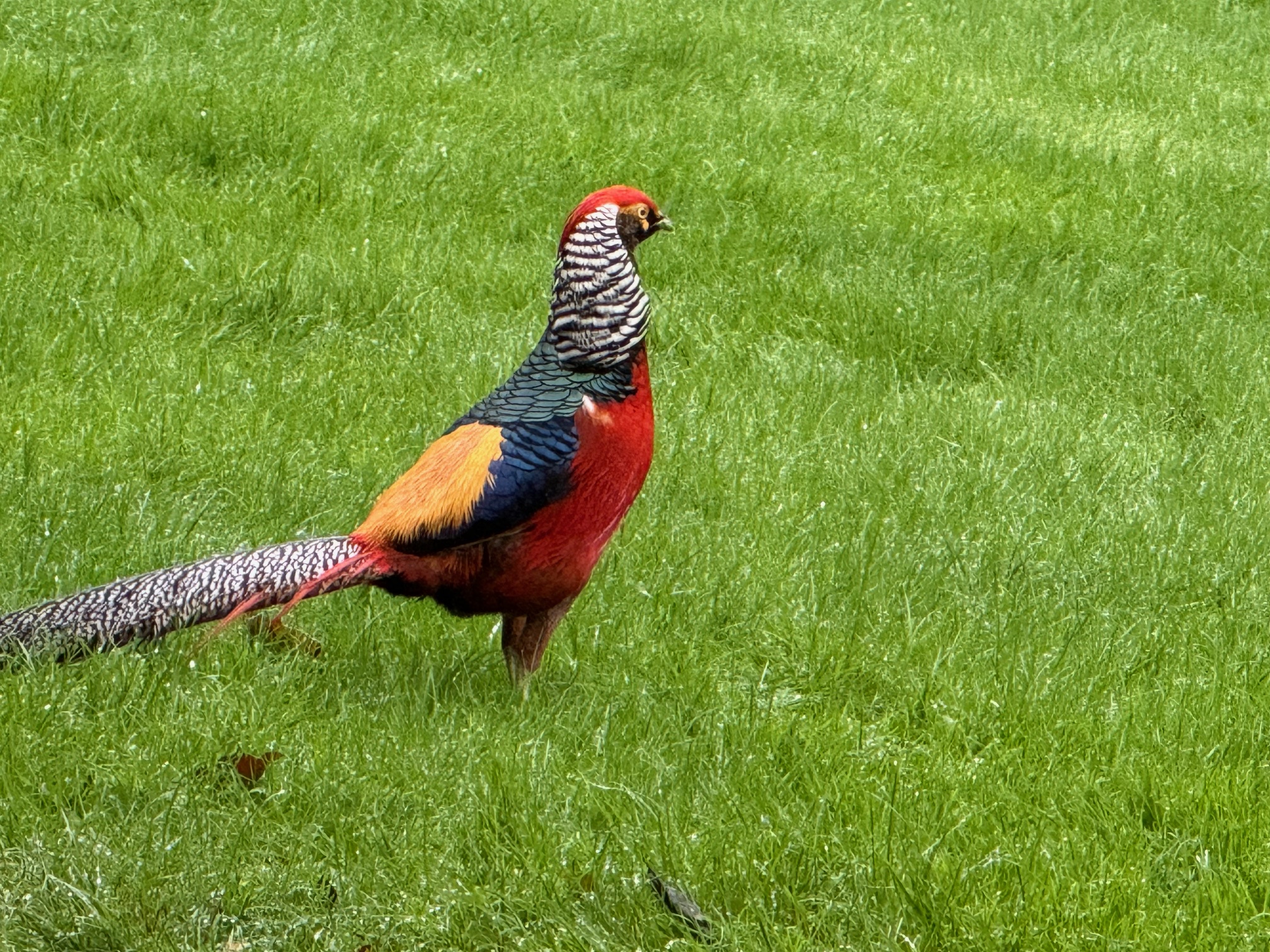
Like many, I contemplated whether all three islands are worth visiting. Isola Bella and the jaw-dropping palace is reason enough to hop on a plane, while the other two are not in the same league. But they still offer plenty of charm, and compliment each other well. Do Isola Bella in the morning, have lunch at the “food island” Isola Superiore, before doing the passeggiata along with the exotic birds on stunning Isola Madre.
Learn to read the ferry schedule
Learning about the various options, private or public ferries, and juggling all that with the destinations requires some advanced planning. If you simply want to do the three islands, the public ferry will suffice, and a hop on hop off day ticket is the best option. But while waiting for the ferry, spend some time getting familiar with the schedule slip. Like if you take the next ferry from X toward Z, make sure that it continues to Z after stopping at Y. Less of an issue in the peak summer months.
Check out the Palace hotels
One of the biggest surprises, if not the biggest in Stresa for us was the stunning hotels along the Lake Maggiore shore. The expansion of the Simplon railway in late 19th century, and into the 20th, connecting Switzerland and Italy, literally put little Stresa village on the map. The expansion resulted in a direct line from Paris to Milan which meant travelers needed a break somewhere, preferably by a lake. The result was luxurious hotels like Regina Palace and Grand Hotel Des Iles Borromee. They are nice to visit, but dont seem shockingly expensive either.
Visit Arona
Had enough of penis shaped Limoncellos staring at you from every corner in Stresa? Head to Arona, a picturesque resort town with a fraction of the foreign tourists of the north. It boasts an elegant old town with all sorts of cute shops, and jaw-dropping monuments like the giant Sancarlone. Good stop on the way to or from Stresa.
Have your Seafood fix at Il Clandestino
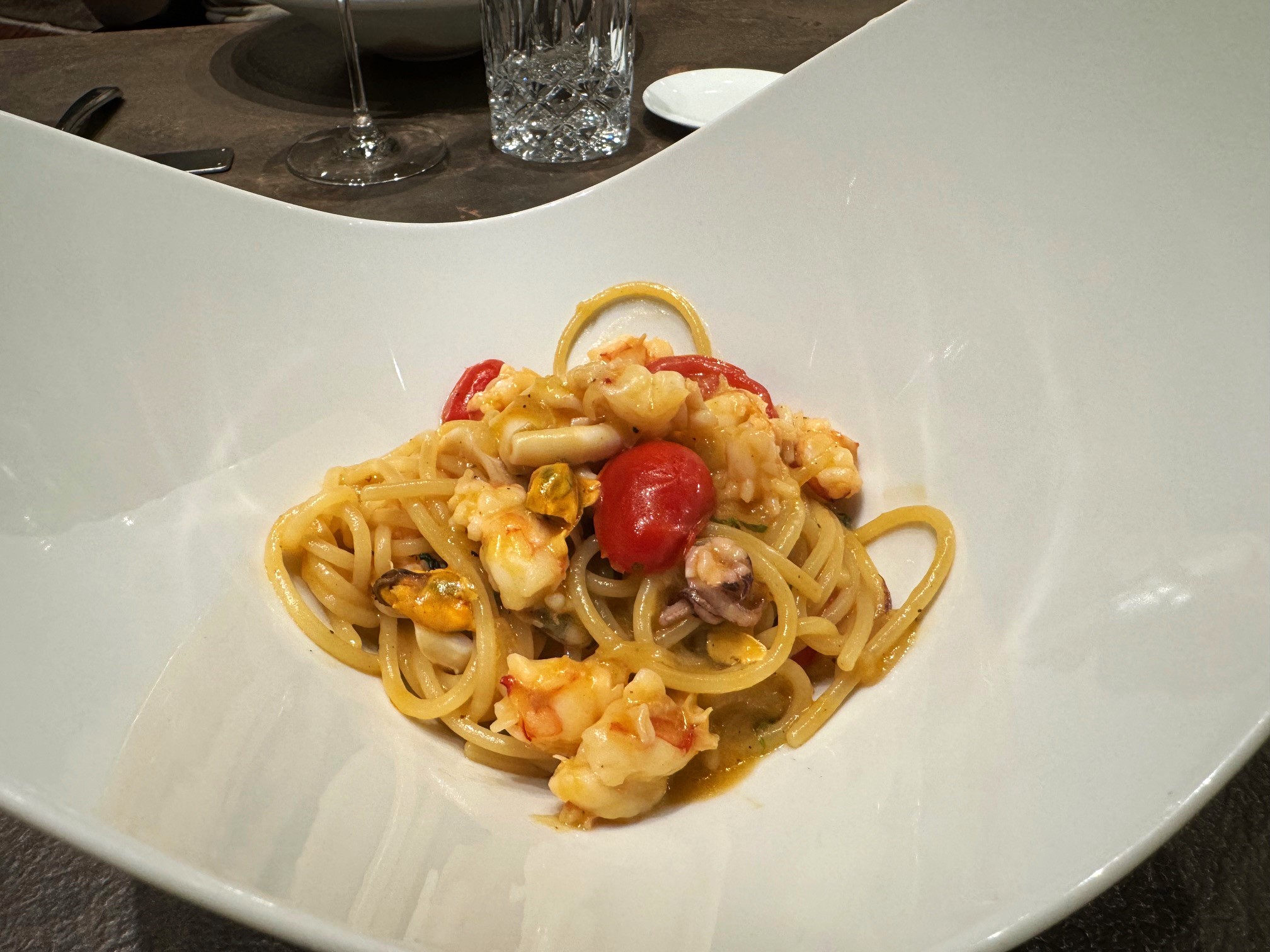
You can spend weeks in Piedmont before realizing your love handles got bigger and that you havent seen any seafood on menus. Il Clandestino and its animated chef/owner is almost literally doctor orders. Its not as famous as Il Vicoletto and others in the area, so much more accessible. The bonus is that you dont even need to open the menu which consists entirely of seafood. The owner comes out and asks you what you feel like eating, and the result is glorious. Just make sure that includes the sick Spaghetti with seafood mix. One of the best I ever had.
Stay and eat at Casa Rampolina
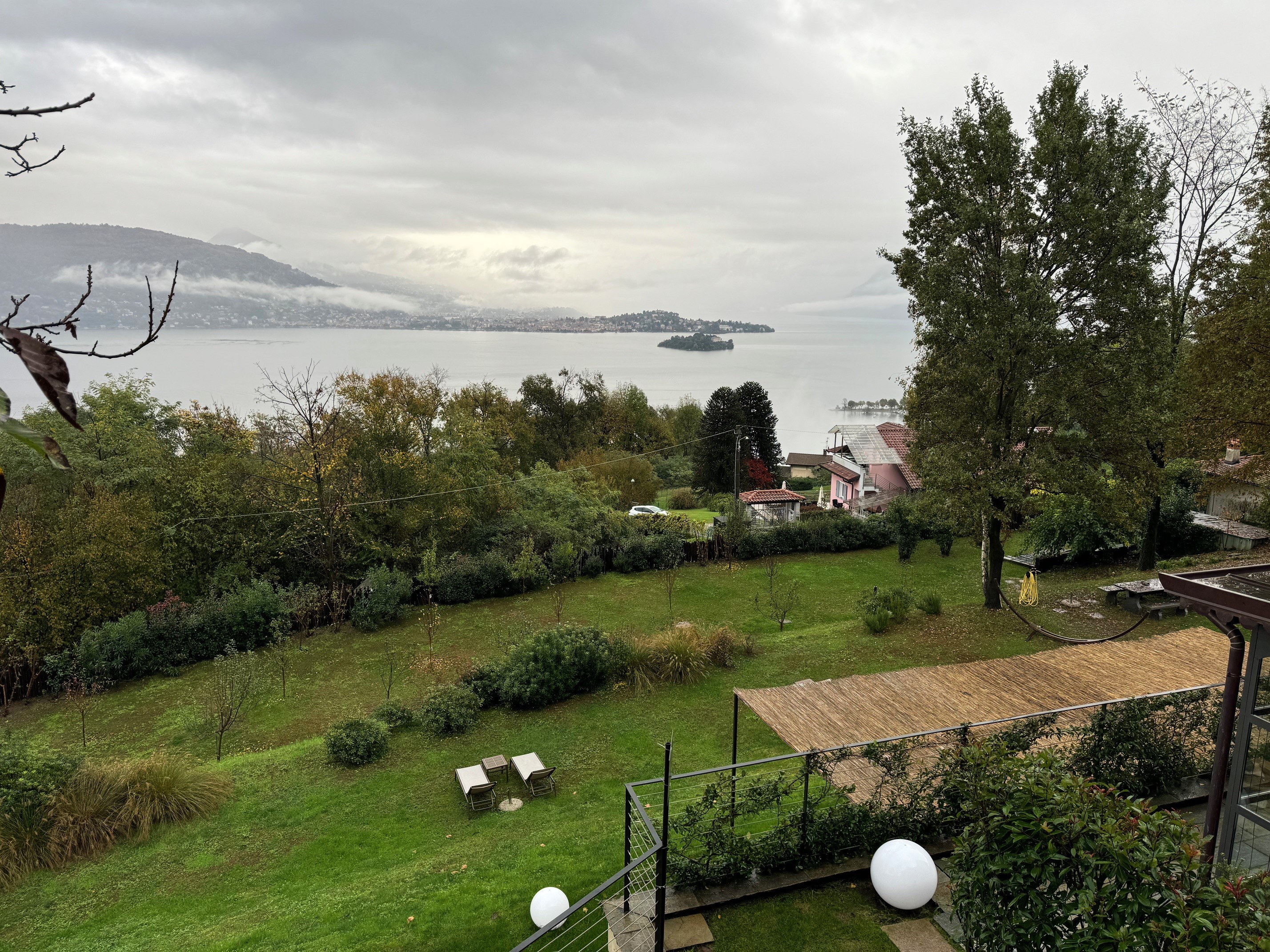
No need to stay at Stresa at all as you have a plethora of unique options all over the area. One of them is a hamlet right about Stresa called Campino where you can find a handful of guesthouses including Casa Rampolina. I’m easy to please, but I travel with someone who’s not. A small place of only 5 rooms, but a big heart. From the shower, to the bed, room size, service, and homemade breakfasts, four enthusiastic thumbs up. And due to the weather we didnt even take advantage of their top draw, the magnificent views of Lake Maggiore.
But that’s not all. La Rampolina, their restaurant just happens to be one of the most popular in the entire region with locals. Its so popular that they need a parking attendant to manage the traffic. On our night, a famous three Michelin star chef just happened to celebrate a family function there. Hard to imagine a bigger endorsement. It deserves a dedicated post, so stay tuned.
And we had some good ones. Instead of keeping the best for last, and boring you with the rest of the stuff, I decided to start with the Crème de la crème, and bore you later. There’s a method behind this madness. Although I do have another top food experience in Turin that’s not a restaurant. I wont spoil it for you, but it rhymes with “Mood Tour”. The second best Mood Tour we ever took.
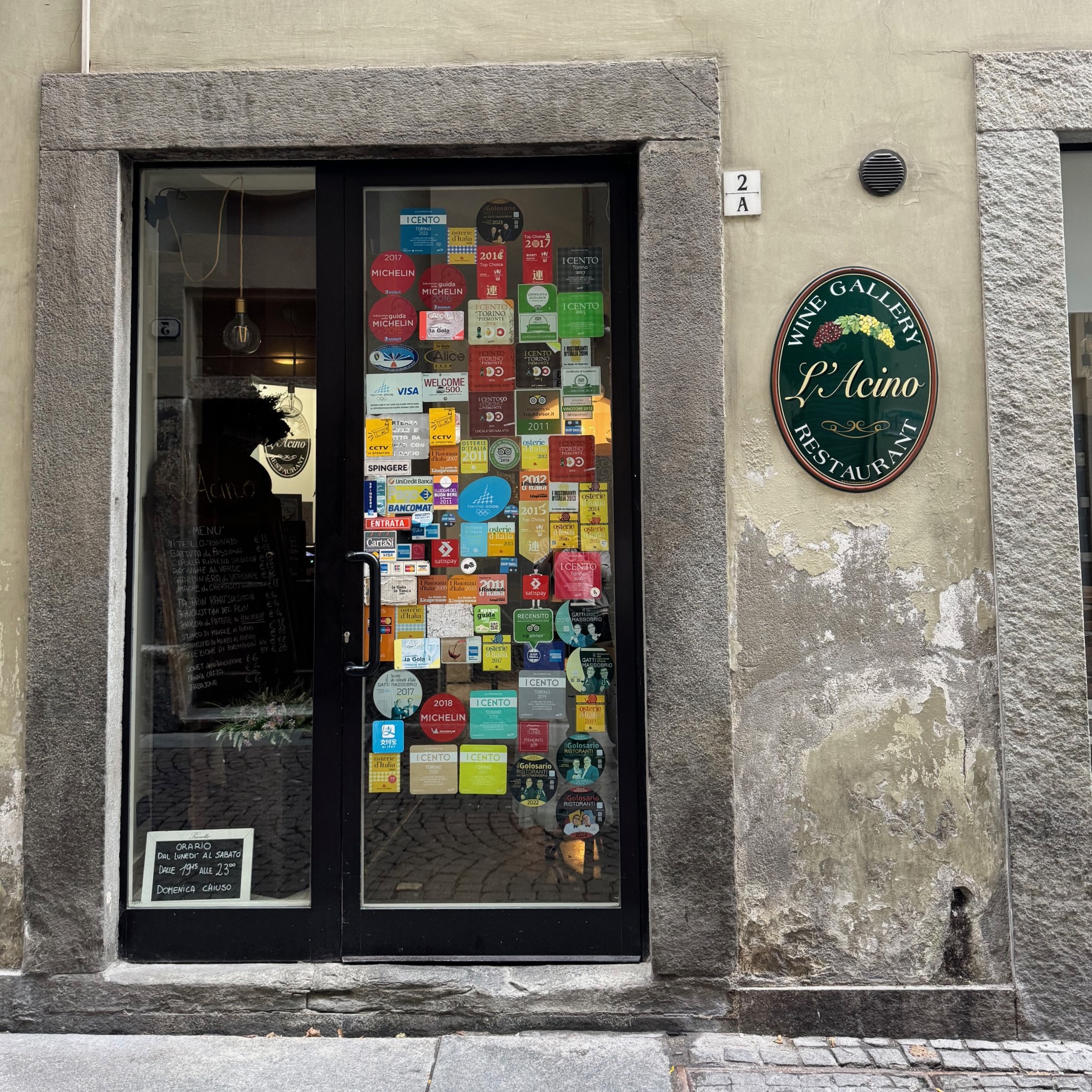
Sometimes you feel it in your gut as soon as you walk in. You just know this will be a good one. I havent felt that in any place in Turin, other than at L’Acino. You are in the presence of greatness. Not to mention surrounded by good looking people, so obviously we felt belong (how many times you’ll use this joke Ziggy?).
The elderly, energetic mom/pop owners greet you like family. He masterfully runs the front, while she runs the kitchen like a well oiled machine, and brings out the magic on a plate. I’m only in my late 40’s (54 to be exact) and I wish I had this kind of energy. One minute he’s welcoming, another minute he’s taking orders, and before you know it, he’s hovering right above us looking for the perfect red for table 5. Its like there were three of him. Last time I said that, I discovered there was actually a twin helping out in a Paris joint.
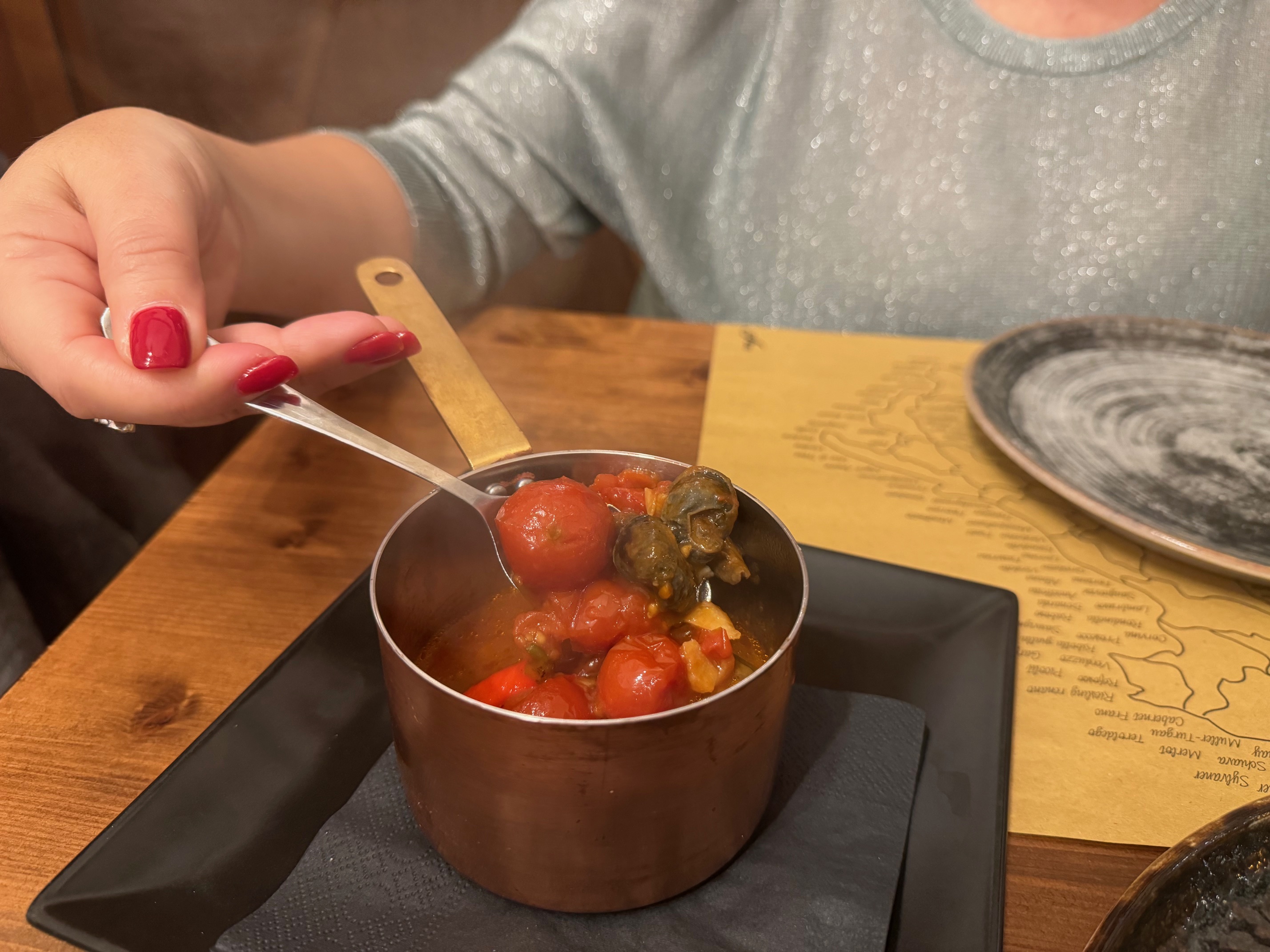
Finally tried the famous Cherasco snails. Snails farmed in a city called Cherasco in the Langhe. Dont even recall seeing them on the menu at the great La Torre in Cherasco 10 years ago. I was surprised by the way they were served. Unlike any escargot I ever had. The snails are meatier, but its more of a sum of all parts kind of dish, with the tomatoes, garlic and plenty of spices.
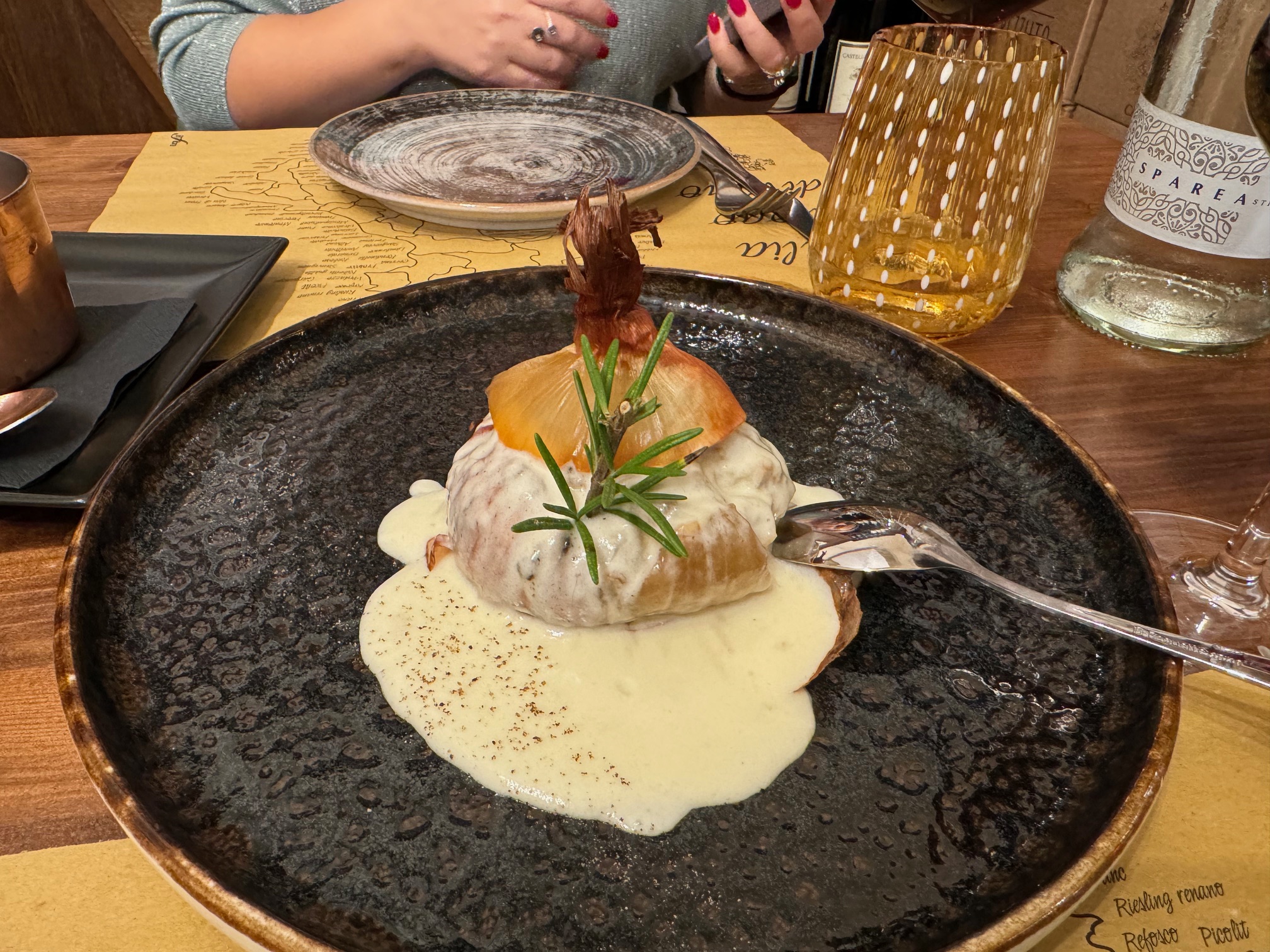
The onion was an even bigger revelation. Stuffed with perfectly spiced sausage and with that cheese sauce, a brilliant combination. When chief onion hater Mrs Z, eats onion, it must be very special. Another such onion saw similar fate in Serravalle Langhe. When you see a stuffed onion in Piedmont, pounce.
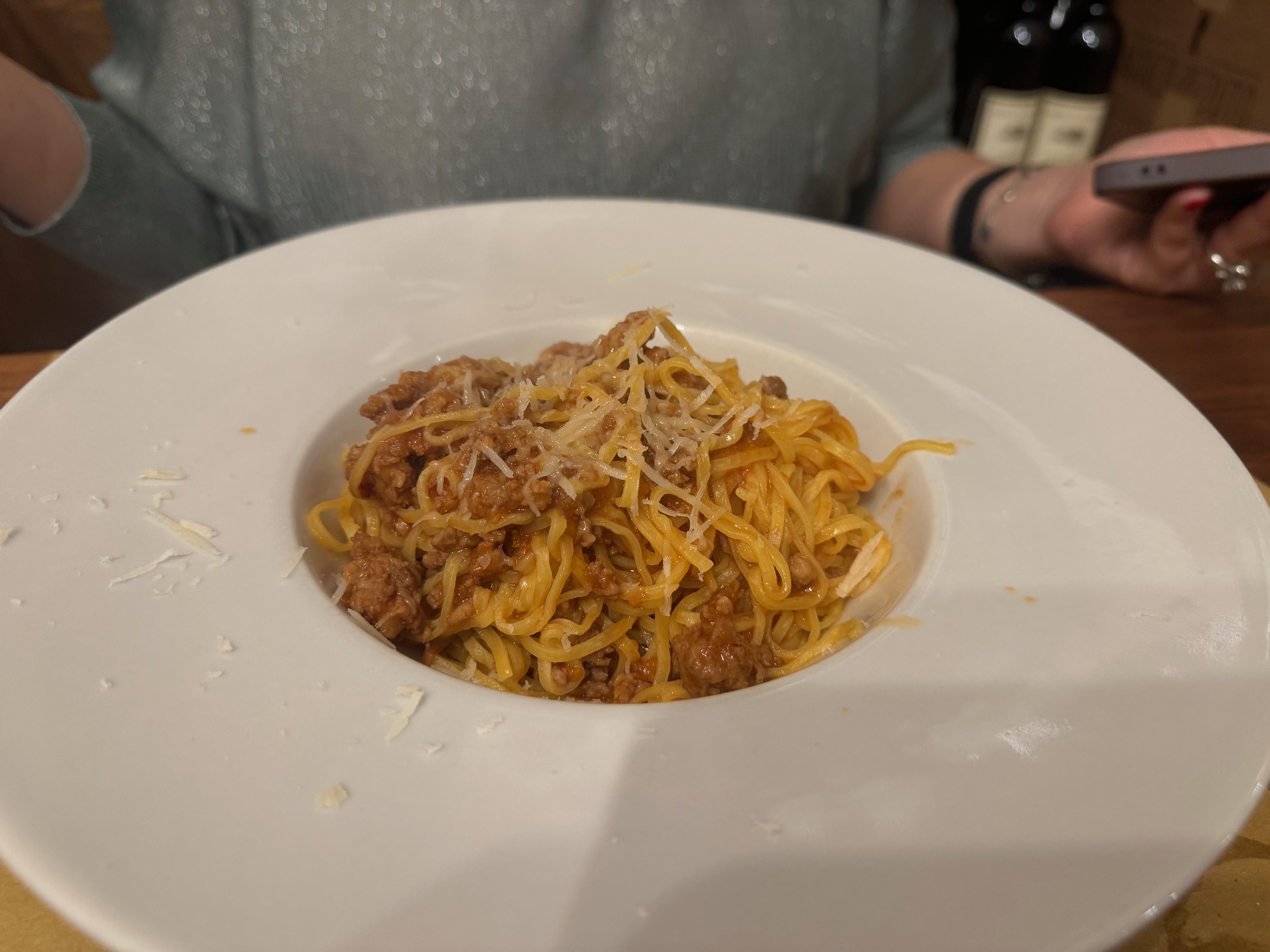
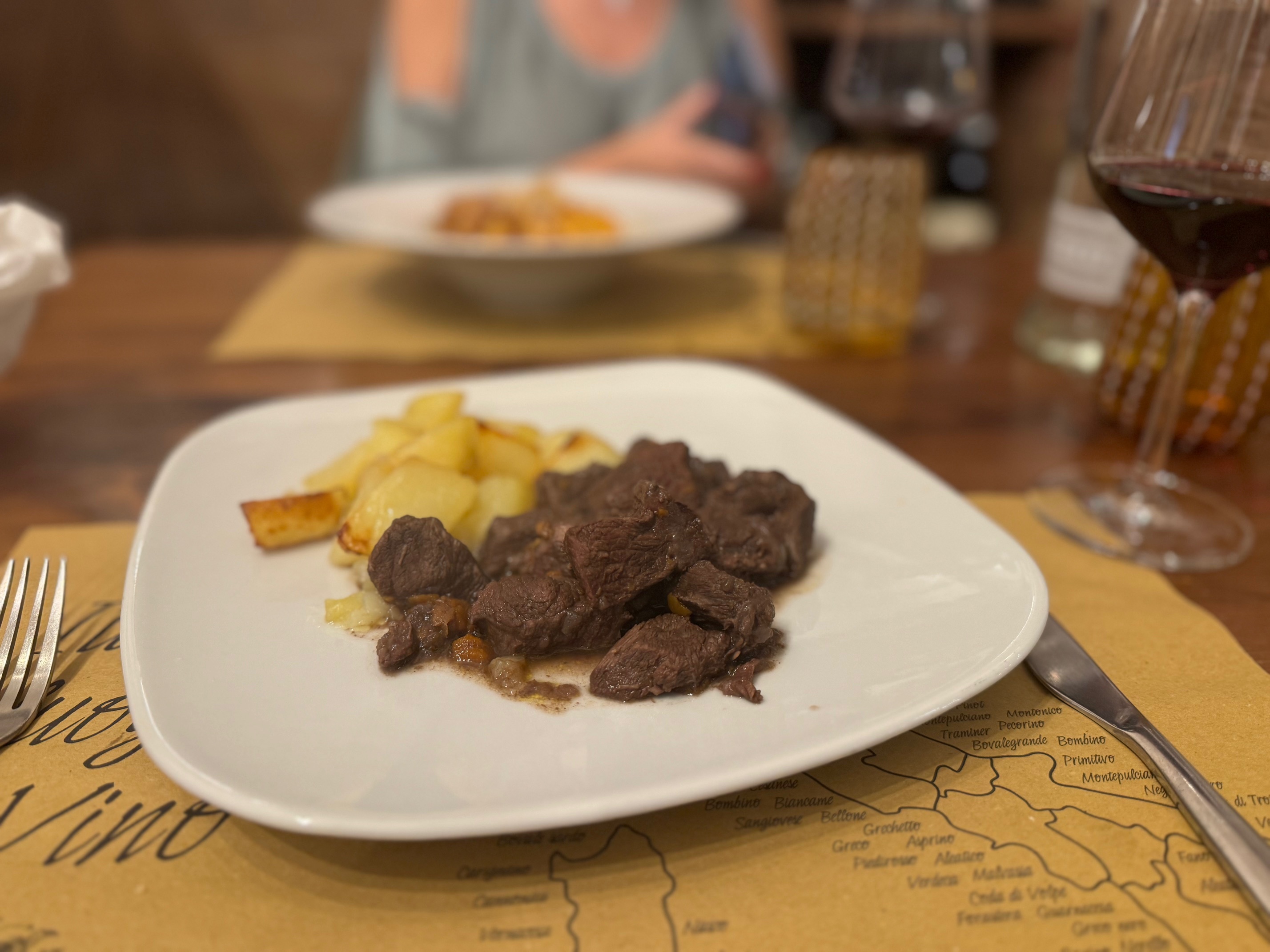
Beef braised with red Roero (Beef Stracotto Al Roero) and expertly cooked potatoes was just solid comfort food. Satisfying, albeit familiar. The Tajarin with ragu was less familiar. While I had plenty of Tajarin with ragu, this one had sweeter oomph to it, in a very satisfying to the palate kind of way. Owner (Didnt catch his name. “Fabio” according to Google AI which I dont trust) said its from the carrots.
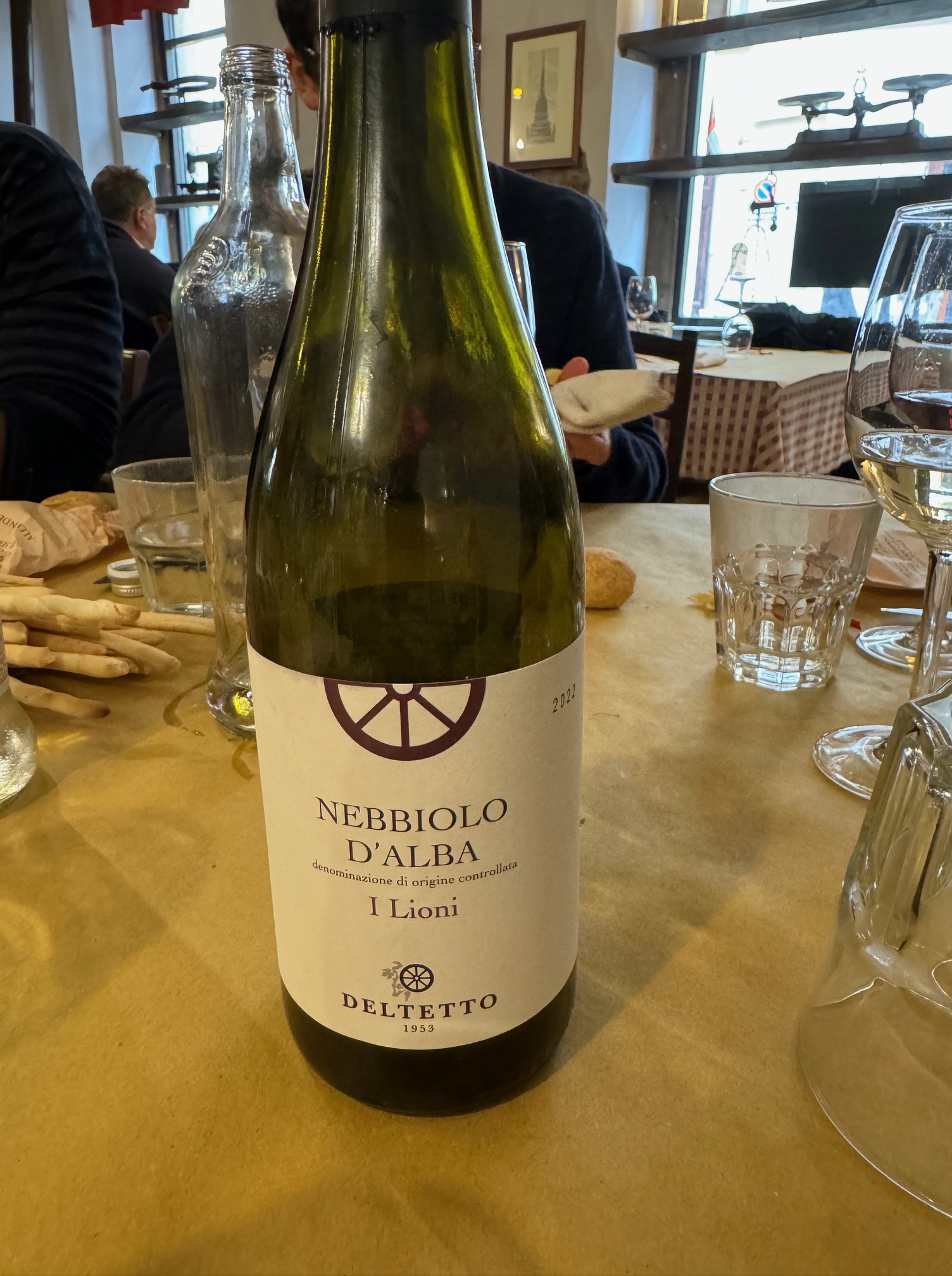
All washed down with excellent Barbera by the glass. Surprisingly we appreciated and enjoyed Barbera more than Nebbiolo on this trip. The only negative to some, not so much to me, was two sittings, and requiring reservations (including via email) weeks in advance. A bit of a victim of its own success and fame. Considering the many accolades, being surrounded by locals was a surprise, a refreshing one. Go!
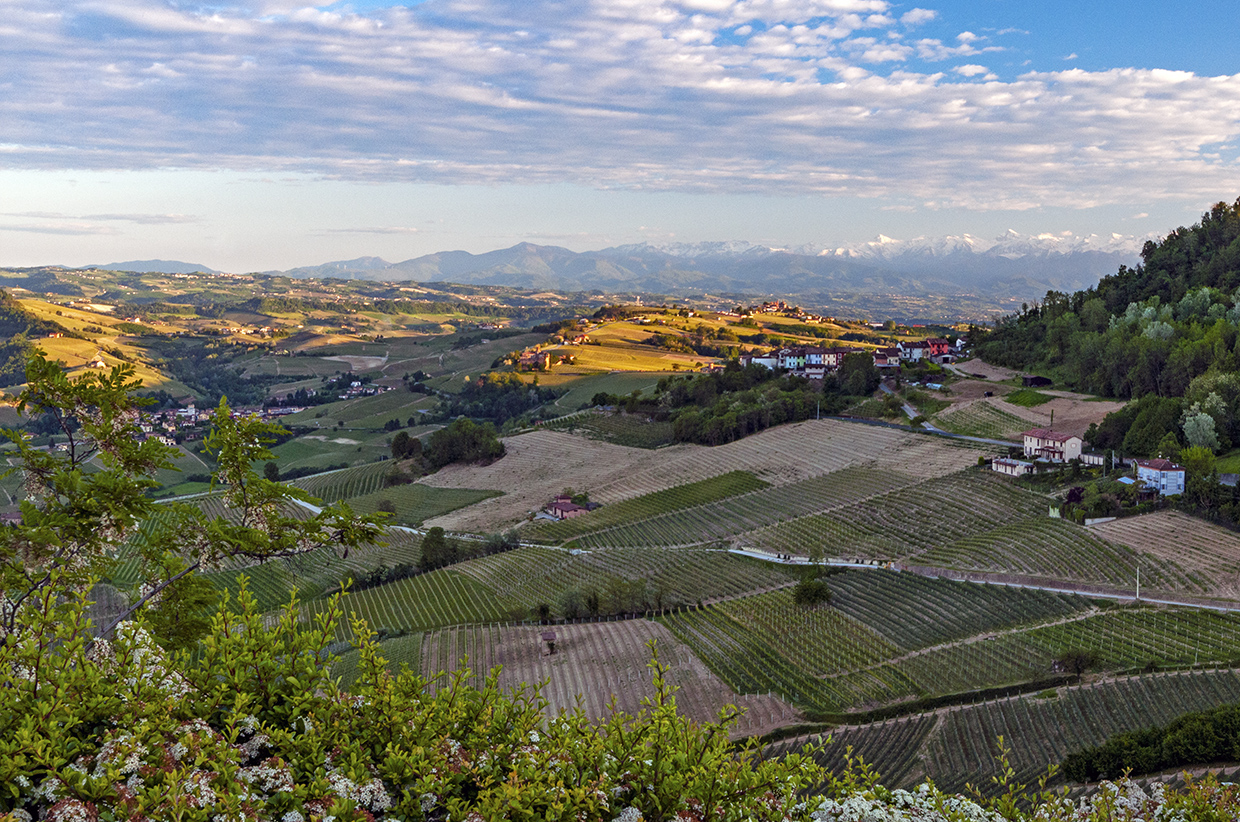
I’ve been having an almost unhealthy obsession with this part of Piedmont since we visited it 10 years ago. That’s how long it took to convince Mrs Z to come back to a place not rich with monuments and attractions. The Langhe, and its many striking Belvederes is the main attraction. Though arguably the best food and wine combo in Italy is an attraction in itself, and reason enough to come.
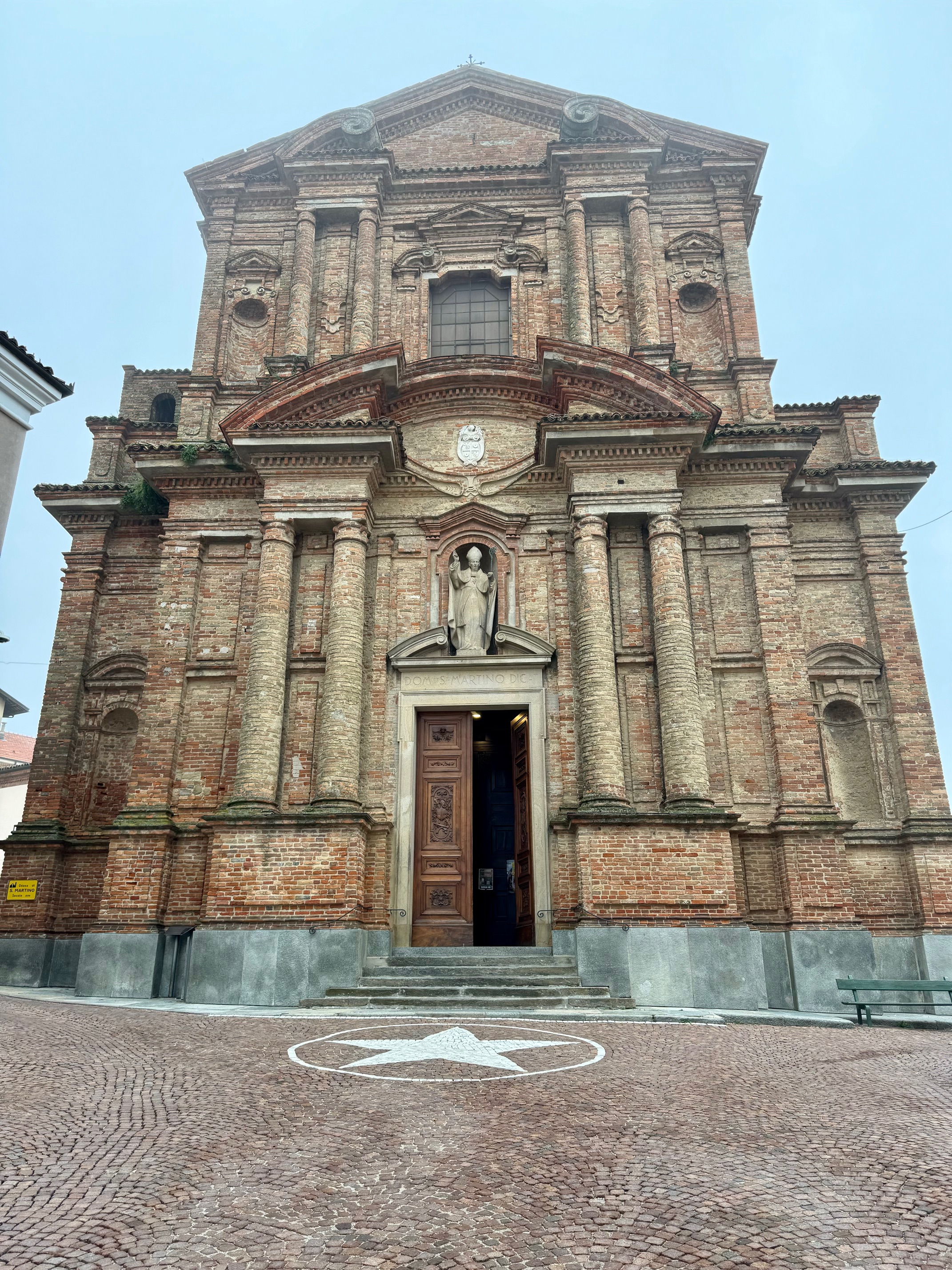
And when you finally pull the trigger, might as well base yourself in La Morra. A tiny hilltop village, surrounded by other tiny hilltop villages in the middle of Barolo wine country. You dont need an entire day to see La Morra, but you’d want to spend some time here exploring the area, starting and ending with Piazza Castello and La Morra Belvedere. We didnt get much blue skies during our recent four days in La Morra in rainy October, but Google has no shortage of sunny images.
La Morra is the perfect base for many reasons. The proximity to Alba (14 km), Barolo village (7 km) and many other interesting villages and towns like Cherasco (known for snails and chocolates), Verduno (home to the Pelaverga grape), and Bra (where the famous Bra sausage is made) is one reason. Even Turin is less than an hour away. The village itself is atmospheric, with just enough shops, restaurants and bars to entertain tourists for a few hours, if not days. The shops here are the tasteful kind, selling local products, not penis shaped Limoncellos.
For such a small village, you have no shortage of food, good food. Osteria More e Macine is very popular with both visitors and locals, and some of the best value we’ve experienced in Italy. Reservations are a must. For a light meal after a big lunch elsewhere (Whether its the great Il Centro in Priocca or La Coccinella), UVE Wine bar will do the trick. But stick to wine here. Not the place to experiment with grape beer.
The Langhe has what many believe to be the highest concentration of great dining in Italy. Notables that are a short drive away: Osteria La Torre (Cherasco), Agnulot (Verduno), Ca ‘del Re (Verduno), L’Osteria del Vignaiolo, Osteria Veglio.
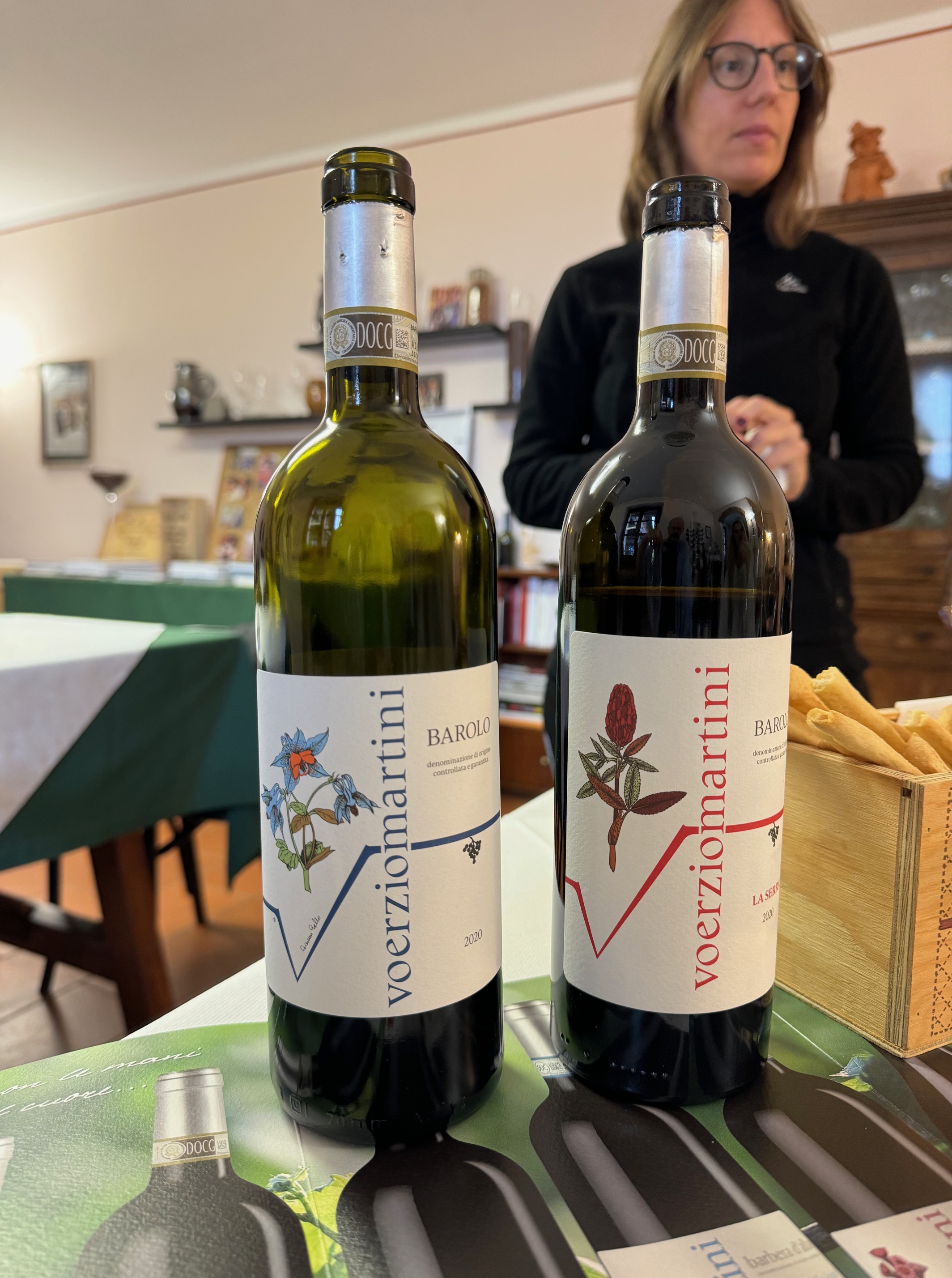
Around La Morra is vineyards galore of course. Some, like the excellent Voerzio Martini, you can just walk to. By appointment only of course. This is not Napa Valley or even Tuscany, where you can show up without reservations. But do make an effort to see the gems outside the area, like Manzone Giovanni, and see Monforte d’Alba while you at it. Stick to small, family producers.
Parking in La Morra is a little tricky. We usually found spots in Piazzale Monera. And if you are a fan of small boutique hotels, look no further than Relais Le Rocche. Ticks all the boxes. Location, views, friendliness, heated pool, comfort, sublime breakfasts, and even dinners from what I heard during breakfast. A ten minute walk to the heart of the village.
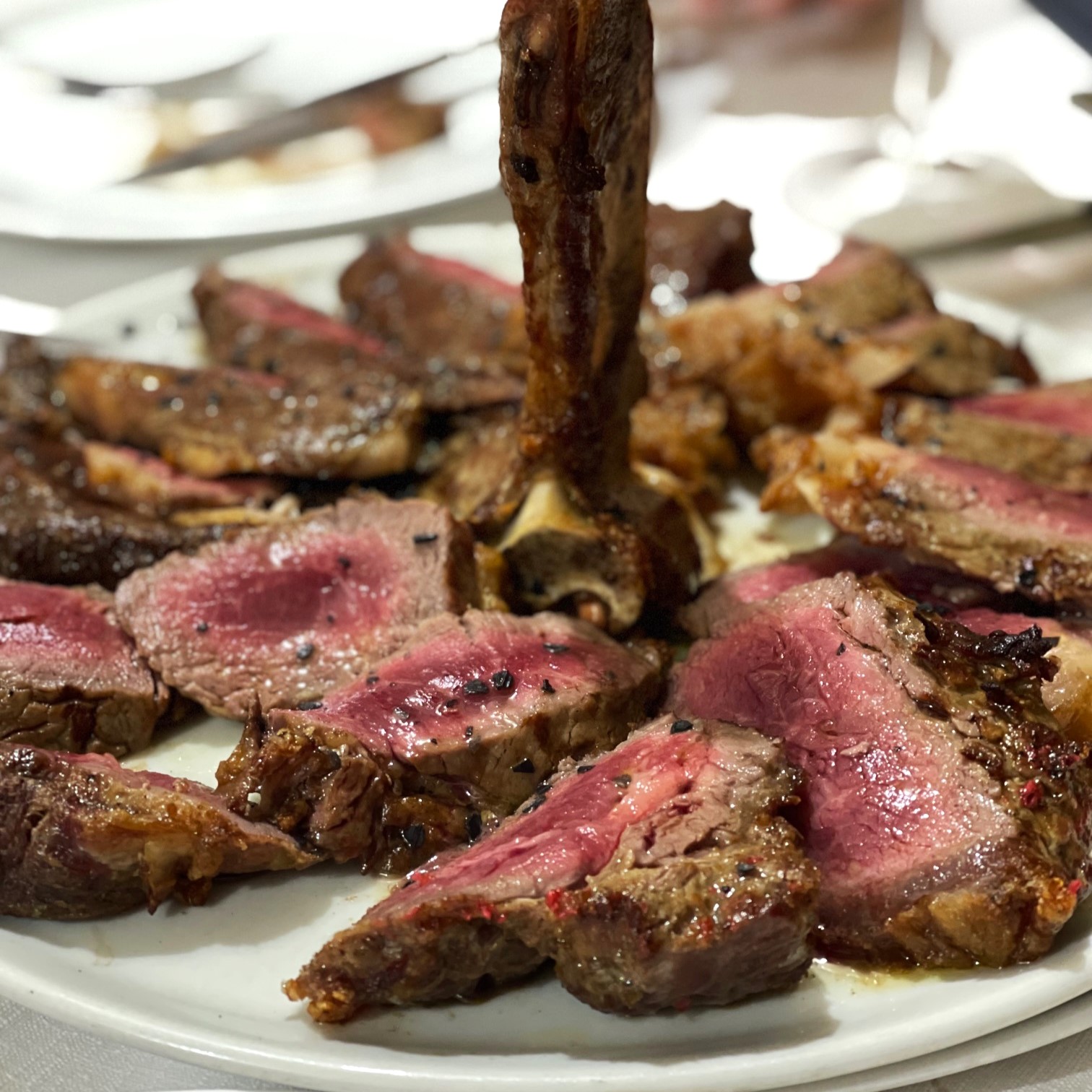
Podolica Ribeye at Soul Kitchen (Matera) – This list has the dubious distinction of being a “best thing we ate in X” list starting with an item in Y. Soul Kitchen isnt in Puglia, but the neighboring region of Basilicata. Matera is very often paired with Puglia as a major destination. But hey, I dont make these rules! Simply put, this steak was freakishly good. Expertly cooked Podolica (the southern answer to Chianina and Fassone), and ranks high up there with anything we’ve ever had in steak heaven Tuscany. So good I just had to hug the chef.
Shrimp baked in Salt atLa Puritate (Gallipoli) – People come to Gallipoli to see Gallipoli, but I came to see the famous shrimp. Trattoria La Pure Joy as we coined it, dished out a shrimp dish unlike anything I ever had. They are plated table side along with delicious EVOO, and although plenty of salt used, they never cross into the too salty territory. Outstanding to say the least.
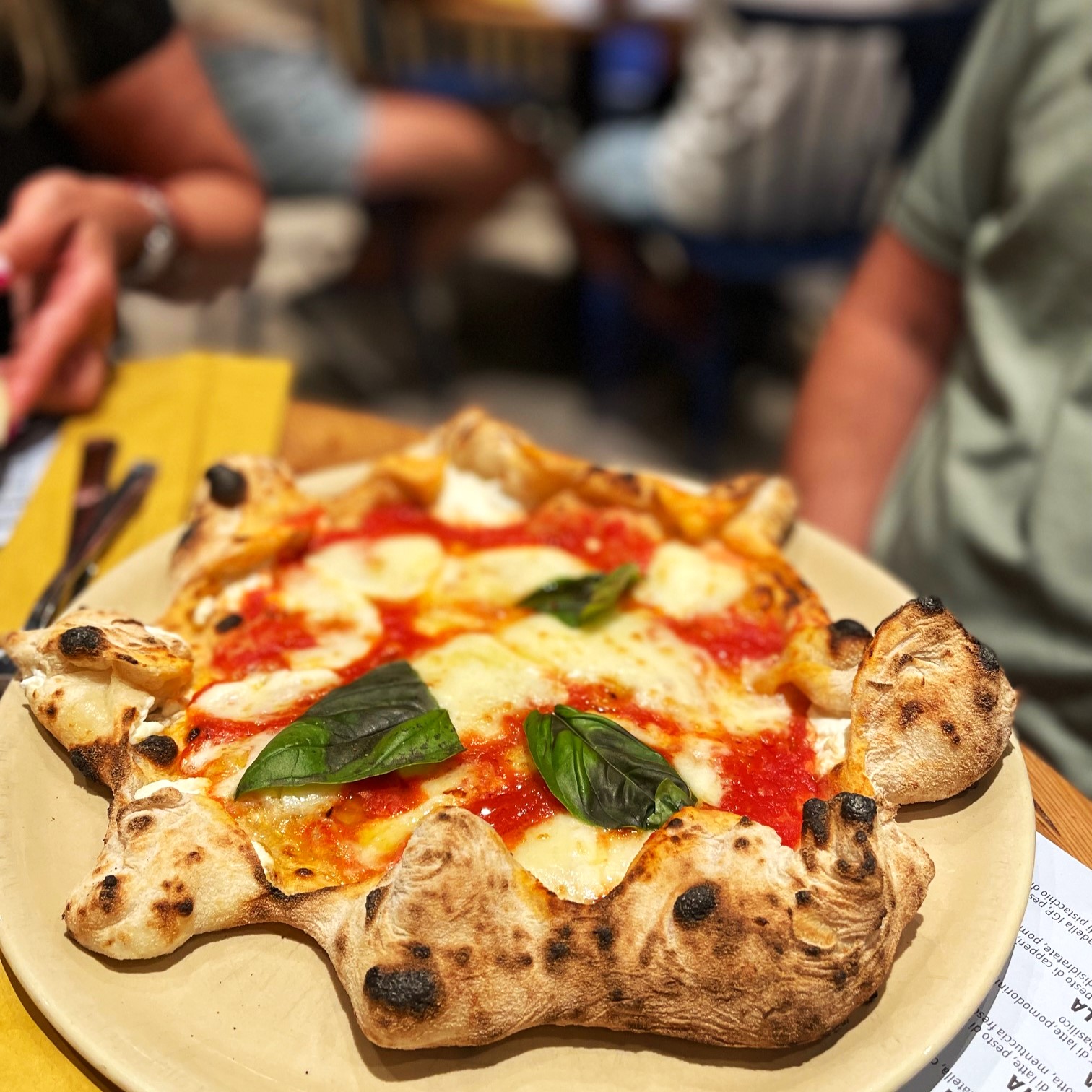
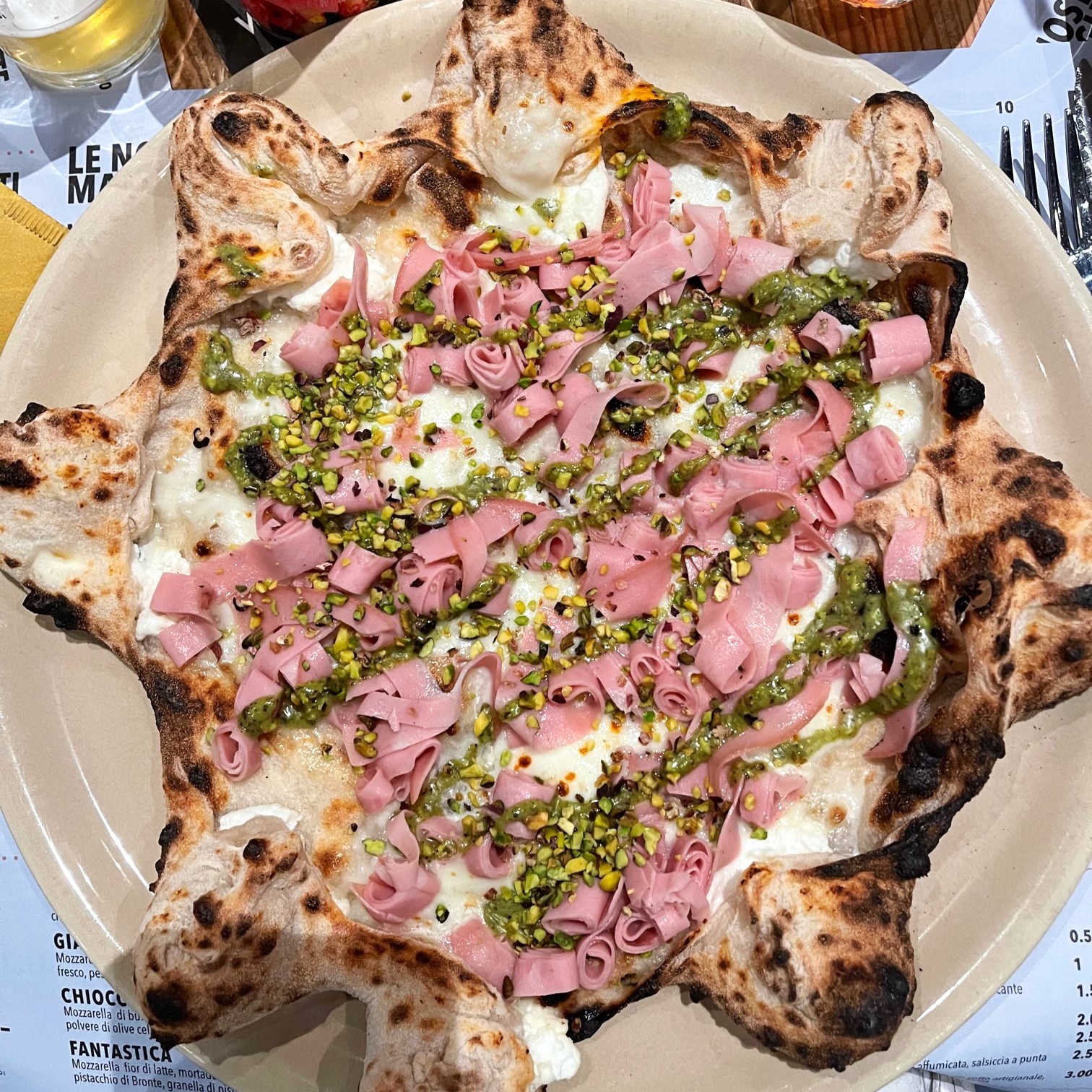
Pizza at 400 Gradi (Lecce) – Highly acclaimed Neapolitan, and arguably the finest pizza in Puglia. According to this well regarded list, one of the best in the world actually. Delicious, perfectly chewy crust, with top notch, zero km ingredients. And I suppose I reached the pivotal point in my life where I just had to finally try pizza shaped like a star and the one here, with beautiful Ricotta filled sun rays, didn’t disappoint. Its a bit outside the closest old city gate, and quite popular with the locals, so come as soon as they open or be prepared to wait.
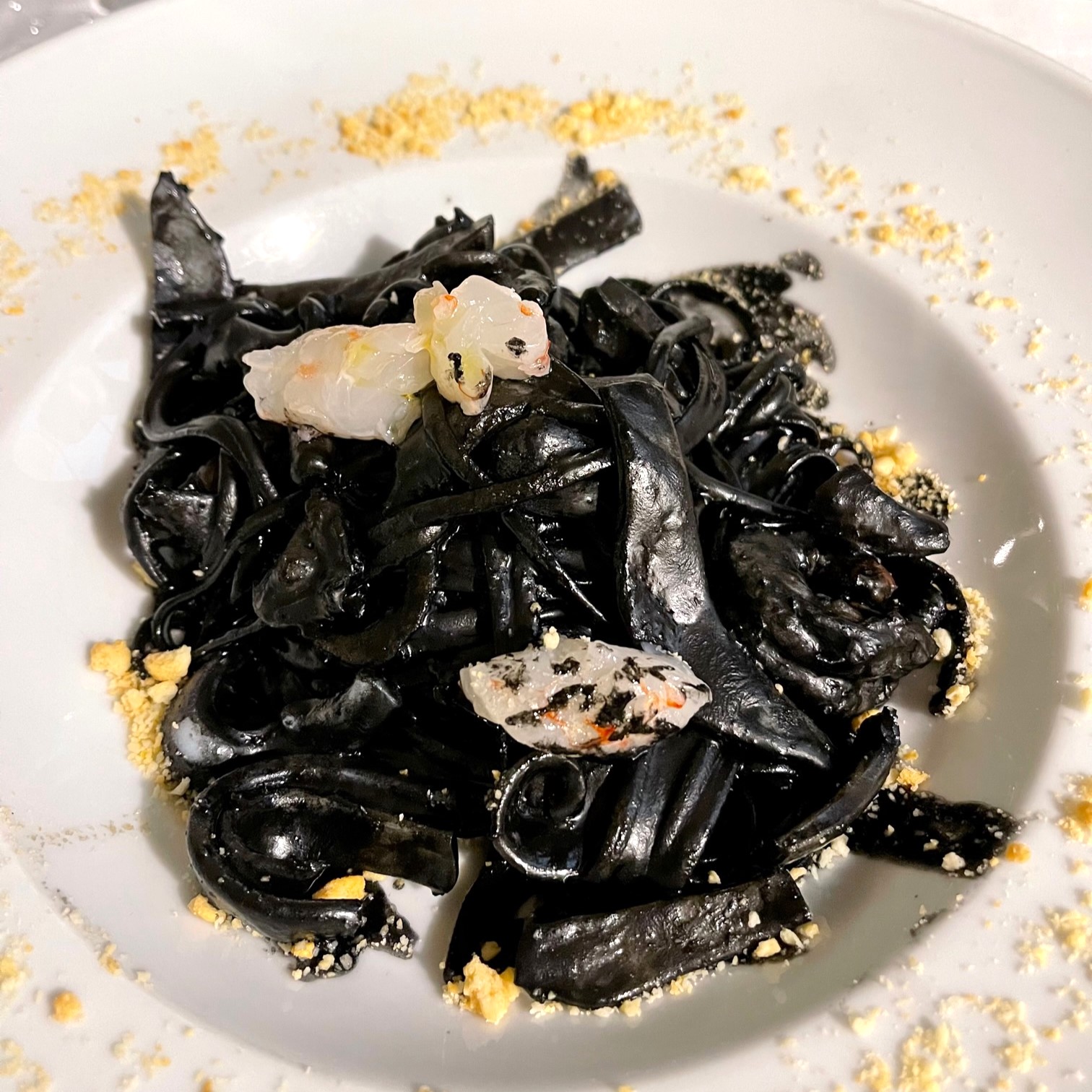
Seppia Tagliolini with shrimp at Ristorante Blu Notte (Lecce) – Sometimes, not often, its the happy accidents that produce the most stellar results. We stumbled upon this gem by pure luck after some places I marked were closed, and it turned out to be one of the best meals of the trip. After enjoying the famous Puglia antipasti all over, the seafood spread here were quite memorable. But the pastas, especially the rich Seppia win the prize.
Tuna Carpaccio at Antiche Mura (Polignano a Mare) – I’m a sucker for a good tuna tartare or carpaccio. You can just see recent posts for evidence. This silky smooth goodness in this seafood mecca is simply divine. A lesson in freshness, quality and simplicity. The baby squid, Tagliolini with fish, not too shabby either. After the meal head to Super Mago del Gelo Mario Campanella, or “Super Mario” for the specialty coffee with lemon and Amaro.
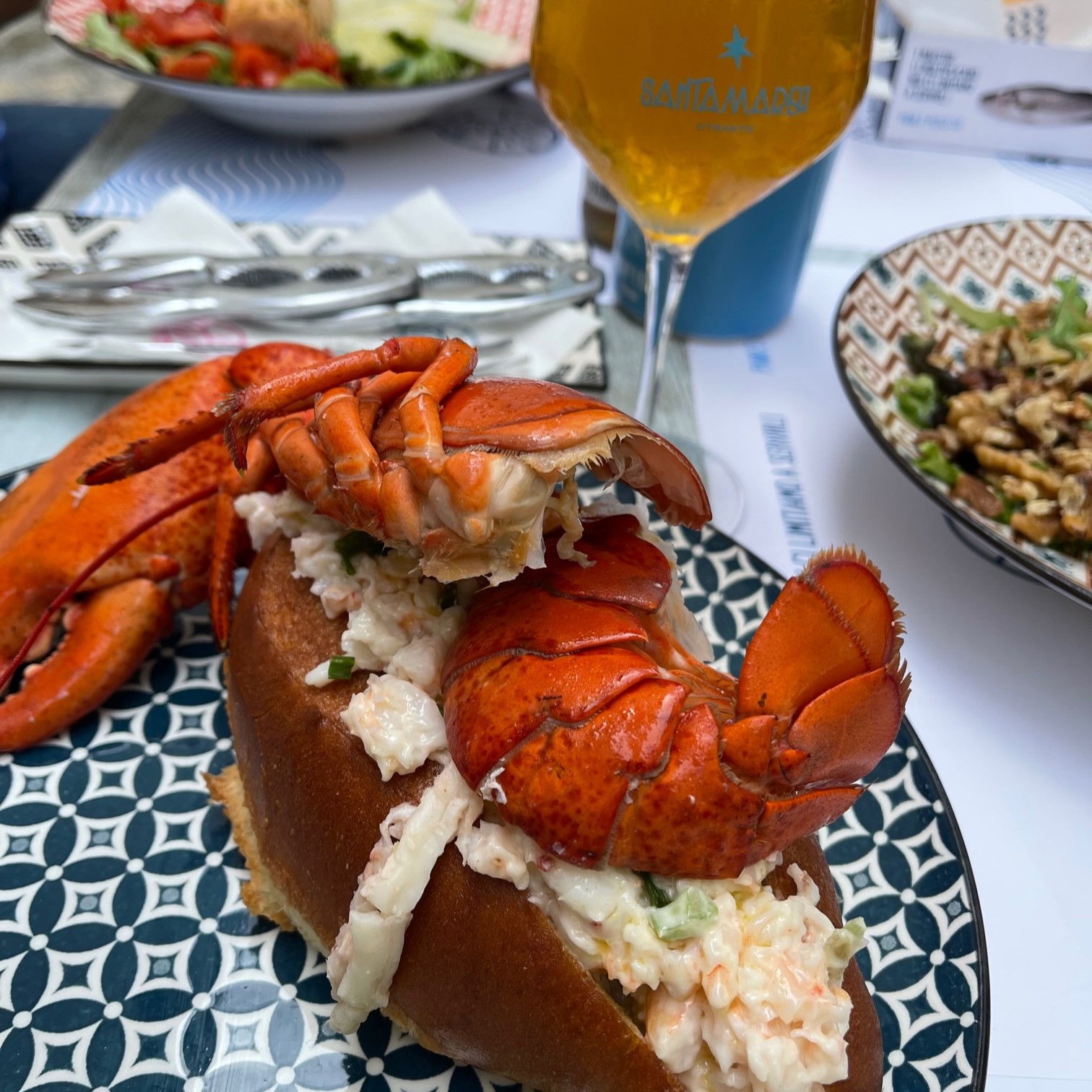
Lobster Roll at SoFish (Otranto) – SoFish is the type that best exemplify the fun of travel, especially for the seafood deprived like us. A hip, “Fast Casual” joint specializing in quick seafood. Its not exactly an old concept in Puglia as it appears that it started by the great success of Pescaria in Polignano a Mare not too long ago. This roll is more like a well crafted lobster salad with huge chunks of meaty lobster and the rest of the lobster resting on top. Perhaps the most outrageous lobster roll you’ll ever encounter.
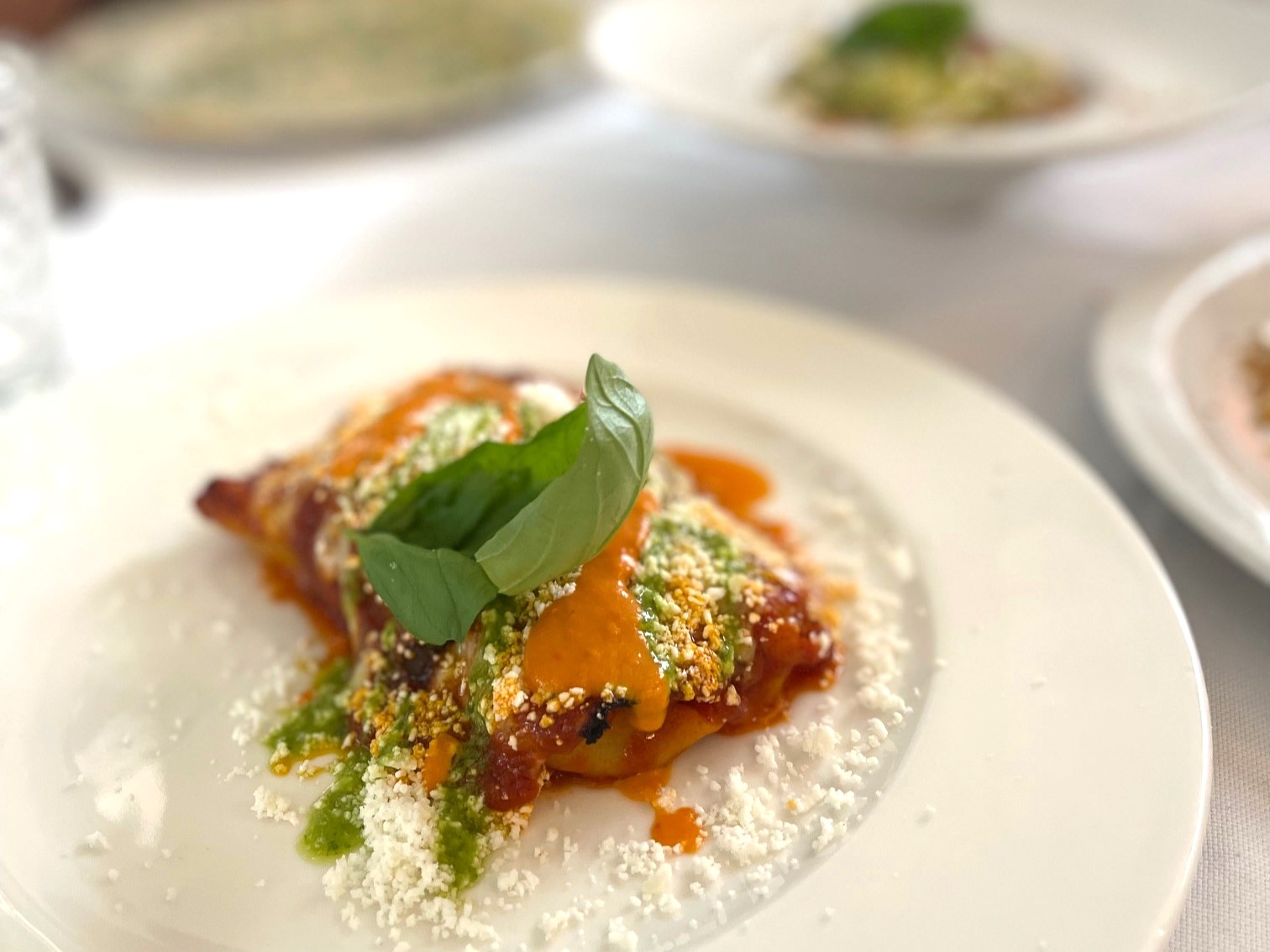
Lasagnariccia at Cibus (Ceglie Messapica) – Picking one dish from this Slow Food legend is not easy. I could have picked any of the sick antipasti spread like the Stracciatella with black truffles or the Zucchini flowers with ricotta and toasted almonds. But I think I heard the angels finally sing when I tried theLasagnariccia, a beautifully deconstructed Lasagna with eggplant, like the best eggplant parm you will ever eat.
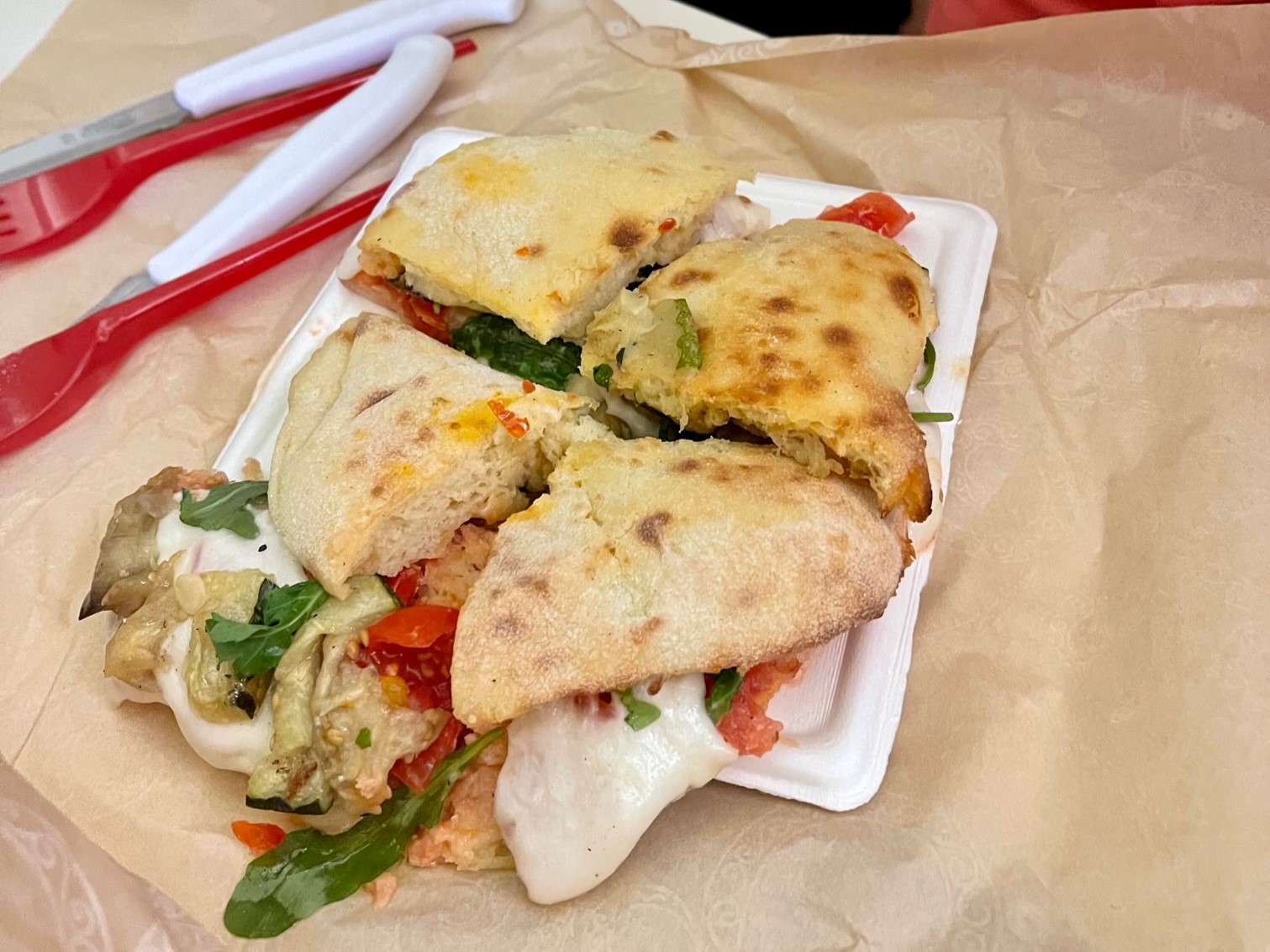
Puccia at La Lira Focacceiria (Alberobello) – Puccia is a sandwich made with pizza dough, and this place and its animated owner makes one heck of a Puccia. “Now wait outside until you hear Puccia! Like this… PUCCIA!!!!”. Dough, ingredients rocked big time. Same with their crafty stuffed focaccia sandwiches
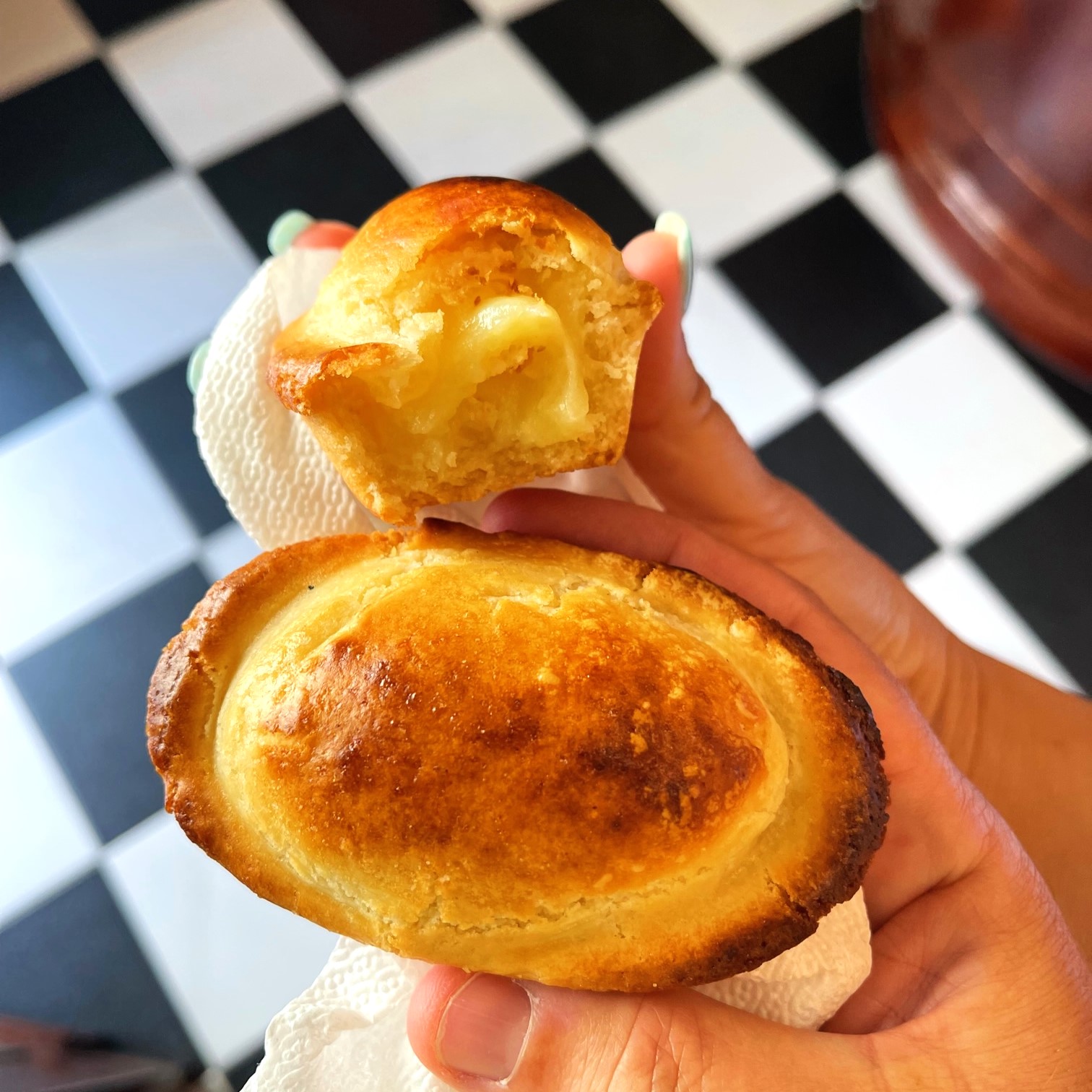
Pasticciotto at Pasticceria Andrea Ascalone (Galatina) – Eating the Pasticciotto here is like eating Pasteis de Nata at Pasteis de Belem in Portugal. You can have them all over Salento and they’ll taste pedestrian next to the original where it was invented. Tour buses including week long food tours make the pilgrimage to this place. Smart to build an impressive 15th century Basilica nearby, with some of the most stunning frescoes you’ll find anywhere.
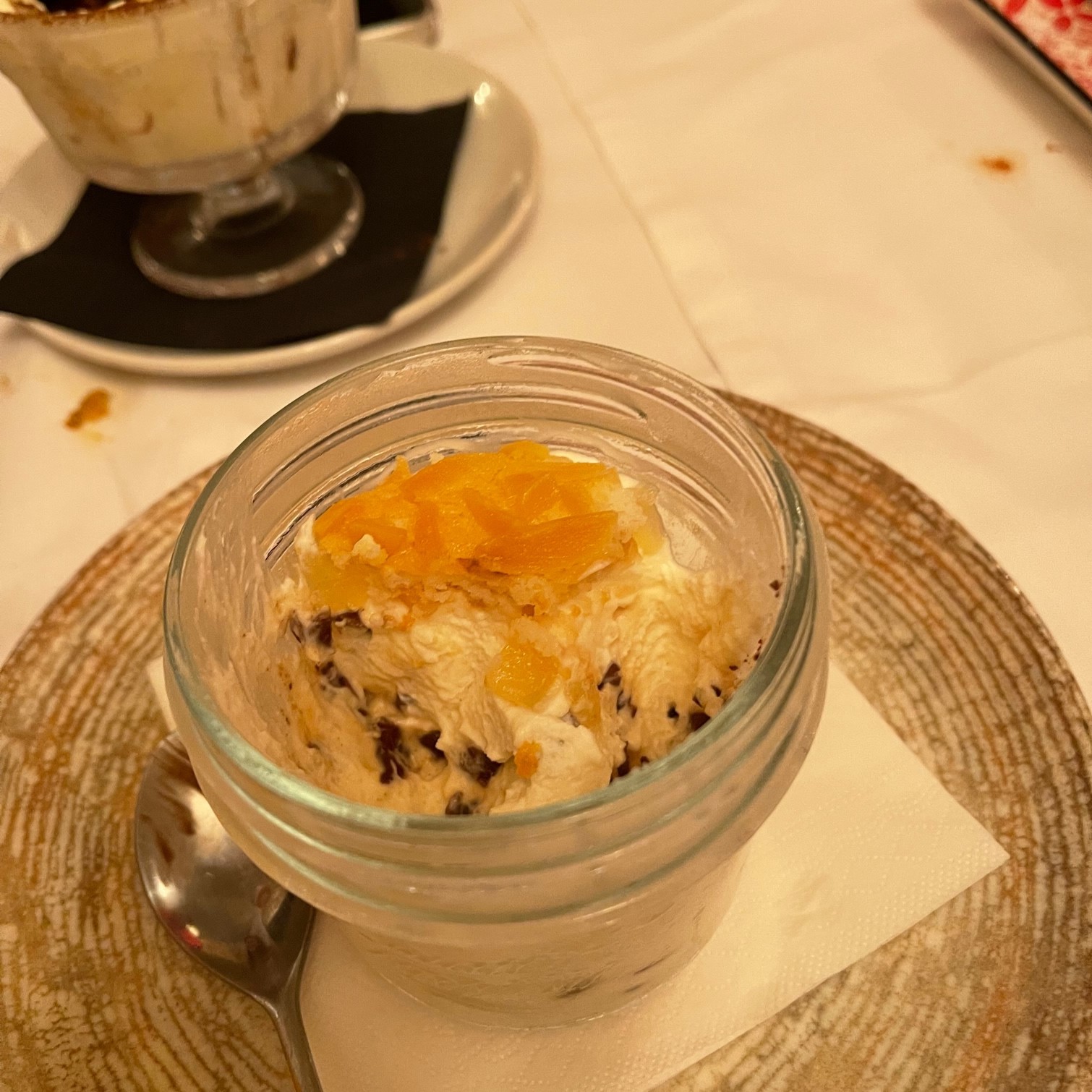
Pear, Ricotta, Rum Dessert at L’antica Locanda (Noci) – I literally heard fireworks when I ate this, but pretty sure it came from outside. It’s a simple but incredibly addictive concoction, especially if you are into boozy desserts. My dining companions thought it was a tad too strong, but to me it was perfectly balanced. Noci is where those in the know go to eat when they visit Alberobello, and L’antica Locanda is its crown jewel.
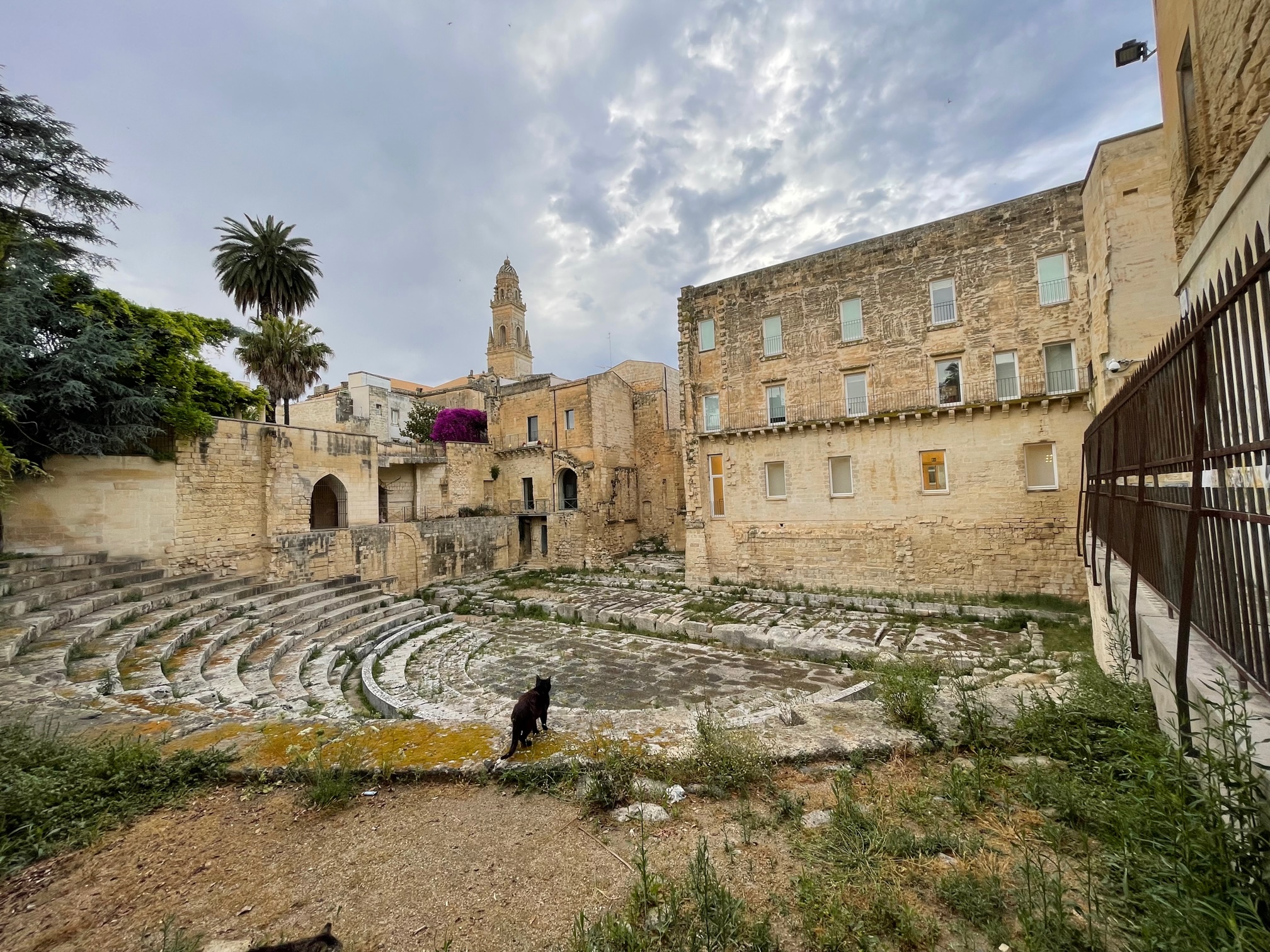
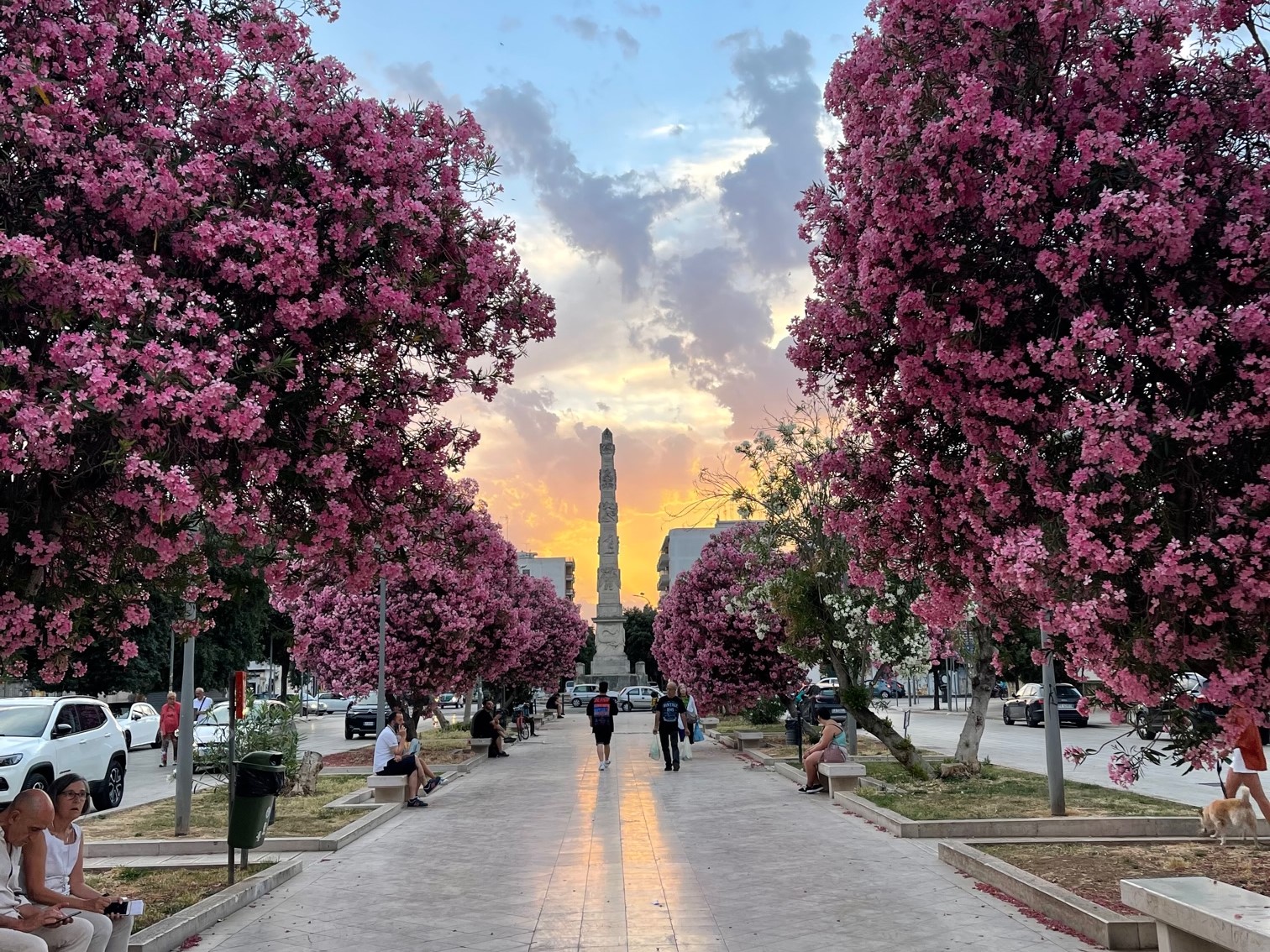
I’m almost done writing about Puglia. I got a doozy I’m saving for last. But it would feel incomplete without mentioning “Florence of the South”, even though its not exactly a secret anymore. We happened to be travelling to Florence after Lecce, and that made us appreciate Lecce even more. Even with the tour groups arriving in droves, Lecce still feels like a sleepy hilltop village when compared to Florence. Lecce’s old town is not large, but its golden sandstone streets make for pleasant walks even when you pass by the same streets and cats every morning.
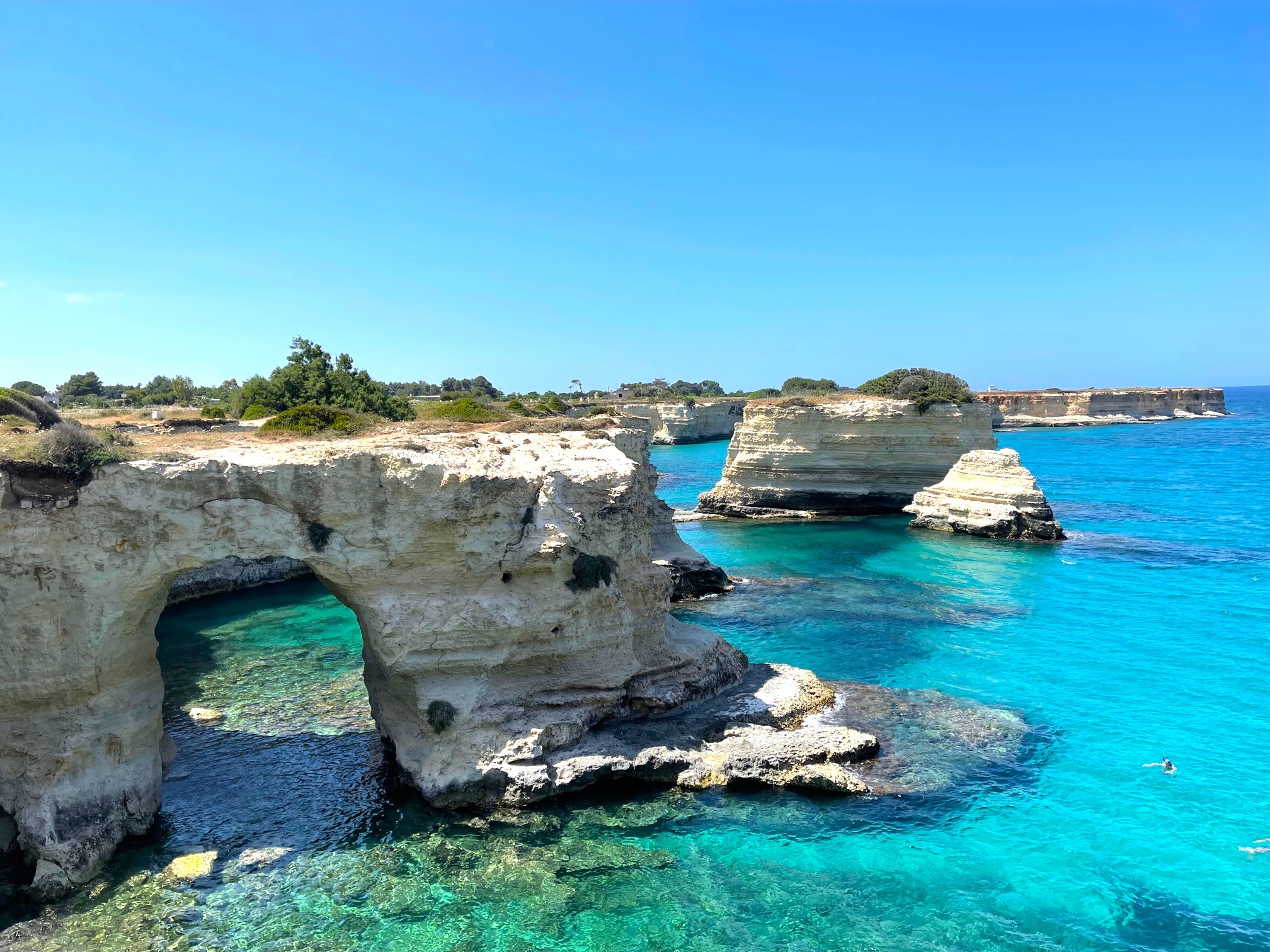
Lecce is one of the strongest reasons that Puglia requires some time (at least 10 days), and it’s old town splendor compliments the Puglia itinerary beautifully. Its also a solid base to explore Salento. You got Otranto and its mesmerizing coast 30 minutes to the east. Gallipoli 30 minutes the other way, along with spectacular beaches like Punta Prosciutto that was calling my name for some bizarre reason. And lesser known jewels like Galatina and its frescoed Basilica in between.
Palazzo Massari, a comfortable bed and breakfast very near the old town ticked all the boxes especially in the parking department. We found Lecce to be easy to get in and out, even with some sneaky ZTL entrances. On your first day, a good way to get oriented with the old town and its history is a food tour with Antonella through Airbnb experiences. While there wont be a food shortage with this one, much of the focus is on history and culture.
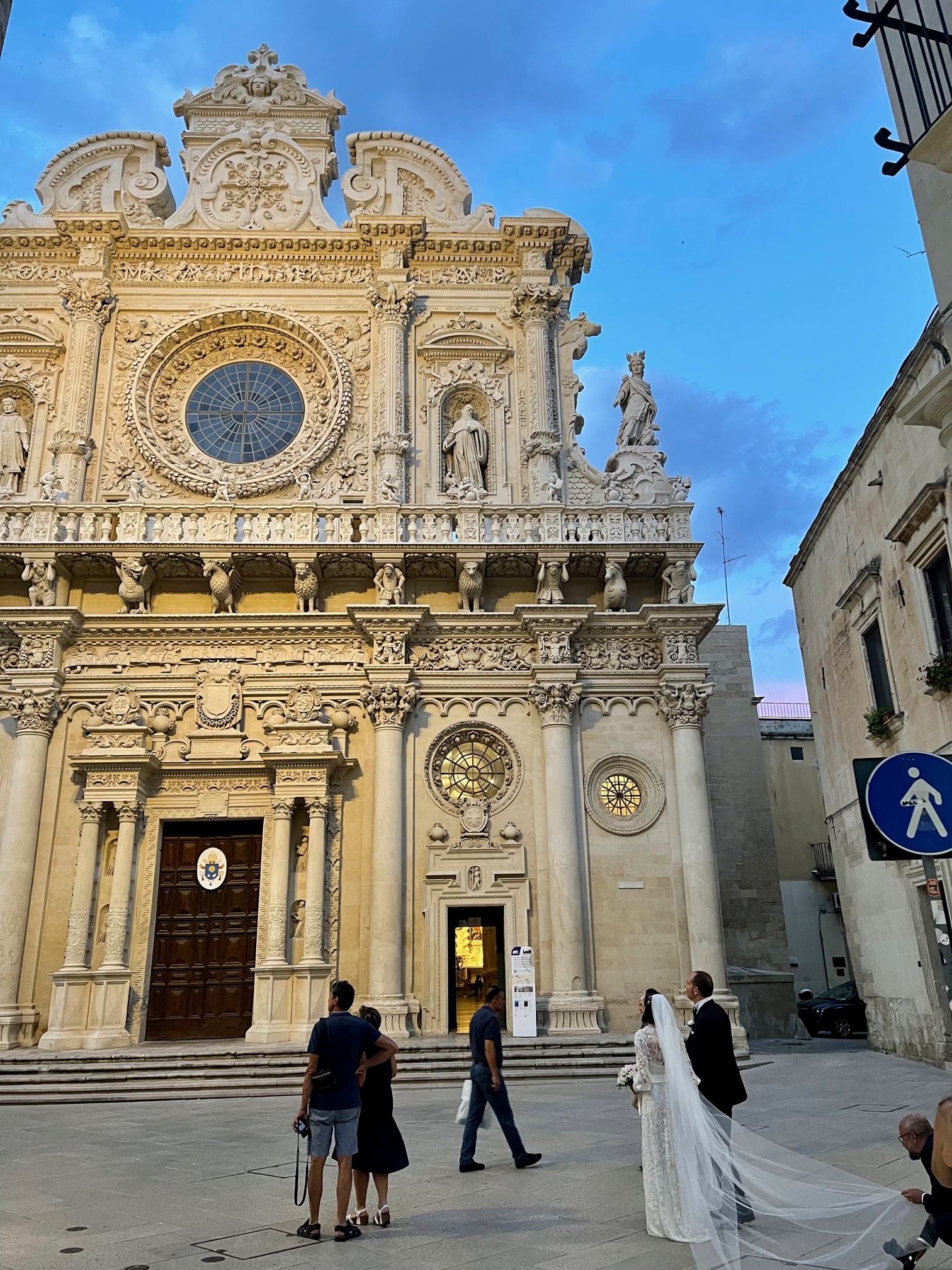
Even if you’ve seen every church in Italy, you do not want to miss the significant Lecce handful, especially the crown jewel Basilica di Santa Croce (above). Another gem, of the hidden not so hidden kind is the Jewish museum in the ancient synagogue right next to Santa Croce. A short tour of the six or so rooms and a short video gives you a good understanding of the history of Jews in Salento.
The notion that Lecce food is meh overall (as per some well known bloggers) is a misnomer from our experience. Maybe compared to the major cities of the north, its lacking, but there doesnt appear to be a shortage of good eats. You can eat well and poorly just about anywhere in Italy. Ristorante Blu Notte and 400 Gradi for pizza were the highlights. La bottega del corso is a fun cheese/salumi/bruschetta quicky. The lone miss was an expensive meat-fest at Tabisca. More here, and more to come.
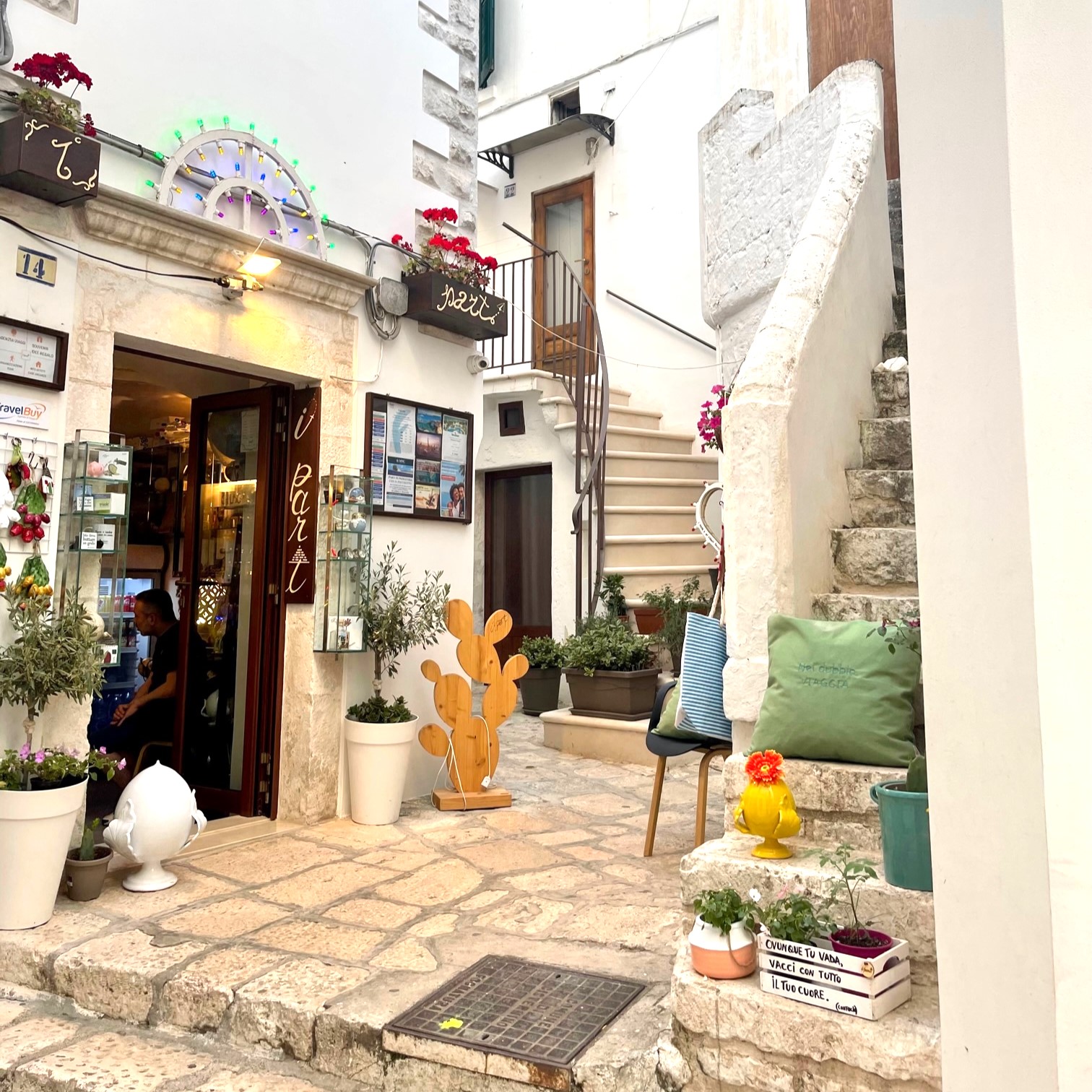
You may not know how to pronounce it, but have probably heard of Puglia or Apulia. You may even heard of Bari, Alberobello, Lecce, and your British aunt may have mentioned Polignano a Mare once or twice. But unless you’ve been researching Puglia extensively, you probably never heard of Cisternino. Blame Puglia’s wealth of stunners, many of which concentrated at the heart of Puglia, Itria Valley. I cant think of another Italian region that boasts such wealth in such proximity.
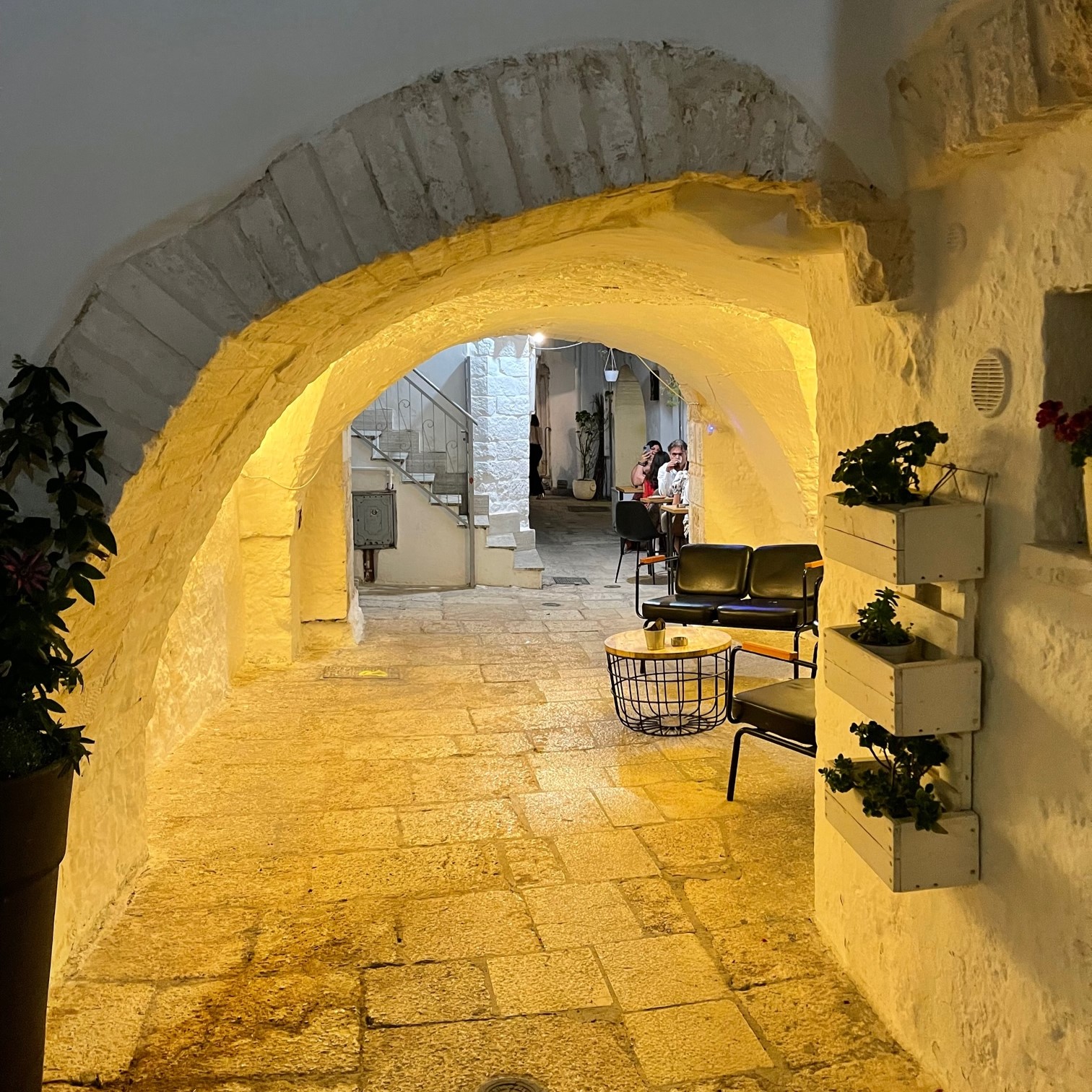
Cisternino therefore is easy to overlook, but I’d argue that its the best base to explore the region with a car. Most pick the more famous Ostuni, 20 km to the south. But Cisternino is not only better positioned, but has a lot of things going for it. It reminds me of the Varenna and Bellagio situation in Lake Como. Its a small mystery why most chose Bellagio to this day where Varenna is not only more convenient, but arguably as attractive.
Draw the main sites in Valle d’Itria, and you’ll find Cisternino smack in the middle of it all. 30 is the magic number. Less than 30 minutes to another white stunner, Locorotondo, the mentioned Ostuni, and mother of Capocollo, Martina Franca. Food heaven Ceglie Messapica and the great Cibus is 16 km away. Cisternino is not only surrounded by Trulli but Trulli capital Alberobello is less than 30 minutes away. Then 30 minutes down the shore you got Polignano a Mare and Monopoli. And the nearby stretch between Savelletri and Torre Canne not only boasts some of the best beaches in the area, but known for its seafood.
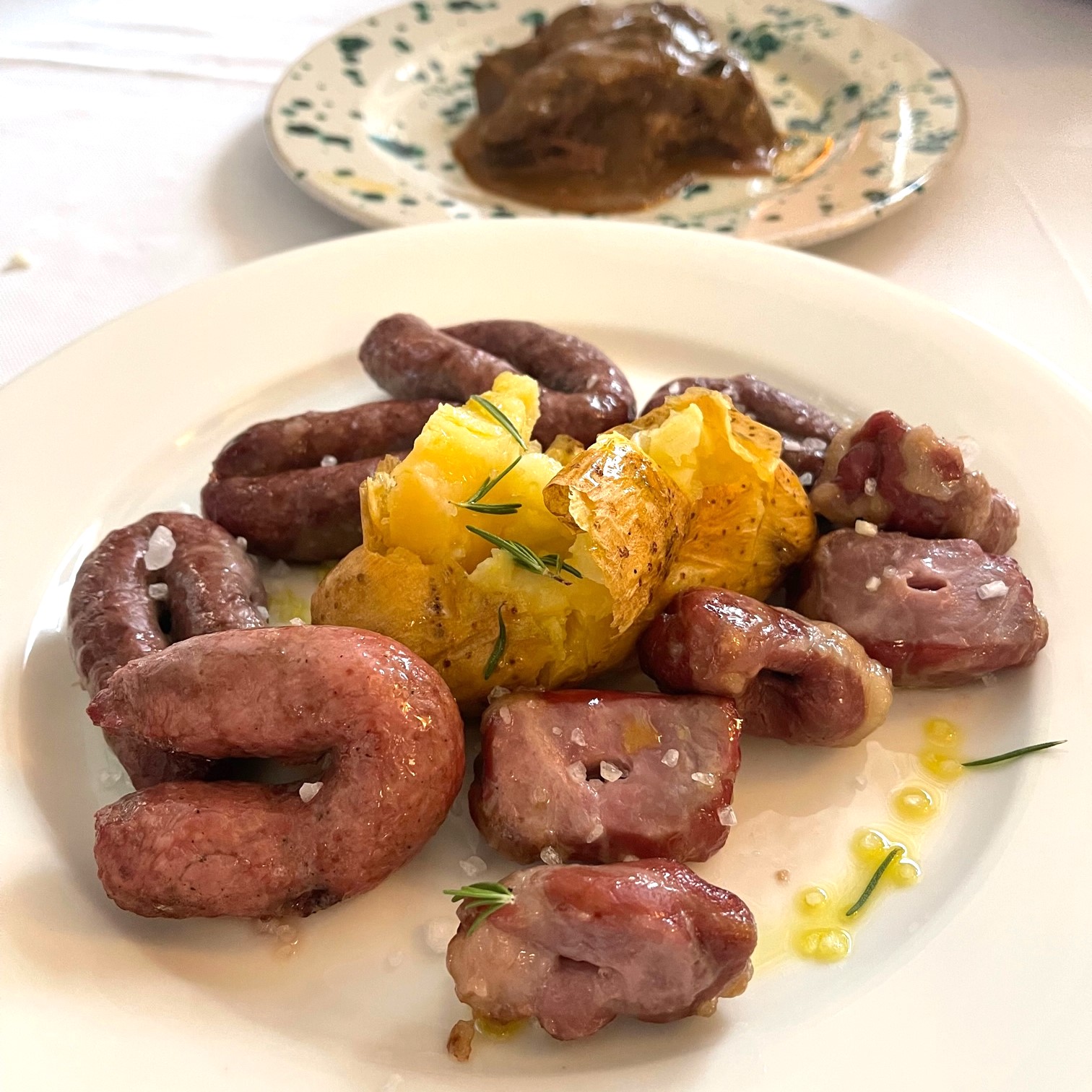
Sometimes you come across a place that ticks all your boxes. One of mine is not only good food, but preferably a place that specializes in something. Cisternino is known for the Fornello Pronto, a network of butchers that will barbecue the meat of choice on the spot. Walk in, choose your meat, pay, and grab a table. Might as well make that meat another local specialty, Bombette, small meat rolls stuffed with cheese and pancetta, though you may find various variations.
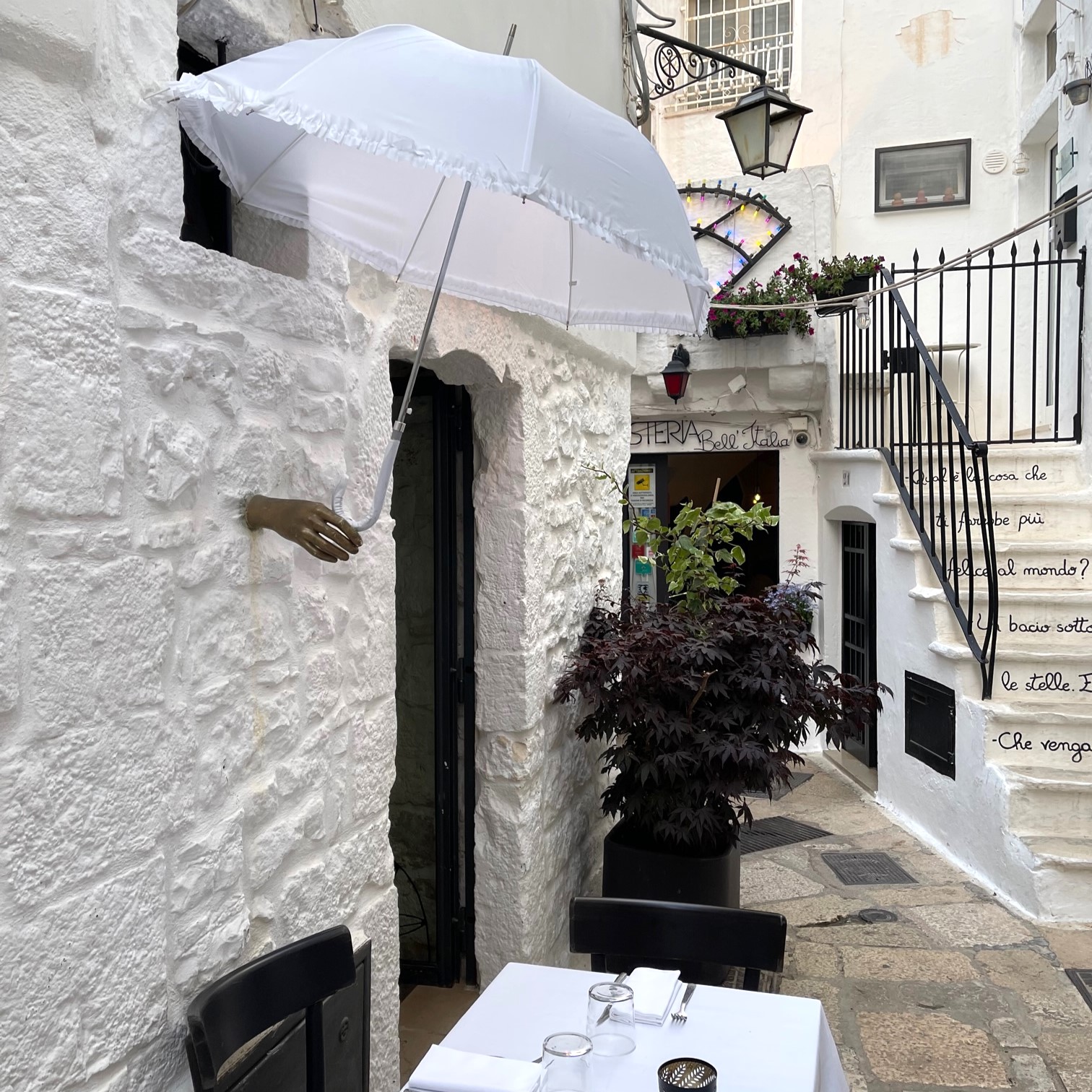
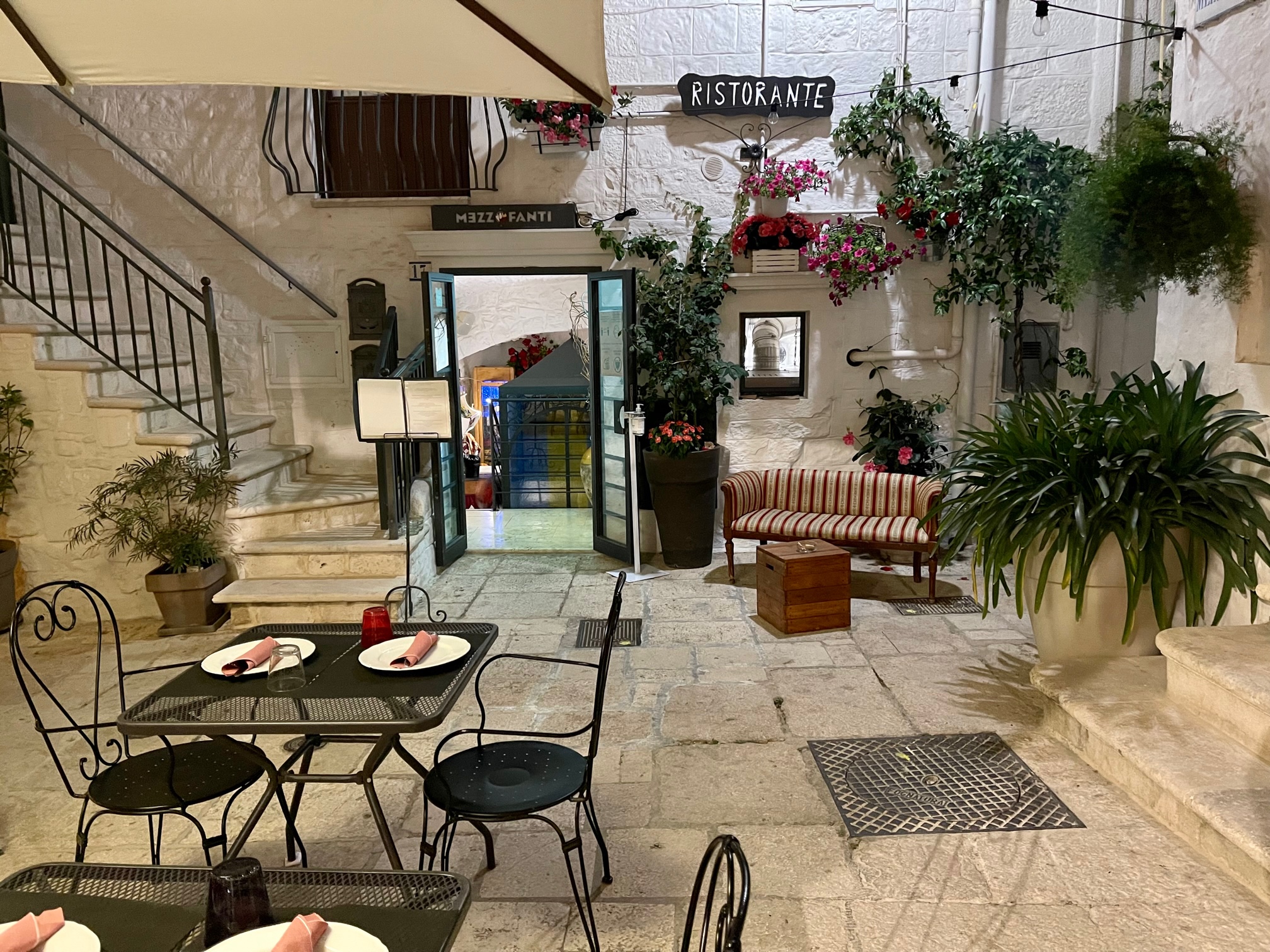
But if you happen to lead a largish group like I did, or simply seek a more traditional sit down, there are no shortages here. Family owned and operated Ristorante Mezzofanti, recommended by our host, is literally a hidden gem in a quiet corner of the old town. Try the baked Entrecote with breadcrumbs, and honey mustard. Neapolitanish Pizzeria Doppio Zero is dope! And quite popular so make reservations.
Dining options get even more interesting in the country side. One is Il Cortiletto, a Slow Food guide recommendation in the tiny village of Speziale. Here you’ll find a charming cameo appearance of the chicken, and an exceptional version of the Altamura specialty Tette delle Monache, that may or may not be safe to Google at work (its means Nun’s tits). Another option is Masseria Il Frantoio for a family style set menu dinner in a striking environment. If you overlook the lavish wedding service, you’ll enjoy the elevated traditional grandma cooking with matching wine.
You dont have to stay inside Cisternino in order enjoy it, although waking up inside the empty old town is probably an experience in itself. The beauty in this part of Puglia is the variety of accommodations like Trulli, Masserias, or both (Masserias with Trulli). Consider Masseria Cervarolo, or the more subdued and homey Spetterrata, a short 15 minute drive from Cisternino, and 20 from Ostuni.
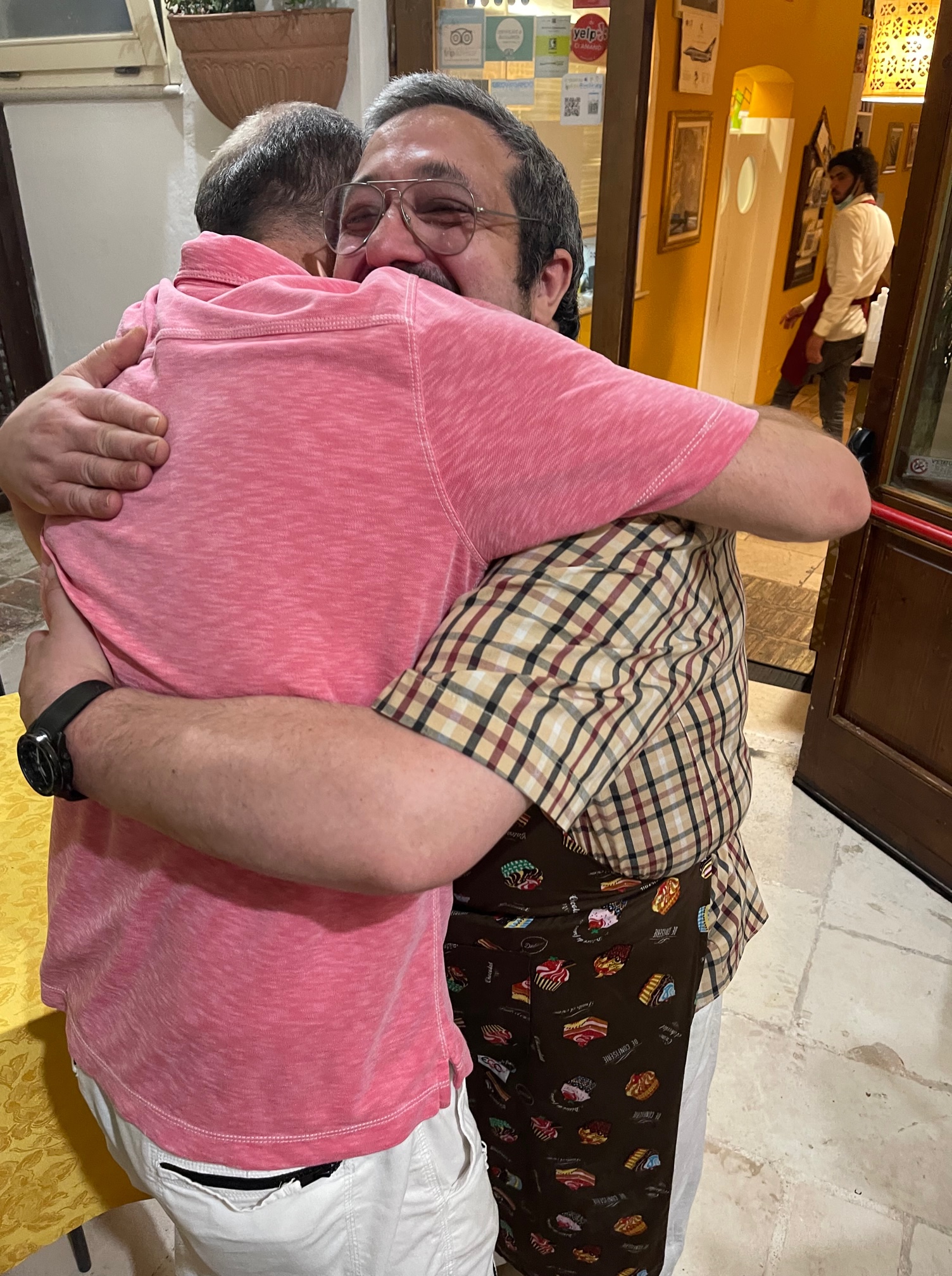
Unlike the old guards like Anthony Bourdain, today’s TV food personalities are in the dangerous habit of hugging every chef they meet. It seems a bit more natural to chief hugger Phil Rosenthal than Stanley Tucci who occasionally forces it uncomfortably. But whether the hug recipients like it or not, its really the ultimate sign of respect and validation for their hard work. Since we are mostly a polite species, words can only do so much. But for me, in order to waltz into a kitchen to hug the chef, at the very least I need to get a little intimate with his/her meat. I dont care how that sounds.
So perhaps for the 5th time in my life I hugged a chef. It happened in Matera, during Covid times no less. Judging by the firmness of the youngest of the two brothers who run the excellent Soul Kitchen, the feeling I assume was mutual. It was the type of hug you only see in funerals. The equivalent of roughly 500 Google reviews, or 700 Trip Advisor. By the end of the evening, I was at the home of a newly discovered and favorite cousin where we can argue about politics, and Eurovision songs. You just cant talk about Bruno or bread. Matera vs Altamura can be a touchy subject.
Some meals are like movies. They start a bit shaky, and can turn into epics. A table mix-up with another group resulted in some uncomfortable moments but all ended well. I’m always careful abroad with jokes that may not translate well, but I let one get away this time. Other personalities would have kicked us out, but not this loveable teddy bear. I haven’t met the older brother, but I can only imagine that he possesses the same passion as the younger Mimmo. You can see it in his eyes, hear it in his voice, and definitely taste it in his creations.
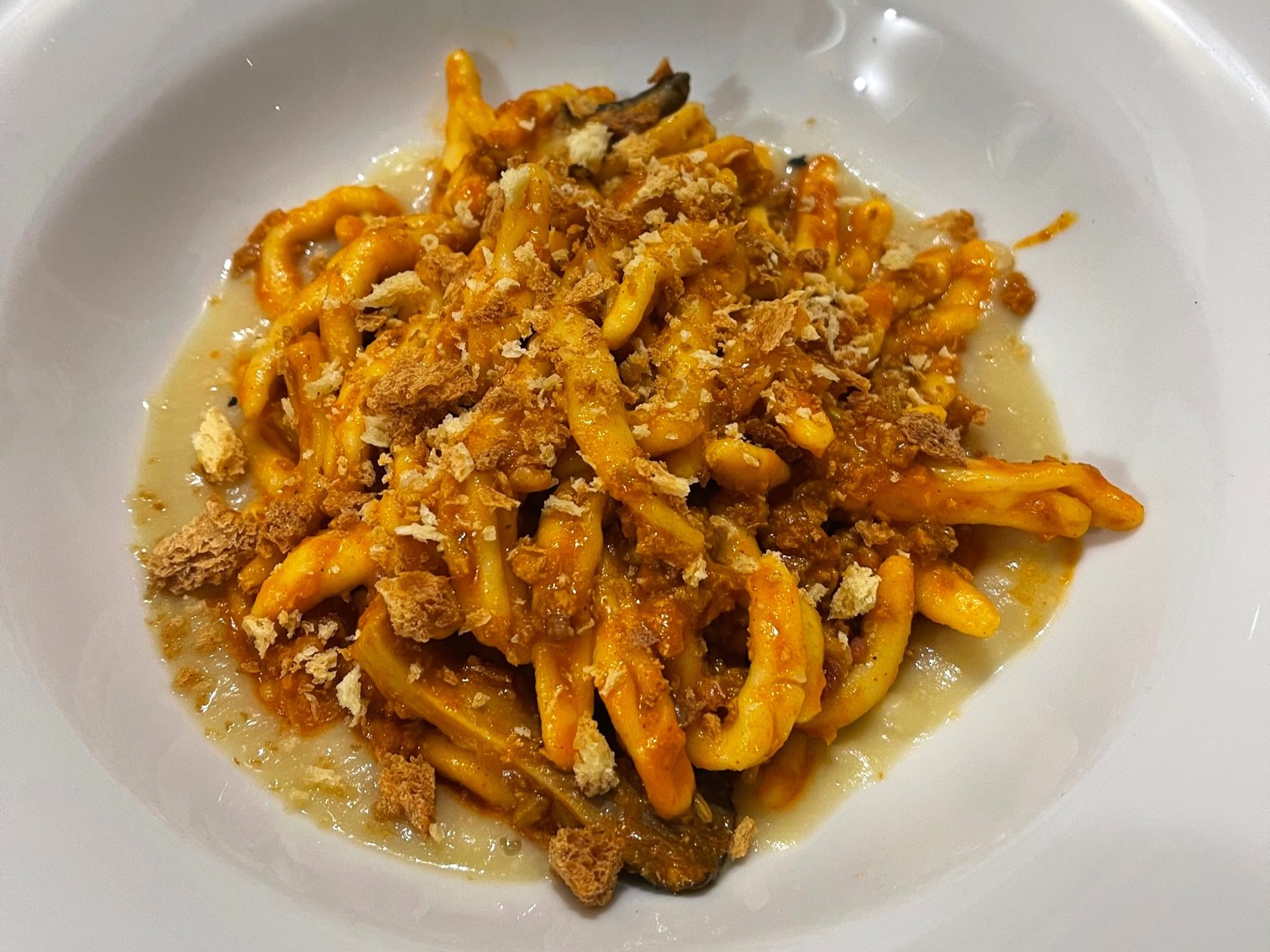
Mimmo, with high end stints in Miami and other cities, pays homage to Matera specialties like the appropriately named Crapiata (rustic local bean soup) but at the same time can elevate with flair. Most in the know, come here to experience the outstanding Podolica (the southern answer to Chianina and Fassone) Ribeye. This expertly cooked cut ranks up there with anything we had in Tuscany.
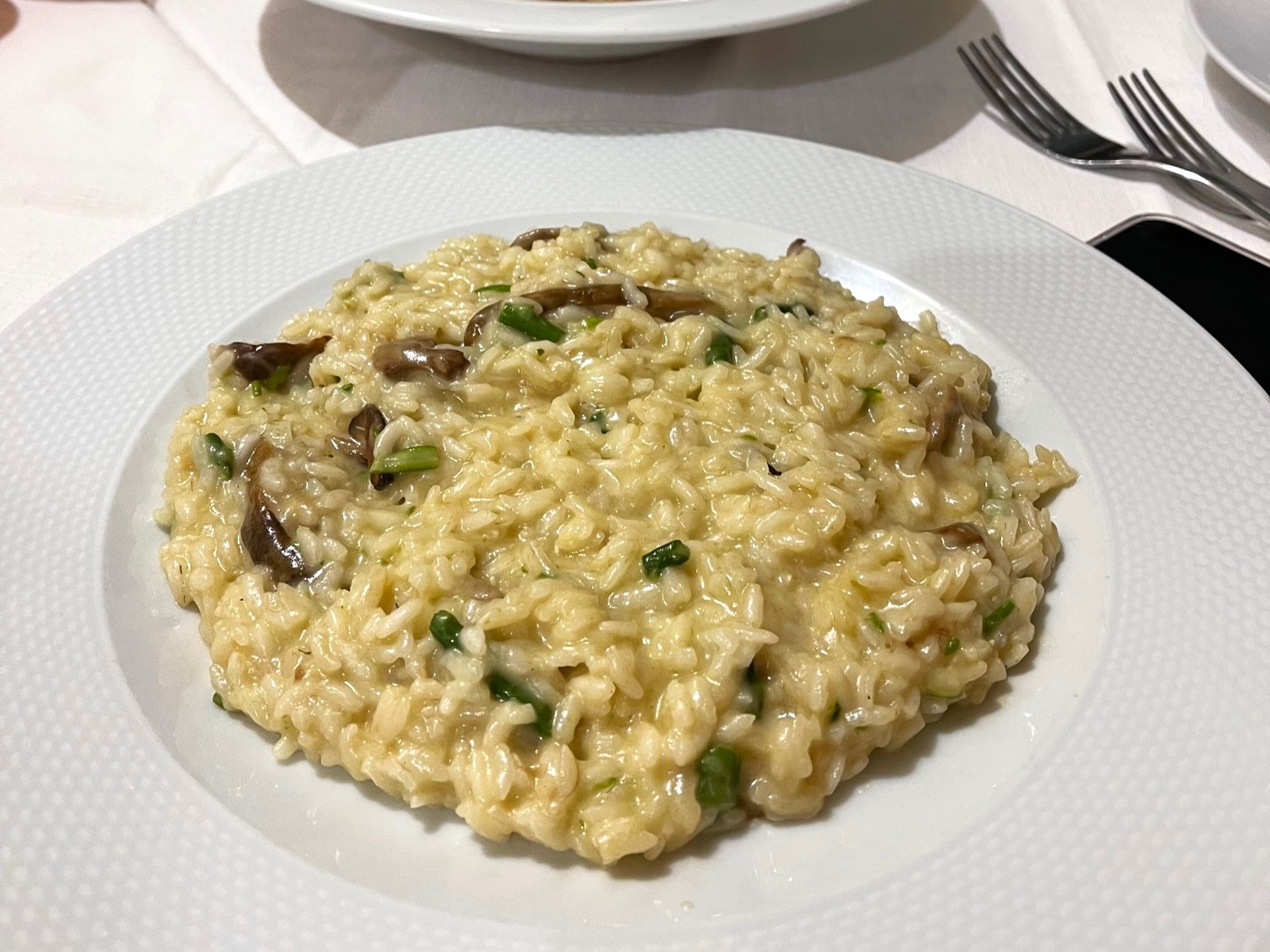
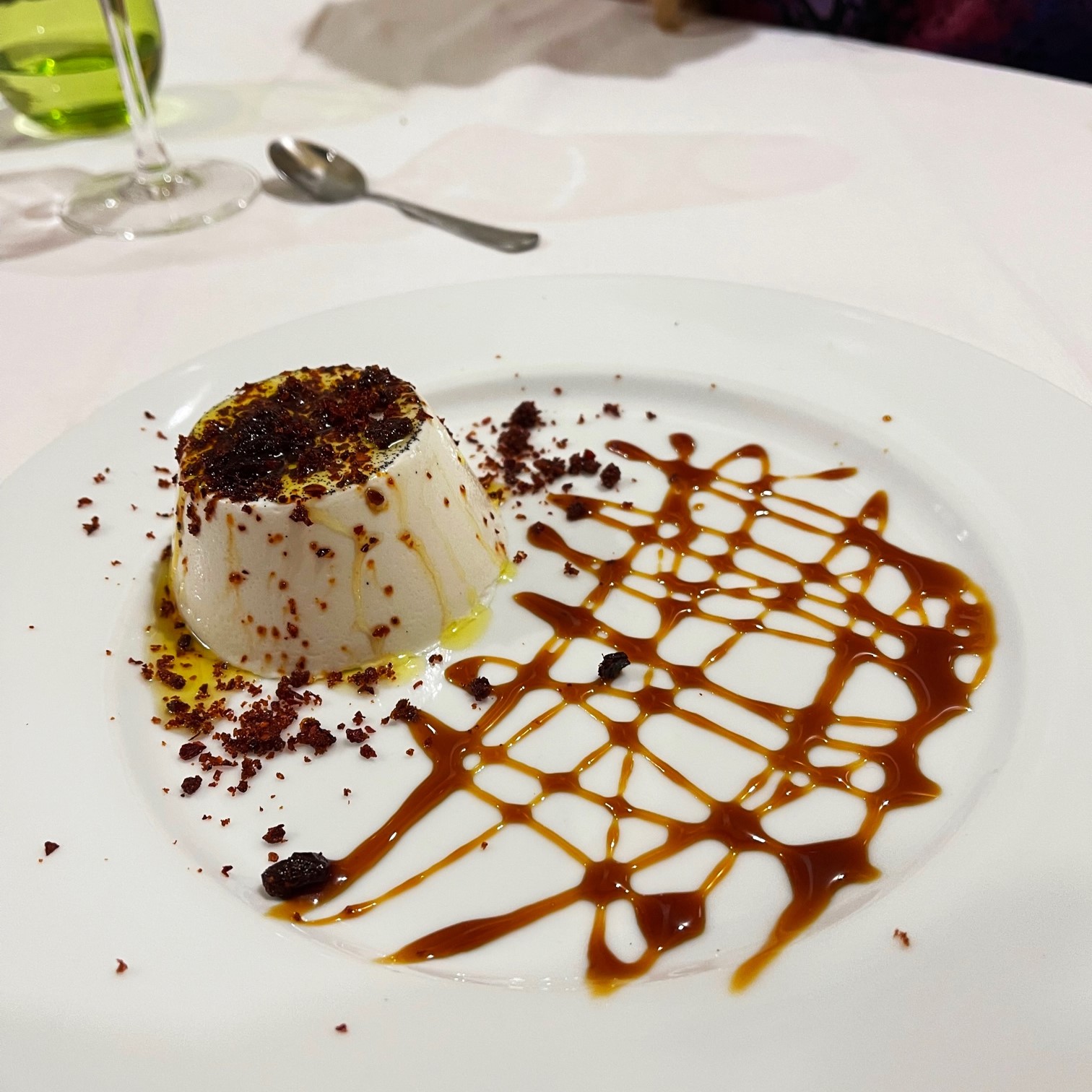
And then you have the Risotto with Porcini, a trip spoiler in a way. Just about every mushroomless Risotto whether its red wine or cheese based, tastes inferior after this. Another standout was a Panna Cotta with Crusco peppers and orange infused olive oil. When you finish one of those meals with a dessert like this, its like culinary extasy. Hence what followed. We had other dishes but these were the memorable ones.
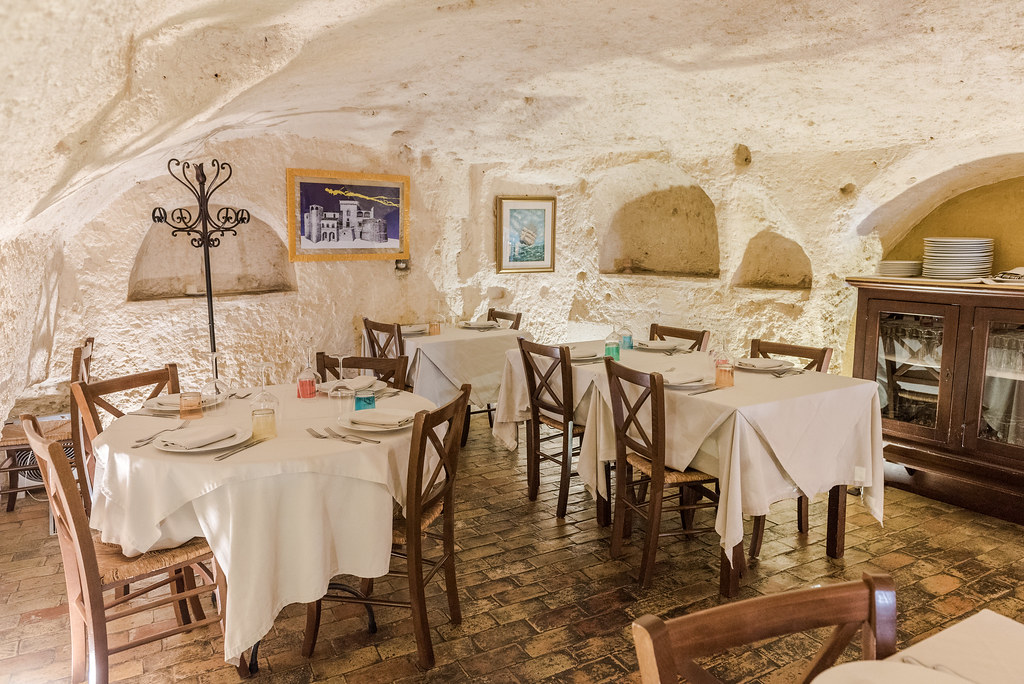
In one of the oldest continuously inhabited cities in the world, the gastronomy scene is still in its infancy. In my brief time in Matera I didnt get a chance to try much, but you get the sense that its already an especially competitive environment. Soul Kitchen is full of just that and is as solid as its its rock cave home.
That’s the amount of time I recommend spending in Florence if the purpose of the trip is to leave your kid there to study. Because not many humans can stomach more than 48 warnings and suggestions on how to secure your personal belongings. Thats roughly 48 dad warnings, followed by half a dozen mom snap-backs at dad. Even monks, and pickpockets at some point go “Alora, enough already. As long as she doesnt have Cappuccino after 10 she’ll be fine”. But I digress. A little early this time.
If you’ve been to Florence before, and you dream about seeing naked David again, prepare for a shock if you are returning anytime soon. Post Covid revenge travel is real, as everyone’s mom, neighbor, and accountant is talking about travelling to Italy these days. We arrived to Florence from “Florence of the south”, Lecce. As popular as Lecce was, Florence made Lecce feel like a remote sleepy hill village. Even the taxis had trouble navigating the crowds. I imagine Rome and Venice are not much different these days.
But Florence is still Florence, and there’s only one Florence. Even the Florence of the south is nothing like Florence of the north. Art, monuments, amazing food, and history on display particularly at the time of our visit. When you see a makeshift stadium built in front of Santa Croce, it can be one of two things. Either a Taylor Swift request was lost in translation, or its Calcio Storico time. Luckily for us it was the latter and we managed to score tickets to one of the semifinals. If you are not familiar with Calcio Storico, Ask Jeeves can probably explain better than Football, Wrestling, Rugby, Kick Boxing, and Couch Potato (When one sits on an an opponent back for 20 minutes for some reason) combined into one. Its one of those events that would never be allowed in the US.
When you revisit such cities, you often revisit a favorite place. To me that place in Florence is Da Ruggero, a quintessential trattoria passed from generation to generation, firmly outside of the tourist route. Traditional Tuscan food doesnt get much better than this. The Tuscan Crostini has quite a bit more oomph than the typical version you find all over the region. Some consider the Pappa al Pomodoro the best in town. Loved introducing my kid to it in between warnings. Salumi, outrageous as always. And the pastas, seemingly so little effort, and yet so much flavor. My happy place in Florence.
All’Antico Vinaio
Since our accommodations this time were at the roomy and peaceful Residenza Marchesi Pontenani near Gladiator arena (Santa Croce), it was hard to avoid the craziness surrounding All’Antico Vinaio these days. On my last visit, roughly 8 years ago, All’Antico Vinaio was just another good sandwich shop. Today its the L’As du Fallafel of Florence and then some. They practically took over an entire block with multiple lines, police directing traffic, teens posing with the overstuffed sandwiches for selfies, and countless picnicking on the curb. I wasnt even tempted to try it. Ok, maybe a little. But I had other plans…
When in Bistecca city, you just have to have the, you guessed it, Gelato. Its not just a matter of which Gelato, but how many times a day. My old rule of picking anything that begins with “Car” is in serious jeopardy now that Carapina is no more. Though Carabè is still going strong. But on this trip, I settled on another old fave, Gelateria dei Neri where I ate three times in two days. EWZ historians tell me its a new EWZ record. The only unforced error was that only one of the tries was the sick Ricotta and Fig combo.
Nugolo
I had other plans for dinner that evening. But when we checked out the place that shall remain nameless earlier, we got a slight bad vibe. Plan B however turned out to be a smashing success. Nugolo is a little far from traditional Tuscan. In fact its closer to what one can find in Paris. But I was intrigued by it after seeing its name pop on the excellent Girl in Florence. And FOMO completed when Nugolo was featured on Stanley Tucci’s new show on CNN before it even opened.
At Nugolo the decor is smart, colorful, playful, and really so is the food to match. The rabbit ragu for instance comes hiding beneath the Risotto for a lasting, milky spoonful. Another clever combination was the slow cooked egg (64 degrees) inside a kataifi nest, with green peas and potato foam, and pancetta. Fresh pasta in a form of “Bottoni” are just that, buttons, stuffed with red potatoes and ‘nduja, and topped with broth of mussels and wild rocket (Arugula) sauce. The Beef tartare was probably the lone forgettable dish. Monkfish, taccole beans, pine nut cream and crusco peppers was superb. So was the Veal’s cheek with potato gratin, Borettane onions and cashews. Every fatty and tender meat cut should come with Borettane onions. A simple but very solid Tarte Tarine capped a memorable meal.
Mercato di Sant’Ambrogio
You will see Mercato Centrale recommended in every guide book and Florence FB group, rightfully so. But it took me all those years to realize that Mercato di Sant’Ambrogio, the locals choice is the real deal. They are only a 20 minute walk apart. We tried mainly some fruits, bread, cheese and salami, and one particular salami stood out. Good, spicy salami is my weakness. At a vendor right off the middle western entrance, the Salame Spagnolo had that “come to papa” color, and the flavor had just the right balance.
In Florence, being the outdoor museum that it is, I opted not to brave the crowds at museums and churches this time. But it would feel like an incomplete trip without another visit to Abbazia di San Miniato al Monte. The atmosphere surrounding it, views off and of it, the cemetery, simply mesmerizing. Still feels like a secret considering the lack of crowds. You can find them all in Piazzale Michelangelo down the road. A more pleasant visit to the area would involve taking a taxi or bus to Miniato, walk down to the Piazzale, and down through the gardens toward the river for numerous selfie opps.
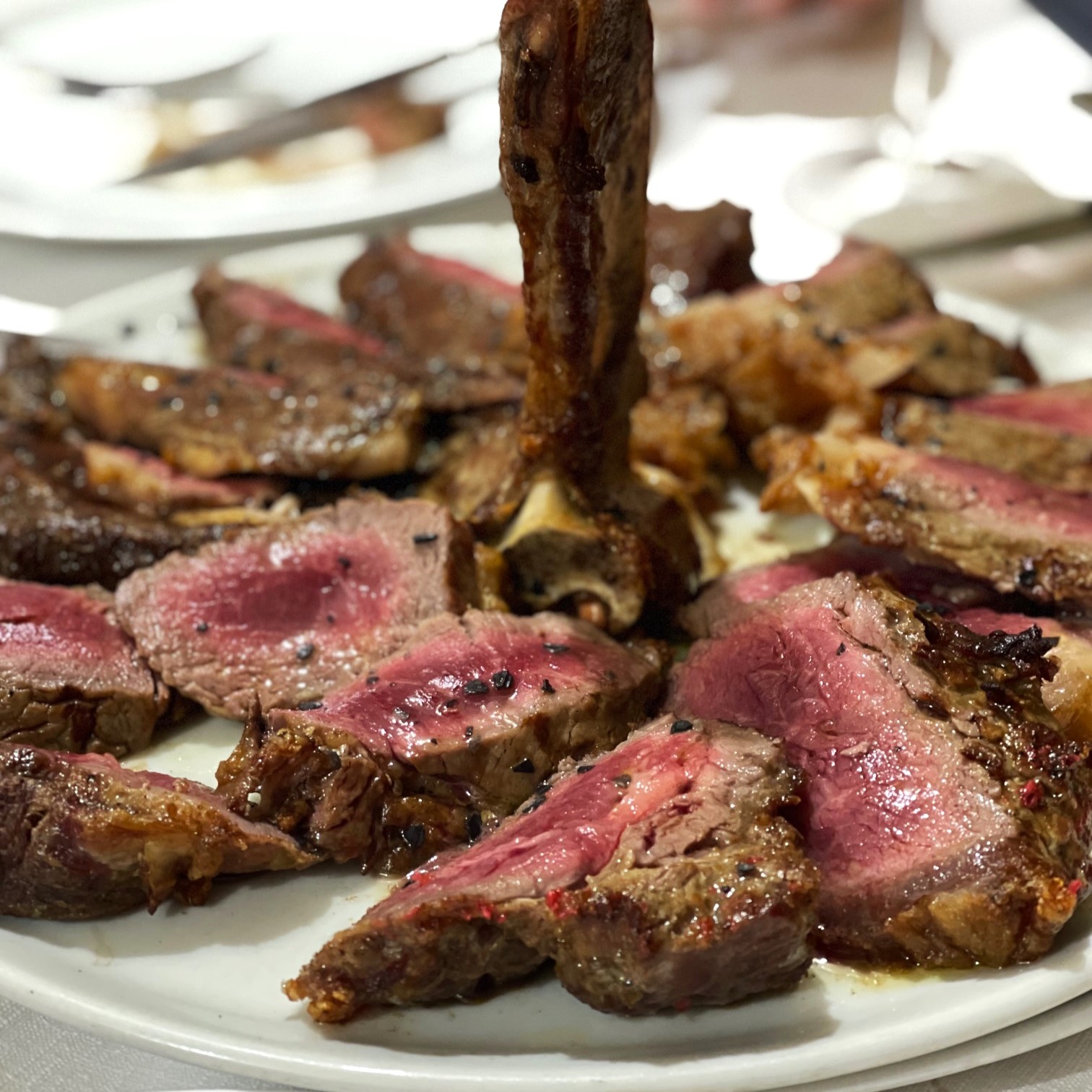
Even with only 48 hours, I could not leave Bistecca city without having the Bistecca. To me its like going to Mexico City and not having a taco. But with some of the old faves like Sostanza closed on Sundays, picking the right place was a challenge. I’m a serial researcher when it comes to food, but picking a good Bistecca in Florence is almost like throwing darts at a map. It dominates almost every review page to the point that none of the restaurants in Florence can afford to offer a bad cut, or not have it available. I cant think of any other city in the world with a similar situation. Segovia and its famous suckling pig comes close, but not quite.
I ended up picking Parione, and as expected turned out to be just what the gastro doc ordered. Its touristy alright, but you get a sense that just enough locals frequent it. The eggs with truffles didnt quite do it for me. The Picci did. The Bistecca while bluer than I remember did not taste like it needed to be cooked more. Supremely flavorful, buttery, slightly funky with just the right seasoning. If you havent perfected the Bistecca art at this point, you would have been in serious trouble. The one mystery here however was the total lack of seasoning on the beans. Did the old Pisa salt tax ban tradition extend to beans as well?